









Last Watched

"Ants"  Sort by

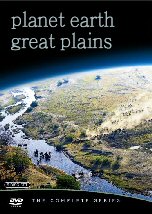
Great Plains

   2007    Nature
After filming for three years, Planet Earth finally captures the shy Mongolian gazelle. Only a handful of people have witnessed its annual migration. Don't miss the bizarre-looking Tibetan fox, captured on film for the first time. Over six weeks the team follow a pride of 30 lions as they attempt to hunt elephants. Using the latest night vision equipment, the crew film the chaotic battles that ensue at close quarters.
Series: Planet Earth

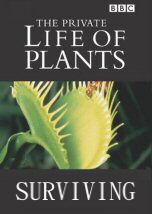
Surviving

   1995    Nature
the final episode deals with plants that live in hostile environments. Attenborough visits Ellesmere Island, north of the Arctic Circle, to demonstrate that even in a place that is unconducive to life, it can be found. Algae and lichens grow in or on rock, and during summer, when the ice melts, flowers are much more apparent. However, they must remain close to the ground to stay out of the chilling wind. In the Tasmanian mountains, plants conserve heat by growing into 'cushions' that act as solar panels, with as many as a million individual shoots grouped together as one. Others, such as the lobelia in Mount Kenya, have a 'fur coat' of dense hairs on their leaves. The saguaro cactus in the Sonoran Desert flourishes because of its ability to retain vast amounts of water, which can't be lost through leaves because it has none. Many desert dwellers benefit from an accelerated life cycle, blooming rapidly within weeks after rainfall. Conversely, Mount Roraima is one of the wettest places on Earth. It is a huge sandstone plateau with high waterfalls and nutrients are continuously washed away, so plants have to adapt their diet if they are to survive. A bladderwort is shown invading a bromeliad. Inhabitants of lakes have other problems to contend with: those that dominate the surface will proliferate, and the Amazon water lily provides an apt illustration. Attenborough ends the series with an entreaty for the conservation of plant species.
Series: The Private Life of Plants

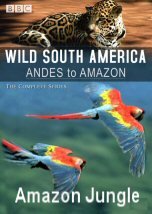
Amazon Jungle

   2005    Nature
A visit to the Amazon jungle - the world's largest rainforest and home to the widest variety of plants and animals on Earth. he diversity of life in the jungle is so great that in just two square miles scientists have counted 3,000 varieties of ants, 530 types of birds and 11 species of monkey. But despite the huge range of life that flourishes here, survival is never easy.
Series: Wild South America

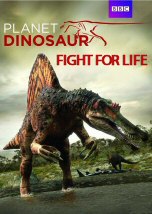
Fight for Life

   2011    Science
This episode focuses on the Jurassic period, a time when the first giant killers stalked the Earth and lurked in the seas; a time when the slightest advantage meant the difference between life and death. In North America the iconic allosaurus, an ambush hunter with a lethal bite, dominated. Not even the heavily-armoured stegosaurus was safe from this killer, and incredible evidence reveals a glimpse of a vicious battle between these two giants. Life in Jurassic oceans was no easier; in 2008, a fossil was dug out of a frozen island high in the Arctic. It was a colossal marine reptile, twice as big as most ocean predators, at 15 metres long and weighing about 45 tonnes. This was Predator X. Its skull alone was nearly twice the size of a tyrannosaurus rex's, and its bite force unmatched by anything in the Jurassic seas. The balance of power between predator and prey is a fine one, as prey continually evolves different ways to avoid predators. But for the most successful and enduring predators, the battle to survive has always been tipped in their favour
Series: Planet Dinosaur

New Giants

   2011    History
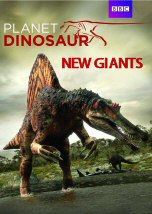
This episode of the documentary series focuses on the new giants, the heavyweights of the dinosaur world. It is only in recent years that experts have unearthed the biggest dinosaurs that ever lived. One monster eclipsed all others; more than seven times as heavy as diplodocus was the immense argentinosaurus - a single backbone was bigger than a human. For years, these giants were considered immune to attack from any predator - until the discovery of mapusaurus, a new giant killer whose fate appeared to be inextricably linked to argentinosaurus
Series: Planet Dinosaur

Congo

   2013    Nature
The very heart of Africa is covered in dense tropical rainforest. The animals that live here find the most ingenious ways to carve out their space in a claustrophobic landscape. Danger lurks in every shadow, but some animals thrive here, from honey-stealing chimps to birds with a lineage as old as the dinosaurs, thundering elephants and kick-boxing frogs. Here in the Congo, no matter how tough the competition, you must stand up and fight for yourself and your patch.
Series: Africa with David Attenborough
Pets: Wild at Heart

Pets: Wild at Heart

2015  Nature
Get Gotti

Get Gotti

2023  History
The Last Narc

The Last Narc

2020  Culture
The Story of Science

The Story of Science

2010  History
Big Oil vs The World

Big Oil vs The World

2022  Nature
Leaving Neverland

Leaving Neverland

2019  Culture
Prehistoric Planet II

Prehistoric Planet II

2023  Science