






Last Watched

"Ants"  Sort by

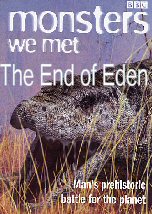
Monster we met: The End of Eden

   2006    Science
New Zealand - 850 years ago New Zealand was the last major land mass to be discovered and colonised by humans. A mere 850 years ago, Polynesian seafarers arrived in a land with no terrestrial mammals. New Zealand was a land of birds, and its avian rulers were giants: huge herbivorous moas were hunted by Haast's eagle - the largest eagle the world has ever seen. But within the space of only 100-400 years, the eagle, all the moas and over 20 other species of birds were gone. Had mankind become the monster?
Life: Challenges of Life

   2009    Nature
Four years in the making, Life will set a new benchmark in family entertainment and natural history epics. Many animals and plants go to extremes to give themselves a chance. Aerial photography reveals how bottle-nosed dolphins trap fish in a ring of mud, and time-lapse cameras show how the Venus flytrap ensnares insect victims. The strawberry frog carries a tadpole high into a tree and drops it in a water-filled bromeliad. Fledgling chinstrap penguins undertake a heroic and tragic journey through the broken ice to get out to sea. Many can barely swim and the formidable leopard seal lies in wait
Series: Life

Ants: Secret Power of the Nature

   2011    Nature
In this documentary we will be transported into the world of ants. What animal has achieved immortality? What animal is the most warlike? What animal has the greatest supercity on the planet? Not man but ants. They are the real success story. It is only their tiny size and our vanity that allows us to hold onto the myth of our supremacy. Ants rule the planet. They are found in more habitats from far northern Finland to the sweltering tropics. The largest colony known of these insects is in Japan, where 306 million ants, with 1 million queens, in 45,000 colonies spread over 270 hectares. The fiercest warriors on earth are the slave maker ants. Other ants have barracks and sentry posts to protect themselves against surprise attack.

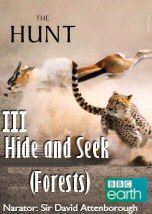
Hide and Seek. Forests

   2015    Nature
The third episode follows tigers, harpy eagles, chimpanzees, army ants and other predators as they rise to the challenge of hunting within the forest - a dense, confusing, three-dimensional world, one in which even finding prey is a maddening task. The prize for succeeding at nature's great game of hide-and-seek is one worth winning. Forests cover one third of the land surface, and concealed within are over half of the species on Earth.
Series: The Hunt

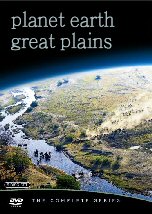
Great Plains

   2007    Nature
After filming for three years, Planet Earth finally captures the shy Mongolian gazelle. Only a handful of people have witnessed its annual migration. Don't miss the bizarre-looking Tibetan fox, captured on film for the first time. Over six weeks the team follow a pride of 30 lions as they attempt to hunt elephants. Using the latest night vision equipment, the crew film the chaotic battles that ensue at close quarters.
Series: Planet Earth

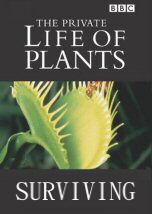
Surviving

   1995    Nature
the final episode deals with plants that live in hostile environments. Attenborough visits Ellesmere Island, north of the Arctic Circle, to demonstrate that even in a place that is unconducive to life, it can be found. Algae and lichens grow in or on rock, and during summer, when the ice melts, flowers are much more apparent. However, they must remain close to the ground to stay out of the chilling wind. In the Tasmanian mountains, plants conserve heat by growing into 'cushions' that act as solar panels, with as many as a million individual shoots grouped together as one. Others, such as the lobelia in Mount Kenya, have a 'fur coat' of dense hairs on their leaves. The saguaro cactus in the Sonoran Desert flourishes because of its ability to retain vast amounts of water, which can't be lost through leaves because it has none. Many desert dwellers benefit from an accelerated life cycle, blooming rapidly within weeks after rainfall. Conversely, Mount Roraima is one of the wettest places on Earth. It is a huge sandstone plateau with high waterfalls and nutrients are continuously washed away, so plants have to adapt their diet if they are to survive. A bladderwort is shown invading a bromeliad. Inhabitants of lakes have other problems to contend with: those that dominate the surface will proliferate, and the Amazon water lily provides an apt illustration. Attenborough ends the series with an entreaty for the conservation of plant species.
Series: The Private Life of Plants
Neanderthal

Neanderthal

  History
Untold

Untold

2021  Culture
The Last Dance

The Last Dance

2020  Culture
Life

Life

2009  Nature
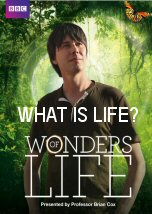
Wonders of Life

Wonders of Life

2013  Science
Neanderthal

Neanderthal

  History