Mathematician Dr Hannah Fry explores the mystery of maths. It underpins so much of our modern world that it's hard to imagine life without its technological advances, but where exactly does maths come from? Is it invented like a language or is it something discovered and part of the fabric of the universe? It's a question that some of the most eminent mathematical minds have been wrestling with. To investigate this question, Hannah goes head first down the fastest zip wire in the world to learn more about Newton's law of gravity, she paraglides to understand where the theory of maths and its practice application collide, and she travels to infinity and beyond to discover that some infinities are bigger than others. In this episode, Hannah goes back to the time of the ancient Greeks to find out why they were so fascinated by the connection between beautiful music and maths. The patterns our ancestors found in music are all around us, from the way a sunflower stores its seeds to the number of petals in a flower. Even the shapes of some of the smallest structures in nature, such as viruses, seem to follow the rules of maths. All strong evidence for maths being discovered. But there are those who claim maths is all in our heads and something we invented. To find out if this is true, Hannah has her brain scanned. It turns out there is a place in all our brains where we do maths, but that doesn't prove its invented. Experiments with infants, who have never had a maths lesson in their lives, suggests we all come hardwired to do maths. Far from being a creation of the human mind, this is evidence for maths being something we discover. Then along comes the invention of zero to help make counting more convenient and the creation of imaginary numbers, and the balance is tilted in the direction of maths being something we invented. The question of whether maths is invented or discovered just got a whole lot more difficult to answer
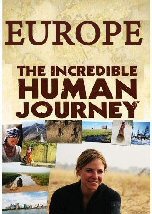
When our species first arrived in Europe, the peak of the Ice Age was approaching and the continent was already crawling with a rival: stronger, at home in the cold and even (contrary to their popular image) brainier than us. So how did the European pioneers survive first the Neanderthals and then the deep freeze as they pushed across the continent? Alice Roberts reconstructs the head of the 'first European' to come face to face with one of our ancestors; she discovers how art became crucial for survival in the face of Neanderthal competition; and what happened to change the skin colour of these European pioneers from black to white.
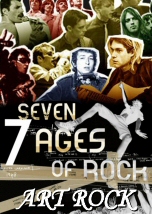
Rock became a vehicle for artistic ideas and theatrical performance. From the pop-art multi-media experiments of Andy Warhol and the Velvet Underground to the sinister gentility of Peter Gabriel's Genesis. We follow Pink Floyd from the fated art school genius of Syd Barrett through the global success of Dark Side of the Moon. The film explores the retro-futurism of Roxy Music and the protean world of David Bowie.
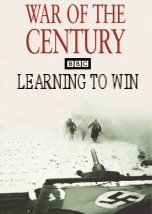
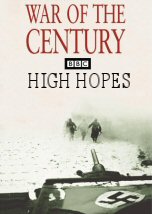
It was the bloodiest war in history, yet Hitler's brutal invasion of the Soviet Union and Stalin's subsequent fight back is surprisingly little known in the West. More than 30 million people died during Hitler and Stalin's terrible war in the East - more than in any other single war in history. With direct testimony from people who perpetrated atrocities and the victims who suffered on both sides, we bring the unspeakable to the screen and allowing victims and aggressors to tell the truth as they see it. In the first episode, we will look at Hitler's plans to invade the Soviet Union and the horror of the first months of conflict.
It is a nightmare that has stalked us for centuries: hordes of human beings transformed into mindless, cannibalistic monsters. Could this civilization-ending nightmare become reality? Scientists have discovered pathogens that turn insects into the walking dead. New strains of viruses are attacking humans every day. Mathematicians have calculated the likelihood of surviving a zombie virus outbreak: they’re not hopeful. Now neuroscientists are discovering how easy it is for us to lose conscious control of our bodies. Are we at risk of becoming puppets? If we were in the middle of a zombie apocalypse, would we even know it?
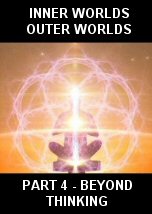
We live our lives pursuing happiness 'out there' as if it is a commodity.
We have become slaves to our own desires and craving. Happiness isn't something that can be pursued or purchased like a cheap suit. This is Maya, illusion, the endless play of form. In the Buddhist tradition, Samsara, or the endless cycle of suffering is perpetuated by the craving of pleasure and aversion to pain. Freud referred to this as the "pleasure principle." Everything we do is an attempt to create pleasure, to gain something that we want, or to push away something that is undesirable that we don't want. Even a simple organism like the paramecium does this. It is called response to stimulus. Unlike a paramecium, humans have more choice. We are free to think, and that is the heart of the problem. It is the thinking about what we want that has gotten out of control. The dilemma of modern society is that we seek to understand the world, not in terms of archaic inner consciousness, but by quantifying and qualifying what we perceive to be the external world by using scientific means and thought.
Thinking has only led to more thinking and more questions. We seek to know the innermost forces which create the world and guide its course. But we conceive of this essence as outside of ourselves, not as a living thing, intrinsic to our own nature. It was the famous psychiatrist Carl Jung who
said, "one who looks outside dreams, one who looks inside awakes." It is not wrong to desire to be awake, to be happy. What is wrong is to look for happiness outside when it can only be found inside.
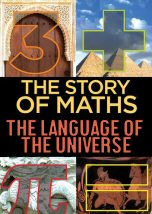
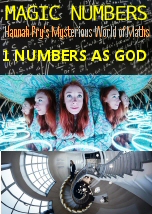



In this episode, Hannah goes back to the time of the ancient Greeks to find out why they were so fascinated by the connection between beautiful music and maths. The patterns our ancestors found in music are all around us, from the way a sunflower stores its seeds to the number of petals in a flower. Even the shapes of some of the smallest structures in nature, such as viruses, seem to follow the rules of maths. All strong evidence for maths being discovered. But there are those who claim maths is all in our heads and something we invented. To find out if this is true, Hannah has her brain scanned. It turns out there is a place in all our brains where we do maths, but that doesn't prove its invented.
Experiments with infants, who have never had a maths lesson in their lives, suggests we all come hardwired to do maths. Far from being a creation of the human mind, this is evidence for maths being something we discover. Then along comes the invention of zero to help make counting more convenient and the creation of imaginary numbers, and the balance is tilted in the direction of maths being something we invented. The question of whether maths is invented or discovered just got a whole lot more difficult to answer