





Last Watched

"Eve"  Sort by

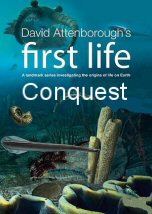
Conquest

   2010    Science
Attenborough's journey continues in Canada's Rocky Mountains, where fossils document an explosion in animal diversity never seen before or since. Travelling from there to North Africa, the rainforests of Australia and the east coast of Scotland, Attenborough discovers how animals evolved to conquer not only the oceans but also the land and air. These remote and fascinating creatures are brought to life as never before with the help of cutting-edge scientific technology and photorealistic visual effects. From the first large predators to the first legs on land, these were creatures that evolved the traits and tools that allow all animals, including ourselves, to survive to this day.
Series: First Life
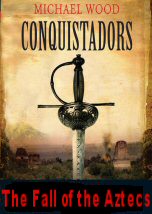
Conquistadors: The Fall of the Aztecs

   2002    History
Hernan Cortes left Cuba in 1519 seeking riches in the island to the west. Instead he discovered, and ultimately destroyed, a hitherto unknown civilization. Join Micheal Wood as he retraces this fateful expedition. Read Spanish eyewitness accounts that describe the conquistadors' awe at the Aztec achievements and the lust for native treasure. Learn the Aztec' side of the story by scrolling trough pictographs that tell of the agonizing fall of the empire.
Series: Conquistadors

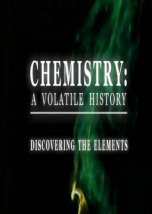
Chemistry: Discovering the Elements

   2010    Science
Just 92 elements made up the world, but the belief that were only four - earth, fire, air and water - persisted until the 19th Century. Professor Al-Khalili retraces the footsteps of the alchemists who first began to question the notion of the elements in their search for the secret of everlasting life.He reveals the red herrings and rivalries which dogged scientific progress, and explores how new approaches to splitting matter brought us both remarkable elements and the new science of chemistry.
Series: Chemistry

Atom: The Clash of Titans

   2007    Science
Author and nuclear physicist Professor Jim Al-Khalili looks at what led to the discovery that everything is made of atoms. The programme looks at how the discovery affected the scientific world including the atomic energy theories of Albert Einstein and Werner Heisenberg and quantum mechanics
Series: Atom

Ants: Secret Power of the Nature

   2011    Nature
In this documentary we will be transported into the world of ants. What animal has achieved immortality? What animal is the most warlike? What animal has the greatest supercity on the planet? Not man but ants. They are the real success story. It is only their tiny size and our vanity that allows us to hold onto the myth of our supremacy. Ants rule the planet. They are found in more habitats from far northern Finland to the sweltering tropics. The largest colony known of these insects is in Japan, where 306 million ants, with 1 million queens, in 45,000 colonies spread over 270 hectares. The fiercest warriors on earth are the slave maker ants. Other ants have barracks and sentry posts to protect themselves against surprise attack.

Can We Make a Star on Earth

   2009    Technology
Could nuclear fusion hold the answers to the energy crisis? It is the process that has forged all matter in the universe. It lights the stars and it is what transformed the lighter atoms that formed in the Big Bang into heavier atoms. In Can We Make a Star on Earth?, Brian Cox peers beyond the glare of our Sun to reveal the hidden forces that provide its power. He discovers how this fusion energy has kept our closest star burning for five billion years. Brian believes humanity must build a star on Earth to ensure survival. Will scientists be able to harness fusion power and achieve abundant, cheap, clean energy?
Leaving Neverland

Leaving Neverland

2019  Culture
Life in the Undergrowth

Life in the Undergrowth

2005  Nature
Wings

Wings

  Nature
The Crime of the Century

The Crime of the Century

2021  Medicine
The Cell

The Cell

  Science
Clarkson Farm 4

Clarkson Farm 4

2021  Nature
Magic Numbers

Magic Numbers

2018  Science