The series, depicted by state of the art CGI techniques, and applying the laws of life on Earth to the rest of the galaxy, blends fact with science fiction and conceptualizes what alien life might be like on other planets. In the prologue, astronomer Didier Queloz makes an appearance to discuss the discoveries of exoplanets and how they are analyzed in the real world. In Episode 1, the fictional world imagined is Atlas, a world with higher gravity than Earth and a thicker atmosphere leading to airborne creatures. In explaining the aliens of Atlas, the episode also explores the handicap principle in insects, and shows a rehabilitative form of falconry as captive falcons are trained to live in the wild.
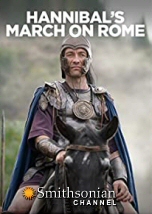
Even 2,000 years after his death, General Hannibal's battle strategies are still studied today. But of all his military feats, perhaps his greatest was leading his massive Carthaginian army of men and three-dozen elephants across the Alps and into the heartland of Rome in 218 B.C. Until now, the route they took has been a matter of dispute, but thanks to modern-day technology, geomorphologist Bill Mahaney and microbiologist Chris Allen believe they've accurately traced this ancient journey.
In 1799, the German scientist Alexander von Humboldt embarked on a perilous journey of discovery across South America. It would take him to the deepest jungle near the Orinoco and to the heights of the Andes. His aim was twofold: to conduct the first scientific survey of South America and to discover how the natural world actually works — at a time when most scientists believed that the world was created less than 6,000 years ago. He later became a leading scientific figure and champion of the abolitionist movement in the US. This extremely visual docudrama follows Humboldt’s extraordinary path. Travelling in Humboldt’s footsteps is historian Andrea Wulf, whose book on Humboldt became a worldwide bestseller. For good reason, since Humboldt’s ideas on the planet’s fragile web of life are as important today as they were 220 years ago.
On 5th July 1984, Diego Maradona arrived in Naples for a world-record fee and for seven years. The world's most celebrated football genius and the most dysfunctional city in Europe were a perfect match for each other. Maradona was blessed on the field but cursed off it; the charismatic Argentine, quickly led Naples to their first-ever title. It was the stuff of dreams. But there was a price... Diego could do as he pleased whilst performing miracles on the pitch, but when the magic faded he became almost a prisoner of the city. The film is constructed from over 500 hours of never-before-seen footage from Maradona's personal archive and is a high-end and definitive feature documentary made with the full support of Maradona. In a city where the devil would have needed bodyguards, Maradona became bigger than God himself. This is the wild and unforgettable story of God-given talent, glory, despair and betrayal, of corruption and ultimately redemption.
Astronomers are giving us astonishing news, visual proof of the reality of black holes. Stunning new findings are overturning conventional theories. The most common vision of black holes is that they are monstrous and mysterious bodies swallowing everything around them. However, the latest discoveries are drawing a link between black holes and the existence of life. A startling new picture is emerging. The existence of black holes is what made life on Earth possible.
Timothy Treadwell's death was as sensational as his life: Having presumed he could live safely among the grizzly bears of the Alaskan wilderness, the outdoorsman and author (Among Grizzlies)--along with his partner, Amie Huguenard--was eventually killed and devoured by one of the very animals to whom he had devoted years of study. In telling this story, Werner Herzog relies considerably on Treadwell's own video footage, shot during his time in the wild. The famed German director takes Treadwell's story into unexpected emotional frontiers and startling landscapes of the mind. Treadwell is an intriguing, infuriating, perhaps even tragic figure. But Herzog himself is equally compelling, and this brilliant film is just one reason why.










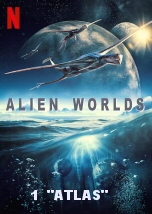




In the prologue, astronomer Didier Queloz makes an appearance to discuss the discoveries of exoplanets and how they are analyzed in the real world. In Episode 1, the fictional world imagined is Atlas, a world with higher gravity than Earth and a thicker atmosphere leading to airborne creatures. In explaining the aliens of Atlas, the episode also explores the handicap principle in insects, and shows a rehabilitative form of falconry as captive falcons are trained to live in the wild.