The 8th episode reviews Giovanni Cassini's life. His observations of Saturn and its moons would have an enduring effect on the scientific world. Neil deGrasse Tyson also narrates the mysterious untold story of the scientist who figured out how to go the Moon while fighting for his life in a WWI trench. Aleksandr Shargei changed his name to Yuri Kondratyuk out of fear for his life and wrote a manuscript on rocket motion and space colonization. This letter would end up capturing the attention of an engineer working on the Apollo program, John Houbolt, and would made the Apollo Mission possible. We will also know the saga of the twenty-year long odyssey of Cassini-Huygens spacecraft, a robotic explorer ordered to commit suicide on another world.
Inside the heart of the atom, its nucleus houses energy. This hidden treasure was forged billions of years ago in distant stellar furnaces. The secret of starlight is nothing to fool with. It can bring a civilization to life and it can burn it to the ground. Two atoms from different parts of the universe meet on a small planet. A deadly embrace between science and state altered the fate of the world and a gripping cautionary tale of others who grew used to living in the shadow of grave danger until it killed them all except one.
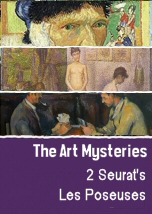
Hanging in the Barnes Foundation in Philadelphia, Seurat’s Les Poseuses is probably his least-known painting. It is also a picture brimming with codes and hidden meanings. It shows three nudes in the artist’s studio, but included in the background is Seurat’s famous masterpiece, A Sunday Afternoon on the Island of La Grande Jatte. Why is it there? What is it trying to say? Why two pictures at once? Waldemar Januszczak investigates.
When Homo sapiens, which means 'wise ones,' discovered and controlled fire hundreds of thousands of years ago, everything changed. Fire allowed us to cook food and heat dwellings, and it served as a focal point for storytelling and sharing cultural identity among community members. We don't yet have established parameters for what it means to be 'distinctly human,' It would seem the only thing that separates us from other animals, Neil deGrasse Tyson ponders, is our neurotic need to feel 'special'. Against the backdrop of the Halls of Extinction, Tyson insists that there must be a clear distinction between ourselves and animals that justifies our eating them, wearing them and even bringing an end to their species. From the birth of the devil in ancient Persia to a searing story of saintliness among macaque monkeys, this episode is an exploration of human potential for change. It concludes with the story of how one of history's greatest monsters was transformed into one of its shining lights.
It's this moment where now both sides realize that no quarter will be asked, and no quarter will be given. Surrender is no longer even an option. You're in this to the end. You either die or you triumph, and there is no other alternative. Amid a spiral of brutality and low morale, Mehmed makes Giustiniani an enticing offer. The grand vizier urges Mehmed to seek a truce with his rival.
Hours before Mehmed II launches his final assault, an ominous sight shakes both sides. Rumors of a 40-ship fleet's imminent arrival have swirled for weeks, but it's exact whereabouts remained unknown. Ottoman cannons reduced the city walls to rubble, and Venetian reinforcements arrived too late. The conquest of Constantinople ushers in a new era for the Ottoman Empire, being a dominant force in world politics for 300 years. Mehmed II, in many senses, changed the nature of world history.









We will also know the saga of the twenty-year long odyssey of Cassini-Huygens spacecraft, a robotic explorer ordered to commit suicide on another world.