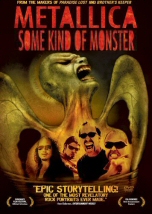
An examination of the heavy metal music subculture that tries to explain why, despite the longevity and popularity of the genre, fans are marginalized and ridiculed for their passion. Sam Dunn is a anthropologist and a lifelong metal fan. After years of studying diverse cultures, Sam turns his academic eye a little closer to home and embarks on an epic journey into the heart of heavy metal. His mission: to figure out why metal music is consistently stereotyped, dismissed and condemned, even while the tribe that loves it stubbornly holds its ground -- spreading the word, keeping the faith and adopting styles and attitudes that go way beyond the music. Sam visits heavy metal landmarks as far flung as L.A.'s Sunset Strip, the dirty streets of Birmingham and the dark forests of Norway. Along the way, the two sides of Sam Dunn -- curious anthropologist and rabid fan -- collide, as Sam explores metal's obsession with sex, religion, violence and death, meets his heroes, and discovers some things about the culture that even he can't defend.
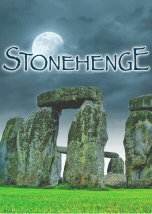
Stonehenge was shaped over centuries, but to what purpose? Was it a temple to the sun, or the moon, an astronomical calendar, or a shrine to dead ancestors? Now Stonehenge may be about to give up some of its secrets. For the first time in nearly half a century a new archaeological dig the sacred stone circle. And the men who are leading the excavation are well aware of the significance of this moment. The film exposes an investigation into a radical theory that Stonehenge, far from being a place of burial as is commonly assumed, was in fact a place of healing. The investigation takes in forensic testing of bones excavated over the past decades and hard-won permission for the first dig in 50 years at the Henge, watched live online by millions of viewers around the world. Does the theory of the healing stones bear up to modern-day forensic science?
Professor Jim Al-Khalili looks at how we have created machines that can simulate, augment, and even outperform the human mind - and why we shouldn't let this spook us. He reveals the story of the pursuit of AI, the emergence of machine learning and the recent breakthroughs brought about by artificial neural networks. He shows how AI is not only changing our world but also challenging our very ideas of intelligence and consciousness.
Along the way, we'll investigate spam filters, meet a cutting-edge chatbot, look at why a few altered pixels makes a computer think it's looking at a trombone rather than a dog and talk to Demis Hassabis, who heads DeepMind and whose stated mission is to 'solve intelligence, and then use that to solve everything else'. Stephen Hawking remarked 'AI could be the biggest event in the history of our civilisation. Or the worst'. Jim argues that AI is a potent new tool that should enhance our lives, not replace us.
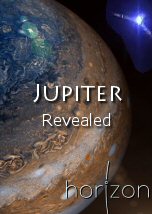
This documentary journeys with the scientists into the heart of a giant. Juno is the Nasa mission designed to peer through Jupiter's swirling clouds and reveal the wonders within. By projecting a 70-foot-wide, life-size Juno on a Houston rooftop, Scott Bolton, head of Juno, shows us how its fragile electronics are encased in 200kg of titanium. As Scott puts it, 'we had to build an armoured tank to go there.' Professor Andrew Ingersoll, Juno's space weatherman, reveals they have seen lightning inside Jupiter, perhaps a thousand times more powerful than Earth's lightning. This might be evidence for huge quantities of water inside Jupiter. Under the extreme conditions of Jupiter thousands of miles under the surface, hydrogen becomes a liquid metal. Juno is finding out how much liquid metallic hydrogen is inside Jupiter, and scientists hope to better understand how this flowing metal produces the most powerful aurora in the Solar System. But what is at Jupiter's heart? In Nice, Prof Tristan Guillot explains how Juno uses gravity to map the planet's centre. This can take scientists back to the earliest days of the solar system, because Jupiter is the oldest planet and it should contain clues to its own creation. By chalking out an outline of the Jupiter, Tristan reveals there is a huge rocky core - perhaps ten times the mass of Earth.
Told by the activists and leaders who live and breathe this movement for justice, Whose Streets? is an unflinching look at the Ferguson uprising. When unarmed teenager Michael Brown is killed by police and left lying in the street for hours, it marks a breaking point for the residents of St. Louis, Missouri. Grief, long-standing racial tensions and renewed anger bring residents together to hold vigil and protest this latest tragedy. Empowered parents, artists, and teachers from around the country come together as freedom fighters. As the national guard descends on Ferguson with military grade weaponry, these young community members become the torchbearers of a new resistance. Whose Streets? is a powerful battle cry from a generation fighting, not for their civil rights, but for the right to live.
The film looks at one of the most critical questions facing the world today-that of food security-and demonstrates the desperate need for common sense, solid information, and calm logical deliberation. Using the often angry and emotional controversy over genetically-modified foods as its entry point, Food Evolution shows how easily fear and misinformation can overwhelm objective, evidence-based analysis. Food Evolution takes the position that science and scientists hold the key to solving the food crisis. But whose science? In the GMO debate, both sides claim science is on their side. Who's right? How do we figure this out? What does this mean for the larger issues of food security, sustainability, and environmental well-being? Food Evolution seeks to answer these critically important questions.




















Sam Dunn is a anthropologist and a lifelong metal fan. After years of studying diverse cultures, Sam turns his academic eye a little closer to home and embarks on an epic journey into the heart of heavy metal. His mission: to figure out why metal music is consistently stereotyped, dismissed and condemned, even while the tribe that loves it stubbornly holds its ground -- spreading the word, keeping the faith and adopting styles and attitudes that go way beyond the music.
Sam visits heavy metal landmarks as far flung as L.A.'s Sunset Strip, the dirty streets of Birmingham and the dark forests of Norway. Along the way, the two sides of Sam Dunn -- curious anthropologist and rabid fan -- collide, as Sam explores metal's obsession with sex, religion, violence and death, meets his heroes, and discovers some things about the culture that even he can't defend.