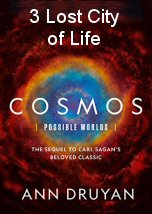
In episodes 3 and 4, a seemingly simple ingredient becomes the invisible force that has shaped civilizations, fueled exploration, and quietly dictated the fate of empires. From ancient trade routes to modern industry, salt emerges not just as a seasoning, but as a powerful driver of human history and survival. At the same time, the story shifts to something far more familiar yet equally unsettling: the global dominance of a single type of banana. What appears to be abundance hides a fragile system built on uniformity, where one disease could wipe out a staple food relied upon by millions. As the journey unfolds, the narrative exposes the hidden cost of convenience and monoculture, revealing how the loss of biodiversity is not a distant ecological concern but an immediate threat to our food security and future. With striking connections between past and present, these episodes invite you to rethink what you eat, where it comes from, and how something as ordinary as salt or a banana could hold the key to understanding the balance—and imbalance—of our world.
A new chapter unfolds as the series returns with Season 4, continuing its intimate and authentic look at young adults on the autism spectrum navigating love in today’s world. This season brings back familiar faces alongside new participants, expanding the emotional depth and diversity of experiences. With a stronger focus on independence, communication, and real-life expectations, the journey feels more personal than ever. Each story highlights the courage it takes to open up, face rejection, and keep believing that meaningful connection is possible. In the first three episodes, Connor steps back into dating with growing confidence, while James explores new opportunities to meet someone, balancing humor with genuine vulnerability. Madison embraces new romantic experiences, bringing her warmth and optimism into every encounter. Among the newcomers, Logan begins his search for a partner with determination, Emma navigates the uncertainty of first dates, and Dylan takes early steps toward building confidence in social situations. From first impressions to emotional breakthroughs, these episodes offer a clear and engaging look at the challenges and small victories that define the path to love.
In Episodes 4 and 5 you’ll dive deeper into the emotional journeys as relationships begin to take shape and expectations meet reality. Connor continues building confidence as he navigates new dating opportunities, while James faces both hopeful moments and the frustration of not finding the right connection yet. Madison explores more meaningful interactions, showing both excitement and vulnerability as she opens herself up to love. At the same time, the newer participants begin to reveal their true personalities through real experiences. Logan pushes himself beyond his comfort zone in search of a genuine bond, Emma faces the emotional ups and downs of dating, and Dylan starts to gain confidence as he learns from each encounter. These episodes highlight honest conversations, small breakthroughs, and the unpredictability of relationships, making every moment feel real, relatable, and deeply engaging.
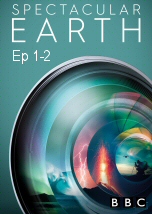
An extraordinary journey into the powerful natural forces that shape our planet, this visually stunning documentary series reveals how extreme weather, oceans, landscapes, and atmospheric phenomena combine to create some of Earth’s most spectacular events. Using breathtaking aerial footage and immersive close-up filming, the series brings viewers closer than ever to the beauty, danger, and raw power of nature. In the first two episodes, the documentary explores the spectacular lightning storms of Arizona, the giant waves of Nazaré, the power of storm clouds, hail, downbursts and tornado-like winds, the ocean forces that build monstrous waves, the cloud ‘tablecloth’ over Table Mountain in Cape Town, and the rare circular rainbows at Victoria Falls. It is a journey through extreme weather, dramatic locations and the hidden natural forces that create some of the most spectacular scenes on Earth.
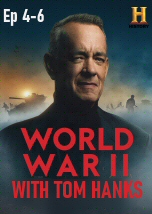
In these three episodes, we see how Japan’s war in China, U.S. sanctions, and the desperate search for vital resources push the Pacific toward a decisive breaking point. Driven by military ambition and imperial ideology, Japan launches the attack on Pearl Harbor, shocking the world and bringing America fully into World War II. From that moment, the conflict becomes a vast struggle across oceans, supply lines, naval codes, aircraft carriers, submarines, and nations fighting for survival. The story then moves into the brutal battle for control of the seas, where German U-boats threaten Britain’s lifeline in the Atlantic while Japan’s powerful navy tries to dominate the Pacific. After Pearl Harbor, Japanese forces sweep through Southeast Asia with alarming speed, but on Guadalcanal their advance meets fierce resistance. In the jungle, at sea, and in the air, U.S. Marines face exhaustion, fear, and relentless combat in one of the first great tests of America’s resolve in the Pacific.
In episodes 9 and 10 of this series, the war moves from the secrecy of codebreaking rooms to one of the most brutal battlefields in history. Far from the front lines, in the quiet English countryside, a hidden struggle unfolds at Bletchley Park, where brilliant mathematicians, linguists and intelligence officers race to crack Germany’s Enigma code. Every intercepted message could save ships, reveal enemy plans and alter the fate of entire campaigns, turning silence, patience and genius into weapons as powerful as tanks or bombers. The story then shifts to the Eastern Front, where Hitler launches Operation Blue in a desperate drive toward the Soviet oil fields and the city of Stalingrad. What begins as a strategic offensive becomes a nightmare of street-by-street combat, starvation, freezing conditions and unimaginable sacrifice. As German forces are pulled deeper into the ruins and Soviet resistance hardens, Stalingrad becomes more than a battle for a city; it becomes a turning point in World War II, where ambition, endurance and catastrophe collide on a scale that changed the course of the war.













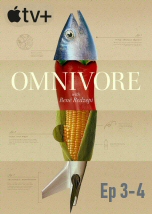





As the journey unfolds, the narrative exposes the hidden cost of convenience and monoculture, revealing how the loss of biodiversity is not a distant ecological concern but an immediate threat to our food security and future. With striking connections between past and present, these episodes invite you to rethink what you eat, where it comes from, and how something as ordinary as salt or a banana could hold the key to understanding the balance—and imbalance—of our world.