The 2016 Reebok CrossFit Games were a gruelling five-day, 15-event test to find the fittest man and woman on Earth. The film follows the dramatic story of the top athletes who qualified and competed and offers an inside look at what it takes to be among the world's elite athletes, both in training and on the competition floor. The CrossFit Games challenge competitors to perform intense physical tasks, but the hardest part is sometimes mental. Athletes often learn the details of the events only minutes before they begin, and everyone handles the pressure differently. Which of these fierce competitors will rise to the top and earn the title of Fittest on Earth?
In just half a century, the human population has doubled to 7.4 billion, and during that time, astronaut and satellite photos have been capturing the startling changes on our planet. See how humans have made their mark reshaping the planet in our quest for new sources of food, power, and shelter. From glimmering new megacities like Shenzhen, China to areas affected by climate change like Mt. Kilimanjaro and Florida, witness Earth's changing look--the spectacular and the shocking--from 250 miles up.
Chris Packham goes on an investigative journey into the mysteries of planet Earth's super predator - Tyrannosaurus rex. The latest groundbreaking paleontological discoveries combined with studies of modern animals are redefining this iconic dinosaur. Tackling everything from the way he looked, moved, socialized - even down to his terrifying roar - Chris strips away Hollywood myths to uncover the amazing truth, and utilizing the latest CGI wizardry, he rebuilds the most authentic T rex ever seen from the bones up.
Professor Brian Cox concludes his exploration of our place in the universe by asking what next for the ape that went to space. Our future is far from certain. In Florida, Brian joins the latest efforts to protect Earth from potential catastrophic events. He joins a team of Nasa astronauts who are training for a future mission to an asteroid - should we ever discover one coming our way - under 30 feet of water in a submerged laboratory that simulates space. It is just one example of how, for our long-term survival, space exploration may well be vital. It is a view shared by Apollo 16 astronaut Charlie Duke, who tells Brian what it was like to escape the confines of the planet. It is a dream that both Nasa and now commercial companies share as they race to get humans back into deep space. But space travel, like every leap our civilisation has ever made, requires energy. Here too, scientists are hard at work attempting to safeguard our future. At the National Ignition Facility in California, Brian witnesses the world's most successful fusion experiment in action. He believes that if their mission succeeds, our civilisation will have unlocked a way to the stars that will not destroy the planet in the process. Brian concludes by returning to the top of the world in Svalbard, where he gains access to our civilisation's greatest treasure, locked away in a vault buried deep in the permafrost.
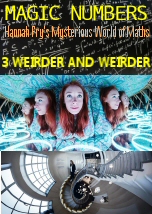
Dr Hannah Fry explores a paradox at the heart of modern maths, discovered by Bertrand Russell, which undermines the very foundations of logic that all of maths is built on. These flaws suggest that maths isn't a true part of the universe but might just be a human language - fallible and imprecise. However, Hannah argues that Einstein's theoretical equations, such as E=mc2 and his theory of general relativity, are so good at predicting the universe that they must be reflecting some basic structure in it. This idea is supported by Kurt Godel, who proved that there are parts of maths that we have to take on faith. Hannah then explores what maths can reveal about the fundamental building blocks of the universe - the subatomic, quantum world. The maths tells us that particles can exist in two states at once, and yet quantum physics is at the core of photosynthesis and therefore fundamental to most of life on earth - more evidence of discovering mathematical rules in nature. But if we accept that maths is part of the structure of the universe, there are two main problems: firstly, the two main theories that predict and describe the universe - quantum physics and general relativity - are actually incompatible; and secondly, most of the maths behind them suggests the likelihood of something even stranger - multiple universes. We may just have to accept that the world really is weirder than we thought, and Hannah concludes that while we have invented the language of maths, the structure behind it all is something we discover. And beyond that, it is the debate about the origins of maths that has had the most profound consequences: it has truly transformed the human experience, giving us powerful new number systems and an understanding that now underpins the modern world.
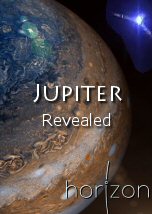
This documentary journeys with the scientists into the heart of a giant. Juno is the Nasa mission designed to peer through Jupiter's swirling clouds and reveal the wonders within. By projecting a 70-foot-wide, life-size Juno on a Houston rooftop, Scott Bolton, head of Juno, shows us how its fragile electronics are encased in 200kg of titanium. As Scott puts it, 'we had to build an armoured tank to go there.' Professor Andrew Ingersoll, Juno's space weatherman, reveals they have seen lightning inside Jupiter, perhaps a thousand times more powerful than Earth's lightning. This might be evidence for huge quantities of water inside Jupiter. Under the extreme conditions of Jupiter thousands of miles under the surface, hydrogen becomes a liquid metal. Juno is finding out how much liquid metallic hydrogen is inside Jupiter, and scientists hope to better understand how this flowing metal produces the most powerful aurora in the Solar System. But what is at Jupiter's heart? In Nice, Prof Tristan Guillot explains how Juno uses gravity to map the planet's centre. This can take scientists back to the earliest days of the solar system, because Jupiter is the oldest planet and it should contain clues to its own creation. By chalking out an outline of the Jupiter, Tristan reveals there is a huge rocky core - perhaps ten times the mass of Earth.













The CrossFit Games challenge competitors to perform intense physical tasks, but the hardest part is sometimes mental. Athletes often learn the details of the events only minutes before they begin, and everyone handles the pressure differently. Which of these fierce competitors will rise to the top and earn the title of Fittest on Earth?