




Last Watched

"Hun"  Sort by

Ice Age Giants: Land of the Sabre-Tooth

   2013    Science
Professor Alice Roberts journeys 40,000 years back in time on the trail of the great beasts of the Ice Age. Drawing on the latest scientific detective work and a dash of graphic wizardry, we bring the Ice Age Giants back to life. The series begins in the 'land of the sabre-tooth'; North America, a continent that was half covered by ice that was up to two miles thick. Yet this frozen land also boasted the most impressive cast of Ice Age giants in the world. Across locations such as the Grand Canyon, the sands of Arizona and the coast of California, Alice traces the movements of Ice Age beasts like bear-sized sloths, vast mammoths and the strange beast known as the glyptodon. These leviathans all have one thing in common: they were stalked by the meanest big cat that ever prowled the Earth, armed with seven-inch teeth and hunting in packs - Smilodon fatalis, the sabre-toothed cat.
Series: Ice Age Giants
Lost Kingdoms of South America: People of the Clouds

   2013    History
Dr Jago Cooper reveals the history of some of South America's ancient civilisations. He begins with an epic journey into the remote Peruvian Andes in search of the mysterious Chachapoya people. Once numbering half a million, they were known as the 'People of the Clouds'. Dr Cooper reveals how they developed sophisticated methods of recording stories, traded in exotic goods found hundreds of miles from their territory, and had funeral traditions that challenge assumptions about ancient human behaviour. His search for evidence takes him to astonishing cliff tombs untouched for 500 years and one of the most spectacular fortresses in South America, where the fate of the Chachapoya is revealed.
Series: Lost Kingdoms of South America

Charles Darwin and the Tree of Life

   2009    Science
David Attenborough asks three key questions: how and why did Darwin come up with his theory of evolution? Why do we think he was right? And why is it more important now than ever before? David starts his journey in Darwin's home at Down House in Kent, where Darwin worried and puzzled over the origins of life. David goes back to his roots in Leicestershire, where he hunted for fossils as a child, and where another schoolboy unearthed a significant find in the 1950s. And he revisits Cambridge University, where both he and Darwin studied, and where many years later the DNA double helix was discovered, providing the foundations for genetics. At the end of his journey in the Natural History Museum in London, David concludes that Darwin's great insight revolutionised the way in which we see the world. We now understand why there are so many different species, and why they are distributed in the way they are. But above all, Darwin has shown us that we are not set apart from the natural world, and do not have dominion over it. We are subject to its laws and processes, as are all other animals on earth to which, indeed, we are related.

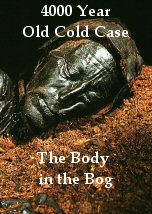
4000 Year Old Cold Case: The Body in the Bog

   2013    History
A 4000-year-old body is found preserved in an Irish peat bog, in Cashel, Ireland. To scientists and historians, it could offer brand new clues to solve an ancient mystery: the hundreds of bodies found mummified in the boglands of Northern Europe. Now, will Cashel Man help prove the theory these Irish victims were ancient kings? And what clues can the bog bodies of Europe offer to explain our ancestors' most macabre tradition - ritual murder? Meanwhile, that question could be answered by the bog itself.

Foreigners in their Own Land

   2013    History
One hundred years after Columbus' arrival in the Caribbean, Spanish Conquistadors and Priests, push into North America in search of gold and to spread Catholicism. With the arrival of the British in North America, the two colonial systems produce contrasting societies that come in conflict as Manifest Destiny pushes the U.S into the Mexican territories of the South West. As the Gold Rush floods California with settlers, complex and vital communities are overwhelmed. The elites, including Mariano Vallejo and Apolinaria Lorenzana lose their land. Mexicans and Mexican Americans are treated as second-class citizens, facing discrimination and racial violence. Resistance to this injustice appears in New Mexico as Las Gorras Blancas (The White Caps), burn Anglo ranches and cut through barbed wire to prevent Anglo encroachment. At the same time, New Mexicans manage to transform themselves through education, managing to preserve Hispano culture in New Mexico and their standing in the midst of an era of conquest and dispossession.
Series: Latino Americans

Cosmos Carl Sagan: The Shores of the Cosmic Ocean

   1980    Science
Carl Sagan opens the program with a description of the cosmos and the Spaceship of the Imagination. The ship journeys through the universe's hundred billion galaxies, the Local Group, the Andromeda Galaxy, the Milky Way, the Orion Nebula, our Solar System, and finally the planet Earth. Eratosthenes' successful calculation of the circumference of Earth leads to a description of the ancient Library of Alexandria. Finally, the Ages of Science are described, before pulling back to the full span of the Cosmic Calendar.
Series: Cosmos