

Last Watched

"Germany"  Sort by

The Wehrmacht The Blitzkrieg

   2007    History
What was the Wehrmacht? A group of obedient yeasayers? A murdering band of thugs? An army of millions of abused young men? This series in 5 parts provides differentiated and conclusive answers based on the latest historical and comprehensive investigative research, bringing many new facts to light – among them documents proving for the first time ever, what many among the officers actually thought. Blitzkrieg, the lightning war, in German incorporate modern weapons and vehicles as a method to help avoid the stalemate of trench warfare and linear warfare in future conflicts. The first practical implementations of these concepts coupled with modern technology were instituted by the Wehrmacht in the opening theatres of World War II. The strategy was particularly effective to Germany in the invasions of Western Europe and initial operations in the Soviet Union. These operations were dependent on surprise penetrations, general enemy unpreparedness and an inability to react swiftly enough to German offensive operations.
Series: The Wehrmacht
How to Stay Young The Body

   2016    Medicine
Angela Rippon and Dr Chris van Tulleken travel the world in search of the latest science that could help us all stay young and healthy for longer. They investigate the best ways to help both our bodies and brains age better. Up first is the body, and Angela travels to Germany to join a groundbreaking study which reveals the exercise that holds off ageing the most. Chris visits America to find out about the unexpected diet that can add years to our lives. And in Ecuador we meet a seventeen-year-old who looks like a child to discover how scientists hope he may hold the key to preventing the diseases of ageing.
Series: How to Stay Young

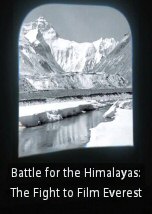
Battle for the Himalayas: The Fight to Film Everest

   2015    History
Between the 1920s and the 1960s the world's great powers sent vast military-style expeditions to conquer the peaks of the Himalayas, with Everest at their head. This was a great game played - camera in hand - by Imperial Britain, Nazi Germany and superpower America. As a result, Himalayan mountaineering's most iconic, epic and tragic moments didn't just go down in history, but were caught on film - from the deaths of Mallory and Irvine on Everest in 1924, to Everest's final conquest in 1953 by Hillary and Tensing. Using footage never before seen on British television, this is the story how of how film-makers turned the great peaks into great propaganda.

Caligula

   2013    History
Two thousand years ago one of history's most notorious individuals was born. Professor Mary Beard embarks on an investigative journey to explore the life and times of Gaius Julius Caesar Augustus Germanicus - better known to us as Caligula. Caligula has now become known as Rome's most capricious tyrant, and the stories told about him are some of the most extraordinary told about any Roman emperor. He was said to have made his horse a consul, proclaimed himself a living God, and indulged in scandalous orgies - even with his own three sisters - and that's before you mention building vast bridges across land and sea, prostituting senators' wives and killing half the Roman elite seemingly on a whim. All that in just four short years in power before a violent and speedy assassination in a back alley of his own palace at just 28-years-old." But how much of his story is true? Travelling across the Roman world - from Germany and Capri in the bay of Naples to the astonishing luxury of his life in imperial Rome - Mary attempts to peel away the myths. Some stories are difficult to get to the bottom of as they were written by hacks long after his death, but there is plenty of surviving evidence where the 'real' Caligula can be glimpsed. Such as in the extraordinary luxury of his private yachts outside Rome; in the designs he chose for his coins when he became Emperor; in an eye-witness account of Caligula's withering humour written in 41AD; the trial documents covering the mysterious death of his father when he was just seven-years-old; and even in a record of his imperial slaves - from the palace spy to his personal trainer. Piecing together the evidence, Mary puts Caligula back into the context of his times to reveal an astonishing story of murder, intrigue and dynastic family power. Above all, she explains why Caligula has ended up with such a seemingly unredeemable reputation. In the process, she reveals a more intriguing portrait of not just the monster, but the man.

The Art of Germany: A Divided Land

   2010    Art
Andrew Graham-Dixon begins his exploration of German art by looking at the rich and often neglected art of the German middle ages and Renaissance. He visits the towering cathedral of Cologne, a place which encapsulates the varied and often contradictory character of German art. In Munch he gets to grips with the earliest paintings of the Northern Renaissance, the woodcuts of Albrecht Durer and the cosmic visions of the painter Albrecht Altdorfer. Andrew also embarks on a tour of the Bavarian countryside, discovering some of the little-known treasures of German limewood sculpture.
Series: The Art of Germany

Hitler and the Occult

   2007    History
How did Hitler decide he was a messiah and persuade a whole nation to follow him to damnation? This is a subject that has been mined many times in fiction - Raiders Of The Lost Ark, Constantine, Hellboy, Bulletproof Monk and English horror writer James Herbert's book The Spear - as well as documentary. Based on Ken Anderson's 1995 book of the same name, this aims to show how the Nazi party was originally made up of several occult groups that believed a messiah was on the way to save Germany.