Comet ISON can well be the brightest and most spectacular comet for a generation. It appeared above the eastern horizon from December 2013 as a glorious streak across the sky. ISON has been travelling towards the sun for ten thousand years and will make only one orbit through its corona before disappearing off into the outer solar system. But as well as providing a great spectacle, ISON's tail of vaporised gas and water, hundreds of millions of kilometres long, will give insights into some of the greatest mysteries of science; it will help explain the origins of the solar system, whether earth's water was delivered on comets and even whether we are alone in the universe.
Take a look at the issues that will change the way we live our lives in the future. Hannah Fry delves into the data we have today to provide an evidence-based vision of tomorrow. With the help of science experts Hannah tries to discover whether we could ever live forever or if there will ever be a cure for cancer. She finds out how research into the human brain may one day help with mental health, and if it is possible to ever ditch fossil fuels. Hannah and her guests also discover the future of transport - and when, if ever, we really will see flying cars. She discovers whether a robot will take your job or if, as some believe, we will all one day actually become cyborgs. The programme predicts what the weather will be like and discovers if we are on the verge of another mass extinction. Hannah's tenth prediction is something she - and Horizon - are confident will definitely happen, and that is to expect the unexpected!
For decades some have suspected that there might be others out there, intelligent beings capable of communicating with us, even visiting our world. It might sound like science fiction, but today scientists from across the globe are scouring the universe for signals from extraterrestrials. Horizon obtained exclusive access to film researchers at the Green Bank Telescope searching for radio signals from Tabby's Star, a star so mysterious that some scientists believe it might be surrounded by a Dyson Sphere, a vast energy collector built by advanced aliens.
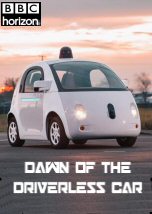
The car has shrunk the world, increased personal freedom and in so many ways expanded our horizons, but there is a flipside. Fumes from car exhausts have helped to destroy our environment, poisoned the air we breathe and killed us in far more straightforward ways. But all that is going to change. Enter a world where cars can drive themselves, a world where we are simply passengers, ferried about by wholesome green compassionate technology which will never ever go wrong. And it is almost here. Explore the artificial intelligence required to replace human drivers for cars themselves, peers into the future driverless world and discovers that, despite the glossy driverless PR (and assuming that they really can be made to work reliably), the reality is that it might not be all good news. From the ethics of driverless car crashes to the impact on jobs, it might be that cars are about to rise up against us in ways that none of us are expecting.
Today, the topic of climate change is a major part of daily life, yet 40 years ago it was virtually unheard of. Since then, Horizon have followed scientists as they have tried to unpick how the climate works and whether it is changing. Dr Helen Czerski delves into this unique archive to chart the transformation of a little-known theory into one of the greatest scientific undertakings in history. It has been a constantly surprising journey of discovery that has revolutionised our understanding of climate, and seen scientists face unprecedented controversy and criticism.
Horizon investigates the idea that the best way to lose weight successfully is a personalised approach, diets tailored to our individual biology and psychology. In a groundbreaking experiment, Dr Chris van Tulleken and Tanya Byron join a team of experts to put 75 overweight volunteers on diets designed to tackle the specific reasons why they eat too much. The volunteers are put through a series of tests at a residential clinic to understand how their genes, hormones and psychology influence their eating behaviour. They are then put on the diets the experts believe are best suited to them. Can science succeed where other diets have failed?









But as well as providing a great spectacle, ISON's tail of vaporised gas and water, hundreds of millions of kilometres long, will give insights into some of the greatest mysteries of science; it will help explain the origins of the solar system, whether earth's water was delivered on comets and even whether we are alone in the universe.