In his mid-eighties, when many believed his journey was winding down, David Attenborough embarked on a bold new chapter in natural history filmmaking. This adventure traces the epic story of life on Earth, from the first organisms that flourished on ancient seabeds hundreds of millions of years ago to the astonishing biodiversity of today. Revisiting iconic landscapes and harnessing cutting-edge technology, Attenborough reveals how our planet’s living tapestry was shaped across deep time. The three episodes can be enjoyed together in a single continuous viewing, creating one sweeping journey across continents and oceans. From the Galápagos Islands to the caves of Borneo, from China’s ancient tropics to the Great Barrier Reef, the series follows Attenborough’s global quest to understand how life rose, adapted, and endured. It is a grand exploration of evolution, resilience, and the fragile beauty of the world we inherit.
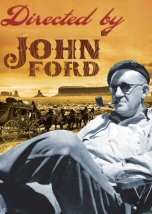
This compelling portrait explores the life and legacy of legendary filmmaker John Ford, tracing his journey from the silent era to becoming one of the most influential directors in cinema history. Through rare archival footage, interviews with collaborators and admirers, and scenes from his most iconic films, the documentary reveals how Ford shaped the visual language of Hollywood and redefined the American Western. It uncovers the man behind the myth—disciplined, private, and fiercely devoted to storytelling. Beyond the sweeping landscapes and unforgettable heroes, the film examines Ford’s complex personality and the contradictions that fueled his artistry. Featuring reflections from major actors and directors who worked with him, it becomes both a tribute and an intimate study of a filmmaker whose vision continues to echo through generations of cinema.
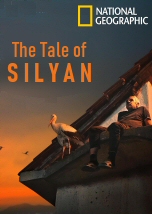
Click CC for subtitles. In a quiet North Macedonian village, a farmer forms an extraordinary bond with a white stork, a creature deeply rooted in local legend and seasonal ritual. What begins as a simple act of care gradually unfolds into a story where nature, folklore, and everyday life merge. Through patient observation and intimate storytelling, the documentary reveals how ancient beliefs still breathe beneath the surface of modern rural life. As the stork becomes both companion and symbol, the film explores themes of belonging, migration, and the fragile balance between humans and the natural world. Blending myth with reality, it offers a poetic meditation on tradition, resilience, and the invisible threads that tie a community to the rhythms of the land and sky.
A joyful and revealing portrait celebrates the life and legacy of Mel Brooks, tracing his journey from the early days of television comedy to global superstardom as one of Hollywood’s boldest satirists. Through rare footage, candid reflections, and stories of friendship and love, the film shows how Brooks used laughter to confront fear, failure, and the absurdities of the human condition, transforming personal experience into timeless comedy. Spanning two episodes that can be enjoyed together as a single, continuous film, the documentary follows Brooks as his career takes flight, shaped by deep creative partnerships, his Jewish heritage, and an unshakable drive to push boundaries. It is a warm, hilarious, and deeply human portrait of an artist who, for nearly a century, has turned humor into resilience, connection, and joy.
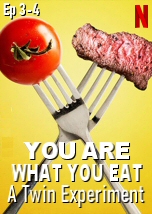
In the final two episodes, the experiment moves from theory to real life as the twins are forced to take full control of their food choices after moving out on their own. Cooking becomes a daily challenge, exposing how habits, convenience, and culture shape what we eat. At the same time, innovators pushing plant-based alternatives step into the spotlight, as growing concerns around animal products raise urgent questions about health and sustainability. As the study reaches its conclusion, the results are finally revealed. Detailed analyses of weight, gut health, and brain function confront the twins with clear, and sometimes surprising, consequences of their diets. What began as a personal test widens into a broader reflection on the future of food, as momentum builds around a changing food industry and the choices that may redefine how we eat.
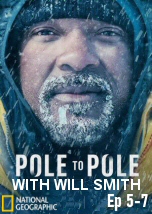
In the final three episodes, the journey deepens into a powerful exploration of culture, survival, and science at the planet’s edges. On a remote Pacific island threatened by rising seas, Will Smith joins Dr. Walworth and John Aini to document a dying language spoken by only five people, turning marine research into an intimate race against time to preserve human memory. The mission reveals how climate change erodes not just coastlines, but identities. The adventure then shifts to extremes of land and ice. In the Kalahari Desert, Will learns survival from the San people, confronting the limits of his endurance during a traditional hunt with guide Kane Motswana. The odyssey culminates beneath the ice of the North Pole, where, alongside polar ecologist Allison Fong, a daring dive to collect critical samples is jeopardized by a sudden storm and equipment failure. What follows is a gripping test of courage and teamwork that redefines heroism at the end of a 100-day quest.




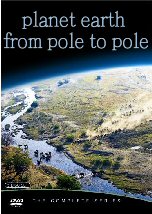








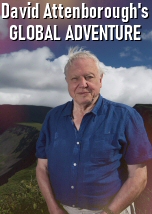


The three episodes can be enjoyed together in a single continuous viewing, creating one sweeping journey across continents and oceans. From the Galápagos Islands to the caves of Borneo, from China’s ancient tropics to the Great Barrier Reef, the series follows Attenborough’s global quest to understand how life rose, adapted, and endured. It is a grand exploration of evolution, resilience, and the fragile beauty of the world we inherit.