








Last Watched

"Stream"  Sort by

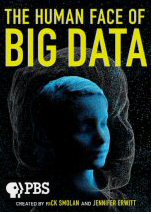
The Human Face of Big Data

   2016    Technology
With the rapid emergence of digital devices, an unstoppable, invisible force is changing human lives: Big Data, a word that was barely used a few years ago but now governs the day for many of us. The real time visualization of data streaming in from satellites, billions of sensors and GPS enabled cameras and smart phones is beginning to enable us to sense, measure and understand aspects of our existence in ways never possible before". This massive gathering and analysing of data in real time is also allowing us to address to some of humanity biggest challenges, including pollution, world hunger and illness, and it is also helping create a new kind of planetary nervous system. But as Edward Snowden and the release of the NSA documents have shown, the accessibility of all this data comes at a steep price. The Human Face of Big Data captures the promise and peril of this extraordinary knowledge revolution.
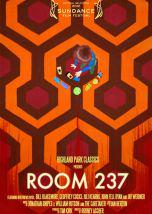
Room 237

   2013    Art
Many movies lend themselves to dramatic interpretations, but none are as rich and far ranging as Stanley Kubrick's The Shining. In LA filmmaker Rodney Ascher's ROOM 237, we hear from people who have developed far-reaching theories and believe they have decoded the hidden symbols and messages buried in the late director's film. Carefully examining The Shining inside out, and forwards and backwards, and backwards and forwards, ROOM 237 as captivating, provocative as it is pure pleasure". It gives voice to the fans and scholars who espouse these theories, reworking the film to match their ideas and intercutting it with layers of dreamlike imagery to illustrate their streams of consciousness. Sometimes outrageous, always engaging, the words of those who were interviewed are given full force by Ascher's compelling vision. Also featured at the 2012 Sundance, Cannes and Toronto film festivals.

The Rise and Rise of Bitcoin

   2014    Technology
Bitcoin is a peer-to-peer monetary system in which all transaction records are public. Participants can use its open-source software to transfer virtual currency to one another as easily as they might send an email. Bitcoin opens an uncharted world of new possibilities to explore. We'll follow the stories of entrepreneurs and startups that are helping shape the new financial frontier. We'll look at the competitive mining market and the various subcultures within the Bitcoin community." You'll encounter a variety of characters and opinions as we examine the social and political impact of an open-source digital currency. Will the rise of Bitcoin bring a monetary paradigm shift that will forever change the world? Supposedly invented by a mysterious Japanese man named Satoshi Nakamoto (whose current whereabouts are unknown). Because it is designed to have an absolute ceiling of 21 million Bitcoins in circulation (not anticipated until 2040), and the system has no central depository or administrative authority, it has great appeal to libertarians and others who seek alternatives to a perceived corrupt, manipulative banking infrastructure and excessive government regulations. Its low processing fees compared with those of mainstream credit-card companies also hold considerable allure for merchants.

London: The Modern Babylon

   2012    Culture
Julien Temple's epic time-travelling voyage to the heart of his hometown. From musicians, writers and artists to dangerous thinkers, political radicals and above all ordinary people, this is the story of London's immigrants, its bohemians and how together they changed the city forever. Reaching back to the dawn of film in London at the start of the 20th century, the story unfolds through film archive, voices of Londoners past and present and the flow of popular music across the century; a stream of urban consciousness, like the river which flows through its heart. It ends now, as London prepares to welcome the world to the 2012 Olympics.

The Private Life of Plants: Travelling

   1994    Nature
Sir David Attenborough reveals plants as they have never been seen before - on the move and dangerously devious. About the major problems of life - growing, finding food, reproduction - and the varied ways plants have evolved to solve it. Filmed from the plant's point of view, using computer animations, fibre-optics and unique time-lapse photography. The first episode looks at how plants are able to move". The bramble is an aggressive example: it advances forcefully from side to side and, once settled on its course, there is little that can stand in its way. An altogether faster species is the birdcage plant, which inhabits Californian sand dunes. When its location becomes exposed, it shifts at great speed to another one with the assistance of wind — and it is this that allows many forms of vegetation to distribute their seeds. While not strictly a plant, the spores of fungi are also spread in a similar fashion. One of the most successful (and intricate) flowers to use the wind is the dandelion, whose seeds travel with the aid of 'parachutes'. They are needed to travel miles away from their parents, who are too densely packed to allow any new arrivals. Trees have the advantage of height to send their seeds further, and the cottonwood is shown as a specialist in this regard. The humidity of the tropical rainforest creates transportation problems, and the liana-species Alsomitra macrocarpa is one plant whose seeds are aerodynamic 'gliders'. Some, such as those of the sycamore, take the form of 'helicopters', while others, such as the squirting cucumber release their seeds by 'exploding'. Water is also a widely used method of propulsion. The tropical sea bean Entada gigas has one of the biggest fruits of all plants and is dispersed by water streams. However, most plants use living couriers, whether they be dogs, humans and other primates, ants or birds, etc., and to that end, they use colour and smell to signify when they are ripe for picking.
Series: The Private Life of Plants

American Alternative Rock

   2007    Art
The rise of alternative rock in the USA. From its early underground days where bands like Black Flag drew inspiration from the DIY ethos of punk. We explore why the bands that emerged from the underground offered an alternative both to the established music industry and the prevailing politics. Bands like R.E.M., The Pixies and Husker Du, REM breaking into the mainstream charts with 'Losing My Religion', Seattle 'grunge' scene, culminating in the success of Nirvana's 'Nevermind'
Series: Seven Ages of Rock