Dr Janina Ramirez embarks on a journey through six decades of the BBC archives to create a television history of one of the most celebrated figures in art - Leonardo Da Vinci. Ramirez shows how experts and art presenters have turned to television to bring Leonardo's artwork out of galleries and into our living rooms. Through television they have explored the origins of Leonardo's boundless curiosity, his pioneering use of light and shade, and his remarkable scientific exploration. Along the way Dr Ramirez discovers Britain's little-known version of The Last Supper, the gruesome ways Leonardo acquired his anatomical knowledge - and even what lies beneath the Mona Lisa.
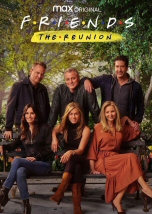
For the first time after seventeen years and their last appearance on the final episode of the TV series in 2004, Jennifer Aniston; Courteney Cox; Lisa Kudrow; Matt LeBlanc; Matthew Perry, and David Schwimmer, find themselves under the same roof for a reunion special. Hosted by James Corden, and produced by the show's co-creators, Marta Kauffman, David Crane, and Kevin Bright, the show's main cast feels at home in the original sets of Friends (1994), taking a trip down memory lane while sitting on Central Perk's couch. Brimming with emotion, laughter, and tears of joy, 'Friends: The Reunion' sheds light on ambivalent endings, the casting process, and many more, as the main cast re-enacts older Friends episodes and meets with a plethora of celebrity guests, including Maggie Wheeler, the show's Janice Litman-Goralnik; Justin Bieber; Cindy Crawford; Cara Delevingne; Lady Gaga; David Beckham; Tom Selleck, and Nobel Peace Prize laureate, Malala Yousafzai.
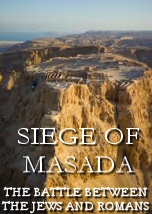
It's known as the Alamo of the ancient world, the story of a band of Jewish rebels and their final stand against the Roman Army. The siege of Masada, recorded nearly 2,000 years ago by Jewish military leader Flavius Josephus, is more than a tale of resistance against impossible odds. It's part of the founding narrative of Israel. But how much of it is true? We take a look at the events that inspired the CBS television miniseries 'The Dovekeepers' and go to the site of the mountain fortress itself, uncovering new truths about this epic conflict.
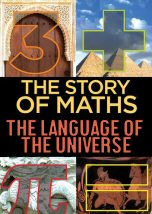
This four-part British television series outlines aspects of the history of mathematics. Written and presented by University of Oxford professor Marcus du Sautoy, it is a co-production between the Open University and the BBC. In the first episode, Marcus du Sautoy in Egypt uncovers use of a decimal system based on ten fingers of the hand and discovers that the way we tell the time is based on the Babylonian Base 60 number system. In Greece, he looks at the contributions of some of the giants of mathematics including Plato, Archimedes and Pythagoras, who is credited with beginning the transformation of mathematics from a counting tool into the analytical subject of today. A controversial figure, Pythagoras’ teachings were considered suspect and his followers seen as social outcasts and a little be strange and not in the norm. There is a legend going around that one of his followers, Hippasus, was drowned when he announced his discovery of irrational numbers. As well as his work on the properties of right angled triangles, Pythagoras developed another important theory after observing musical instruments. He discovered that the intervals between harmonious musical notes are always in whole number intervals.
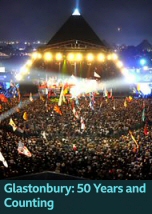
Three years in the making, Francis Whately’s film is a social and musical history of (probably) the world’s greatest music festival, as told by its principal curators, Michael and Emily Eavis, and many of the key artists who’ve appeared there between 1970 and 2019 – Billie Eilish, Thom Yorke, Florence Welch, Dua Lipa, The Levellers, Aswad, Orbital, Fatboy Slim, Linda Lewis, Noel Gallagher, Ed O’Brien, Chris Martin, Stormzy and more. Balancing the driving forces of social conscience and hedonism, Glastonbury has always been both a world apart and a barometer of the state of the nation. Looking at the hippie days, CND, the contribution of the travellers, dance music, Britpop, The Wall, the impact of television and the first black British solo headliner, this film takes viewers backstage and deep into the archive to reveal the forces that have driven this alternative nation between utopia and dystopia, the greatest night of your life and a muddy field in the middle of nowhere. This is not a chronological plod through the festival’s evolution so much as a thematic and story-driven exploration of the peaks and troughs, and the agonies and ecstasies, that have shaped Glastonbury’s 50 years and counting.
Of all the wonders of the human body, there's one more mysterious than any other. Blood: five precious litres that keep us alive. Yet how much do we really know about this sticky red substance and its mysterious, life-giving force? Michael Mosley gives up a fifth of his own blood to perform six bold experiments". From starving it of oxygen to injecting it with snake venom, Michael reveals the extraordinary abilities of blood to adapt and keep us alive. Using specialist photography, the programme reveals the beauty in a single drop. Michael even discovers how it tastes when, in a television first, he prepares a black pudding with his own blood. Down the ages, our understanding of blood has been as much myth as science, but Michael reveals there might be truth in the old vampire legends, as he meets one of the scientists behind the latest research that shows young blood might be able to reverse the ageing process - the holy grail of modern medicine.






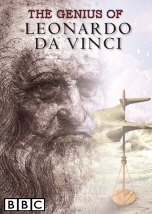
Along the way Dr Ramirez discovers Britain's little-known version of The Last Supper, the gruesome ways Leonardo acquired his anatomical knowledge - and even what lies beneath the Mona Lisa.