
Last Watched

"Troll"  Sort by

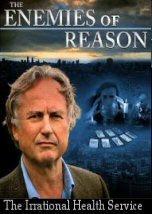
The Irrational Health Service

       Medicine
Richard Dawkins examines the growing suspicion the public has for science-based medicine, despite its track record of successes like the germ theory of disease, vaccines, antibiotics and increased lifespan. He notes a fifth of British children are currently not immunised against measles, mumps and rubella, attributing it to fears arising from a highly controversial report linking the vaccine with autism. Dawkins criticizes the growing field of alternative medicine which does not pass the same objective and statistical rigour as scientifically derived treatments using controlled double-blind studies. Without verifiable evidence, alternative therapies must rely on biased anecdotes and word of mouth to perpetuate. Dawkins observes these treatments have fanciful rationales and rituals behind them, with many alternative treatments employing pseudoscientific jargon such as "energy", "vibration" or "quantum theory" to give themselves greater credence to patients.
Series: Enemies of Reason
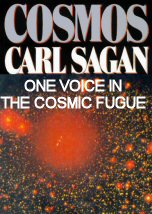
One Voice in the Cosmic Fugue

   1980    Science
Sagan discusses the story of the Heike crab and artificial selection of crabs resembling samurai warriors, as an opening into a larger discussion of evolution through natural selection (and the pitfalls of intelligent design). Among the topics are the development of life on the Cosmic Calendar and the Cambrian explosion; the function of DNA in growth; genetic replication, repairs, and mutation; the common biochemistry of terrestrial organisms; the creation of the molecules of life in the Miller-Urey experiment; and speculation on alien life (such as life in Jupiter's clouds). In the Cosmos Update ten years later, Sagan remarks on RNA also controlling chemical reactions and reproducing itself and the different roles of comets (potentially carrying organic molecules or causing the Cretaceous–Paleogene extinction event).
Series: Cosmos

CTRL

   2016    Technology
The Internet is an uncontrollable labyrinth of content and imagery that operates under loose laws and partial anonymity - a new frontier where people can do anything and see anything, whether they should or not. In this lawless landscape, who's in control? The protectors? The abusers? In this episode meet the content moderators who watch the worst of the Internet so you don't have to; a convicted hacker whose punishment was the virtual prison of the unplugged; plus, a blackhat hacker who encrypts and holds computer files hostage.
Series: Dark Net

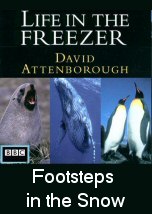
Footsteps in the Snow

   1993    History
This episode discusses the human exploration of Antarctica, in particular the mission led by Captain Robert Falcon Scott, whose team died on the way back from the South Pole. It shows the scientific work in the modern human bases in Antarctica, especially Mawson Base and its observation of Adelie Penguins (partially through tracking devices). The second half of the episode describes how the series was made. Most crucial was of course the camera work. To get access to the wildlife of the sea, for example, boats, divers, suspended capsules and remotely controlled cameras mounted on inflatables were used. Particularly dangerous to divers were Leopard Seals and other predators. The film concludes that although working in Antarctica is now much easier than during the early days of exploration, human footsteps on the continent are still exceedingly rare in part because of international treaties prohibiting industrial exploitation.
Series: Life in the Freezer

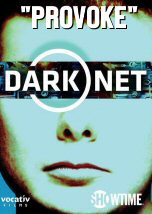
Dark Net Provoke

   2016    Technology
We all project images of ourselves online - a curated identity that defines how we want to be perceived. But what temptations exist to embellish and what are the dark implications? In this episode, enter the world of Cyberbanging, where inner city youth are using social media to brag, conspire and incite violence; two African-American women bloggers who have turned the table on the trolls who threaten them; and the creator of Abdullah X, an online character who's trying to keep Muslim kids from falling under the spell of Islamic extremists.
Series: Dark Net

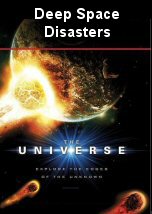
Deep Space Disasters

   2008    Technology
In space travel there is a saying that the first 50 miles and the last 50 miles are the most dangerous. Explore the controlled explosion of launch, the fiery crucible of re-entry and everything in between. See how a single spark inside a spacecraft or a micrometeoroid less than an inch wide hitting a space station can turn a routine mission into a lethal nightmare. As the missions become longer, venturing to Mars and beyond, the potential disasters will only become bigger. What would happen if a spacecraft ventured too close to a black hole or was hit by a gamma ray burst?
Series: The Universe
Rotten

Rotten

2018  Nature
The Sky at Night

The Sky at Night

2024  Science
The Story of Us

The Story of Us

2018  Culture
Welcome to Earth

Welcome to Earth

2021  Nature
Food Inc

Food Inc

2009  Technology