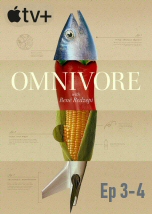
In episodes 3 and 4, a seemingly simple ingredient becomes the invisible force that has shaped civilizations, fueled exploration, and quietly dictated the fate of empires. From ancient trade routes to modern industry, salt emerges not just as a seasoning, but as a powerful driver of human history and survival. At the same time, the story shifts to something far more familiar yet equally unsettling: the global dominance of a single type of banana. What appears to be abundance hides a fragile system built on uniformity, where one disease could wipe out a staple food relied upon by millions. As the journey unfolds, the narrative exposes the hidden cost of convenience and monoculture, revealing how the loss of biodiversity is not a distant ecological concern but an immediate threat to our food security and future. With striking connections between past and present, these episodes invite you to rethink what you eat, where it comes from, and how something as ordinary as salt or a banana could hold the key to understanding the balance—and imbalance—of our world.
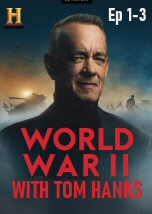
From the first shots fired in Poland to the dawn of the atomic age, this gripping documentary revisits the most devastating conflict in modern history with the scale, urgency, and human focus it demands. Through decisive battles, world-changing leaders such as Winston Churchill, Franklin D. Roosevelt and Josef Stalin rare wartime perspectives, and the immense suffering of soldiers and civilians, it shows how total war reshaped nations, destroyed millions of lives, and forced humanity into a new and terrifying era. The first three episodes plunge directly into the war’s explosive beginnings. In September 1939, Germany invades Poland after a secret pact between Adolf Hitler and Josef Stalin clears the path for aggression, setting Europe on fire once again. As Nazi forces crush the Netherlands and Belgium and drive west, Churchill prepares Britain for an air assault while Roosevelt races to turn American industry into a weapon of survival. The story then moves to Operation Barbarossa, Hitler’s colossal surprise invasion of the Soviet Union in 1941, the largest and most costly land offensive ever launched, where ambition, brutality, and resistance collide on an unimaginable scale.



As the journey unfolds, the narrative exposes the hidden cost of convenience and monoculture, revealing how the loss of biodiversity is not a distant ecological concern but an immediate threat to our food security and future. With striking connections between past and present, these episodes invite you to rethink what you eat, where it comes from, and how something as ordinary as salt or a banana could hold the key to understanding the balance—and imbalance—of our world.