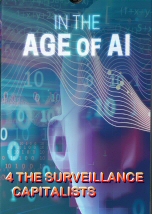
Everywhere you go, you generate a cloud of data. You're trailing data, everything that you do is producing data. And then there are computers looking at that data that are learning, and these computers are essentially trying to serve you better. They're trying to personalize things to you. They're trying to adapt the world to you. So on the one hand, this is great, because the world will get adapted to you without you even having to explicitly adapt it. There's also a danger, because the entities in the companies that are in control of those algorithms don't necessarily have the same goals as you, and this is where I think people need to be aware that, what's going on, so they can have more control over it. We came into this new world thinking that we were users of social media and search engines. It didn't occur to us that social media and search engines were actually using us.
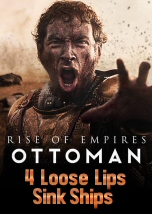
Sultan Mehmed II's siege of Constantinople enters its third week. Mehmed's artillery teams continue their relentless bombardment of Constantinople's walls. After his navy suffers a devastating defeat, Mehmed moves his ships overland to the Golden Horn in a daring, visionary feat. In the shadow of betrayal, Giustiniani attacks the Ottoman fleet.
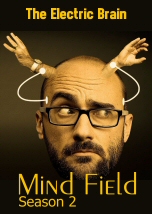
The nervous system is fundamentally electric. When we move our arm, it moves because a electric signal has been sent to the muscle that controls it. Now, because the brain is electric, we could also use electricity to record what the brain is doing or bypass it entirely, and control a body. That means that we could restore movement to people who are paralyzed, feel through an artificial hand as if it was our own, and even read people's minds. Michael Stevens explores how electricity can be used to move cockroaches, control other peoples' limbs and even read peoples' thoughts.
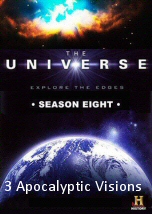
The end is coming. But which cosmic catastrophe will deliver the death blow? Were the Vikings right to fear the frozen apocalypse of an endless winter? Did the Buddhists correctly predict a fiery end to life on Earth? Or will the thunderous Christian vision of Armageddon come crashing down from the stars? Which ancient prophesy do scientists believe accurately foretells our doom? And how close are we to the end of the world? This film explores all the possibilities Apocalyptic Visions to the Future.
Following the wildly successful 'Cosmos: A Spacetime Odyssey,' Neil deGrasse Tyson returns as host to translate more revelations of science into a lavish transporting experience, taking audiences on a series of spiritual voyages of exploration. The show reveals previously uncharted realms, including lost worlds, worlds yet to come, and the worlds that humans may one day inhabit. Ann Druyan, original creative collaborator to Carl Sagan, whose iconic docuseries 'Cosmos' provided inspiration for this series, serves as executive producer alongside Seth MacFarlane. Episode 1 takes viewers on a wild ride with the Ship of Imagination in an adventure spanning billions of years into the evolution of life.
Episode 3 delves into how life began on a roiling, violent Earth and explores the story behind Victor Goldschmidt, the man who found the first clues to life's beginnings on our planet. Neil deGrasse Tyson takes viewers on a journey through space and time to witness the tenacity and creativity of life on Earth and the prospects of life throughout the universe.












We came into this new world thinking that we were users of social media and search engines. It didn't occur to us that social media and search engines were actually using us.