







Last Watched

"Earth"  Sort by

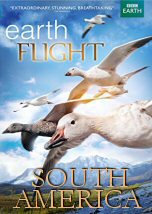
Earthflight South America

   2012    Nature
The documentary series gives a bird's-eye view of South America, as condors soar along the Andes, scarlet macaws explore the heart of the Amazon and hummingbirds and vultures see the continent's greatest sights. It is a journey that includes Machu Picchu, the Nasca Lines and the cities of Rio de Janeiro and Santiago. In Patagonia, giant petrels shadow killer whales as they hunt seals by stranding their huge bodies on the beach. At Iguassu Falls, dusky swifts dive through the cascades to huddle in communal roosts while hummingbirds bathe below. In a secret Andean location, condors soar in flocks over 40-strong and scavenge on casualties from herds of fighting guanacos. Elsewhere, a mother condor gently pushes her youngster to the edge of a 200-metre cliff, as flight school begins. Deep in the Amazon, macaws seek medicinal clay. They are joined by a host of secretive jungle animals, including spider monkeys and tapirs, all after the same remedy. In Peru, condors soar over fighting sea lions waiting for causalities and on a mass exodus north, birds converge on the Panama Canal. In Costa Rica, black vultures descend on turtles as they lay their eggs in the sand and pick off the eggs that ping-pong through the air.
Series: Earthflight

Do You Trust this Computer

   2018    Technology    HD
Science fiction has long anticipated the rise of machine intelligence. Today, a new generation of self-learning computers is reshaping every aspect of our lives. Incomprehensible amounts of data are being collected, interpreted, and fed back to us in a tsunami of apps, smart devices, and targeted advertisements.
Virtually every industry on earth is feeling this transformation, from job automation to medical diagnostics, from elections to battlefield weapons. Do You Trust This Computer? explores the promises and perils of this developing era. Will A.I. usher in an age of unprecedented potential, or prove to be our final invention?

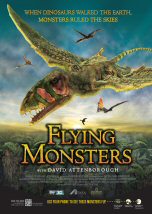
Flying Monsters

   2011    Science    3D    HD
For thousands of years, humans have believed that there were once flying monsters. But did they really exist beyond our nightmares? 220 million years ago dinosaurs were beginning their domination of Earth. But another group of reptiles was about to make an extraordinary leap: pterosaurs were taking control of the skies. The story of how and why these mysterious creatures took to the air is more fantastical than any fiction. In Flying Monsters 3D, David Attenborough the worlds leading naturalist, sets out to uncover the truth about the enigmatic pterosaurs, whose wingspans of up to 40 feet were equal to that of a modern day jet plane. Attenborough works with scientists to understand the incredible story of the evolution of the pterosaurs, a story that unfolds in such stunning locations as New Mexico, the Jurassic Coast of Lyme Regis in Britain, an ancient pterosaur landing site in Southern France and a fossil pit in Germany where near perfect pterosaur specimens have been found. The central question and one of the greatest mysteries in palaeontology is: how and why did pterosaurs fly? How did lizards the size of giraffes defy gravity and soar through prehistoric skies? Driven by the information he finds as he attempts to answer these questions, Attenborough starts to unravel one of sciences more enduring mysteries, discovering that the marvel of pterosaur flight has evolutionary echoes that resonate even today. Flying Monsters 3D is a groundbreaking film that uses cutting-edge 3D technology and CGI to bring the story of giant flying monsters and their prehistoric world to life. Audiences of all ages will be in awe as they enter the world and experience, as never before, REAL Flying Monsters in 3D.

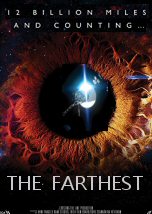
The Farthest

   2017    Technology
Is it humankind's greatest achievement? 12 billion miles away a tiny spaceship is leaving our Solar System and entering the void of deep space. It is the first human-made object ever to do so. Slowly dying within its heart is a plutonium generator that will beat for perhaps another decade before the lights on Voyager finally go out. But this little craft will travel on for millions of years, carrying a Golden Record bearing recordings and images of life on Earth. In all likelihood Voyager will outlive humanity and all our creations. It could be the only thing to mark our existence. Perhaps some day an alien will find it and wonder. The story of Voyager is an epic of human achievement, personal drama and almost miraculous success. Launched 16 days apart in Autumn 1977, the twin Voyager space probes have defied all the odds, survived countless near misses and almost 40 years later continue to beam revolutionary information across unimaginable distances.

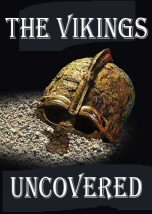
The Vikings Uncovered

   2016    History
Dan Snow uncovers the lost Vikings in America with space archaeologist Dr Sarah Parcak. Sarah uses satellites 383 miles above the earth to spot ruins as small as 30cm buried beneath the surface. As Sarah searches for Viking sites from Britain to America, Dan explores how they voyaged thousands of miles when most ships never left the shoreline. He also tracks their expansion west, first as raiders and then as settlers and traders throughout Britain and beyond to Iceland and Greenland. In North America they excavate what could be the most westerly Viking settlement ever discovered.

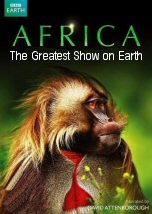
Africa the Greatest Show on Earth

   2013    Nature
Sir David Attenborough takes a breath-taking journey through the vast and diverse continent of Africa as it's never been seen before. From the richness of the Cape of Good Hope to blizzards in the high Atlas Mountains, from the brooding jungles of the Congo to the steaming swamps and misty savannahs, Africa explores the whole continent. An astonishing array of previously unknown places are revealed along with bizarre new creatures and extraordinary behaviours. Using the latest in filming technology including remote HD cameras, BBC One takes an animal's eye view of the action. The journey begins in the Kalahari, Africa's ancient southwest corner, where two extraordinary deserts sit side by side and even the most familiar of its creatures have developed ingenious survival techniques. Black rhinos reveal a lighter side to their character as they gather around a secret waterhole. Springbok celebrate the arrival of rains with a display of 'pronking'. Bull desert giraffes endure ferocious battles for territory in a dry river bed.
Series: Africa with David Attenborough