
Last Watched

"Bit"  Sort by

Surviving

   1995    Nature
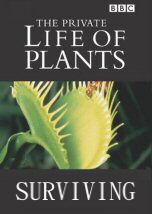
the final episode deals with plants that live in hostile environments. Attenborough visits Ellesmere Island, north of the Arctic Circle, to demonstrate that even in a place that is unconducive to life, it can be found. Algae and lichens grow in or on rock, and during summer, when the ice melts, flowers are much more apparent. However, they must remain close to the ground to stay out of the chilling wind. In the Tasmanian mountains, plants conserve heat by growing into 'cushions' that act as solar panels, with as many as a million individual shoots grouped together as one. Others, such as the lobelia in Mount Kenya, have a 'fur coat' of dense hairs on their leaves. The saguaro cactus in the Sonoran Desert flourishes because of its ability to retain vast amounts of water, which can't be lost through leaves because it has none. Many desert dwellers benefit from an accelerated life cycle, blooming rapidly within weeks after rainfall. Conversely, Mount Roraima is one of the wettest places on Earth. It is a huge sandstone plateau with high waterfalls and nutrients are continuously washed away, so plants have to adapt their diet if they are to survive. A bladderwort is shown invading a bromeliad. Inhabitants of lakes have other problems to contend with: those that dominate the surface will proliferate, and the Amazon water lily provides an apt illustration. Attenborough ends the series with an entreaty for the conservation of plant species.
Series: The Private Life of Plants
Judgment Day

   2016    History
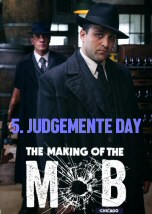
In 1927, Prohibition agent Eliot Ness narrowly escapes a hit ordered by Al Capone. Determined to prove to Capone that he's not intimidated, Ness and his team of Untouchables execute a series of high-profile raids on Capone's breweries. Over the course of a few months, they destroy more than 200,000 gallons of beer, worth a modern-day equivalent of $134 million - and the newspapers cover it all. Capone lashes out against Ness in the press. What Capone doesn't realize is that Ness and the Prohibition agents aren't the only ones trying to take him down. For the past four years, another government agency with more manpower and resources than Ness has been going after the infamous kingpin: the Internal Revenue Service.
Series: The Making of the Mob

Life: Reptiles and Amphibians

   2009    Nature
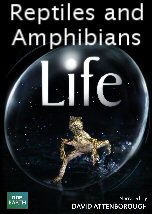
Reptiles and amphibians look like hang-overs from the past. But they overcome their shortcomings through amazing innovation. The pebble toad turns into a rubber ball to roll and bounce from its enemies. Extreme slow-motion shows how a Jesus Christ lizard runs on water, and how a chameleon fires an extendible tongue at its prey with unfailing accuracy. The camera dives with a Niuean sea snake, which must breed on land but avoids predators by swimming to an air bubble at the end of an underwater tunnel. In a TV first, Komodo dragons hunt a huge water-buffalo, biting it to inject venom, then waiting for weeks until it dies. Ten dragons strip the carcass to the bone in four hours.
Series: Life

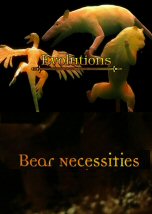
Bear Necessities

   2008    Science
One animal embodies all that is amazing about survival. It has adapted to wildly varying habitats and evolved unique weapons of survival; its greatest asset is its ferocious bite and it is evolutions ultimate survivor, but what species is it? Find out if a new bear species could be about to evolve before our very eyes.
Series: Evolutions

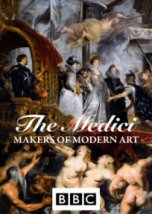
The Medici: Makers of Modern Art

   2008    Art
Andrew Graham-Dixon reveals how the Medici family transformed Florence through sculpture, painting and architecture and created a world where masterpieces fetch millions today. Without the money and patronage of the Medici we might never have heard of artists such as Donatello, Michelangelo or Botticelli, and Graham-Dixon examines how a family of shadowy, corrupt businessmen, driven by greed and ambition, became the financial engine behind the Italian Renaissance.

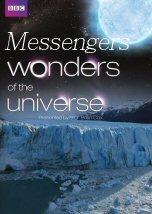
Messengers

   2011    Science
Professor Brian Cox travels from the fossils of the Burgess Shale to the sands of the oldest desert in the world to show how light holds the key to our understanding of the whole universe, including our own deepest origins. To understand how light holds the key to the story of the universe; you first have to understand its peculiar properties. Brian considers how the properties of light that lend colour to desert sands and the spectrum of a rainbow can lead to profound insights into the history and evolution of our universe. Finally, with some of the world's most fascinating fossils in hand, Brian considers how but for an apparently obscure moment in the early evolutionary history of life, all the secrets of light may have remained hidden. Because although the universe is bathed in light that carries extraordinary amounts of information about where we come from, it would have remained invisible without a crucial evolutionary development that allowed us to see. Only because of that development can we now observe, capture and contemplate the incredible wonders of the universe that we inhabit.
Series: Wonders of the Universe
The Last Dance

The Last Dance

2020  Culture
Science and Islam

Science and Islam

2017  History
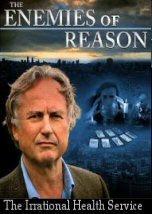
Enemies of Reason

Enemies of Reason

  Medicine
The Sky at Night

The Sky at Night

2018  Science
Follow This

Follow This

2018  Medicine
How Earth Made Us

How Earth Made Us

2010  Culture