





Last Watched

"AGI"  Sort by

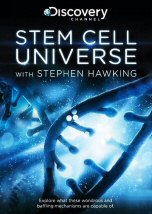
Stem Cell Universe with Stephen Hawking

   2014    Medicine
The use of embryonic stem cells has ignited fierce debate across the spiritual and political spectrum. But what if we could create manmade stem cells - or find super cells in adults that could forever replace embryonic cells and remove the controversy? Today, we are on the brink of a new era - an age where we may be able to cure our bodies of any illness. Stephen Hawking has spent his life exploring the mysteries of the cosmos, now there is another universe that fascinates him - the one hidden inside our bodies - our own personal galaxies of cells." Hawking takes us on a fascinating journey exploring what these wondrous and baffling mechanisms are capable of. He is joined by the scientists who are on the front lines of discovery in this field including Dr. Doris Taylor who is customizing a donor's heart with the recipient's stem cells - her goal is to revolutionize heart transplants, Dr. Paul Lu and Dr. Mark Tuszynski may have created a breakthrough that could cure paralysis, and Dr. Vincent Giampapa who believes that stem cells can be used to stem the tide of aging and create a fountain of youth.
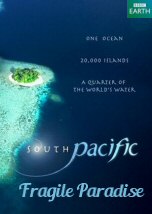
South Pacific Fragile Paradise

   2009    Nature
The extraordinary wildlife, culture and history of this immense, fascinating ocean and its myriad islands are revealed in stunning detail. With its coral reefs, turquoise lagoons and dramatic oceanic atolls, the South Pacific is the archetypal paradise. It is still relatively healthy and teeming with fish, but it is a fragile paradise. International fishing fleets are taking a serious toll on the sharks, albatross and tuna, and there are other insidious threats to these bountiful seas. We look at what is being done to preserve the ocean and its wildlife.

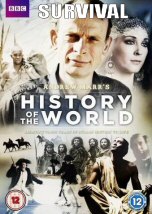
History of the World: Survival

   2012    History
Andrew Marr sets off on an epic journey through 70,000 years of human history. Using dramatic reconstructions, documentary filming around the world and cutting-edge computer graphics, he reveals the decisive moments that shaped the world we live in today, telling stories we thought we knew and others we were never told." Starting with our earliest beginnings in Africa, Marr traces the story of our nomadic ancestors as they spread out around the world and settled down to become the first farmers and townspeople. He uncovers extraordinary hand-prints left in European caves nearly 30,000 years ago and shows how human ingenuity led to inventions which are still with us today. He also discovers how the first civilisations were driven to extremes to try to overcome the forces of nature, adapting and surviving against the odds, and reveals how everyday life in ancient Egypt had more in common with today's soap operas than might be imagined.
Series: History of the World

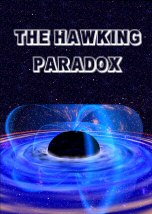
The Hawking Paradox

   2005    Science
Stephen Hawking is the most famous scientist on the planet. But behind the public face lies an argument that has been raging for almost 30 years. Has he been wrong for the last 30 years? Hawking shot to fame in the world of physics when he provided a mathematical proof for the Big Bang theory. This theory showed that the entire universe exploded from a singularity, an infinitely small point with infinite density and infinite gravity. Hawking was able to come to his proof using mathematical techniques that had been developed by Roger Penrose. These techniques were however developed to deal not with the beginning of the Universe but with black holes". Science had long predicted that if a sufficiently large star collapsed at the end of its life, all the matter left in the star would be crushed into an infinitely small point with infinite gravity and infinite density – a singularity. Hawking realised that the Universe was, in effect, a black hole in reverse. Instead of matter being crushed into a singularity, the Universe began when a singularity expanded to form everything we see around us today, from stars to planets to people. Hawking realised that to come to a complete understanding of the Universe he would have to unravel the mysteries of the black hole and its paradoxes

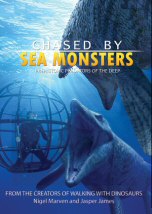
Chased by Sea Monsters 1of3

   2003    Science
If you're a paleontology buff, this series is for you. And the fun-loving Nigel Marvin provides a great narrative. Explore the prehistoric world in search of sea-based monsters. It focuses on life in ancient oceans during each prehistoric period. Nothing, not the carnivorous dinosaurs of the past, nor the imagined sea serpents and monsters of maritime history, nor the great white shark, salt water crocodile, killer whale and leopard seal of today can compare to the horrifying hunters of the prehistoric oceans.
Series: Chased by Sea Monsters

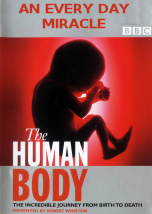
An Everyday Miracle

   1998    Medicine
This series, presented by Robert Winston, takes us on a journey from birth to death using time-lapse photography, computer graphics and various state-of-the-art imaging techniques to explore every aspect, every nook and crevice of the human body in its various stages of growth, maturity and eventual decay. Though heart-warming in that it shows the commonality of human experience, The Human Body is also a potentially depressing reminder of our frail physicality and mortality." In this episode, follow Jeff and Phillippa from conception to the birth of their first child Bob in An Everyday Miracle. Learn why conception is the most dangerous part of your life, and the struggles that you must go through to even reach the first step. The couple openly discuss their concerns and joy throughout their entire pregnancy and this episode in particular would be well worth viewing by those who are expecting their first child. From experience, this tasteful and informative section captures aspects of pregnancy that the hospital-run Maternity Classes don't explain as well. You even get to see the birth of their child which makes for a great lead into the next section. And in case you were wondering, every day there are around 100 million acts of sexual intercourse taking place in the world resulting in around 910,000 conceptions.
Series: The Human Body