



Last Watched

"Ship"  Sort by

The Grasslands

   2011    Culture
Grasslands feed the world. Over thousands of years, we humans have learned to grow grains on the grasslands and domesticate the creatures that live there. Our success has propelled our population to almost seven billion people. But this episode reveals that, even today, life in the 'Garden of Eden' isn't always rosy. We walk with the Dorobo people of Kenya as they bravely attempt to scare off a pride of hungry lions from their freshly caught kill. We gallop across the Steppe with extraordinary Mongolian horsemen who were 'born in the saddle'. And in a perfect partnership with nature built up over generations Maasai children must literally talk to the birds! The honeyguide leads them to find sweet treats, but they'll have to repay the favour.
Series: Human Planet
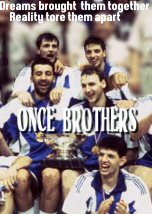
Once Brothers

   2010    Culture
Drazen Petrovic and Vlade Divac were two friends who grew up together sharing the common bond of basketball. Together, they lifted the Yugoslavian National team to unimaginable heights. After conquering Europe, they both went to America where they became the first two foreign players to attain NBA stardom. But with the fall of the Soviet Union on Christmas Day 1991, Yugoslavia split up. A war broke out between Petrovic's Croatia and Divac's Serbia. Long buried ethnic tensions surfaced. And these two men, once brothers, were now on opposite sides of a deadly civil war. As Petrovic and Divac continued to face each other on the basketball courts of the NBA, no words passed between the two. Then, on the fateful night of June 7, 1993, Drazen Petrovic was killed in an auto accident. "Once Brothers" will tell the gripping tale of these two men, how circumstances beyond their control tore apart their friendship, and whether Divac has ever come to terms with the death of a friend before they had a chance to reconcile.

Flowering

   1995    Nature
The third episode is devoted to the ways in which plants reproduce. Pollen and a stigma are the two components needed for fertilisation. Most plants carry both these within their flowers and rely on animals to transport the pollen from one to the stigma of another. To do this, they attract their couriers with colour, scent and nectar. It isn't just birds that help pollination: some mammals and reptiles also do so. However, it is mostly insects that are recruited to carry out the task. To ensure that pollen is not wasted by being delivered to the wrong flower, some species of plant have developed exclusive relationships with their visitors, and the gentian and its attendant carpenter bees is one example. Since pollen can be expensive to produce in terms of calories, some plants, such as orchids, ration it by means of pollinia and a strategically placed landing platform. Other orchids offer no reward for pollination, but instead mislead their guests by mimicking their markings and aroma, thus enticing males to 'mate' with them (Pseudocopulation). The most extreme fertilisation method is one of imprisonment, and one plant that uses it is the dead horse arum. It is often found near gull colonies, and mimics the appearance and smell of rotting flesh. Blow-flies are attracted to it, and are forced to stay the night before being allowed to depart in the morning, laden with pollen. Finally, Attenborough introduces the world's largest inflorescence: that of the titan arum.
Series: The Private Life of Plants

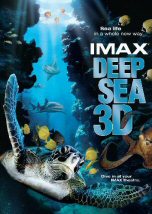
Deep Sea

   2006    Nature    3D    HD
An astonishing close encounter with some of the most exotic creatures inhabiting the hidden depths. In the realm of the giant octopus, the rainbow nudibranch (sea slug), and the Scorpion fish, viewers become a fearless undersea explorers, discovering the strange and unusual partnerships these 'star wars' creatures forge to ensure their survival, and learning how this cooperation allows life in this enchanting world to flourish. Filmmaker Howard Hall guides an astonishing adventure. Johnny Depp and Kate Winslet narrate as Green Sea Turtles gather so Surgeonfish can strip harmful algae from their shells. A Humboldt Squid changes color four times per second like a flashing strobe light. A Mantis Shrimp’s claws have the speed of a bullet in battling a hungry octopus. Brace yourself to be submerged in a wondrous new dimension.

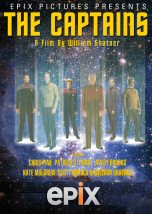
The Captains

   2011    Art
Follow actor William Shatner through interviews with the other actors who have portrayed starship Enterprise captains in five other incarnations of the Star Trek franchise. Shatner's subjects discuss their lives and careers before, during and after their tenure with Star Trek. With the use of conversations and archival footage, they explore the pressures, stigmas and sacrifices that accompanied their roles and their larger careers. During the process of the film and with help from the other Captains, Sir Patrick Stewart, Avery Brooks, Kate Mulgrew, Scott Bakula and Chris Pine, Shatner overcomes his disdain and learns to embrace his best known character, Captain James T. Kirk.

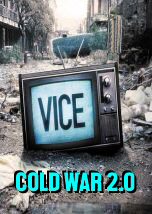
Cold War 2.0

   2015    Culture
For 45 years, America was locked in the Cold War with the Soviet Union, and fear of global nuclear annihilation was constant. The end of the Cold War in 1991 was supposed to usher in a new era of peace and cooperation, but it didn’t last. Tensions between the U.S. and Russia have been simmering for years. And now, the conflict in Ukraine has pushed the relationship to the brink of full-blown crisis. VICE Founder Shane Smith met Kremlin officials and American leaders to figure out what’s really driving the new standoff between the powers, while correspondent Simon Ostrovsky reported from the front lines of the bloody war in Eastern Ukraine.
The Planets

The Planets

2000  Science
Cooked

Cooked

2016  Culture
Animal

Animal

2021  Nature
Top Gear

Top Gear

2012  Technology
Vietnam in HD

Vietnam in HD

2011  History
History of the World

History of the World

2012  History
Wild Wild Country

Wild Wild Country

2018  Culture