
Last Watched

"EU"  Sort by

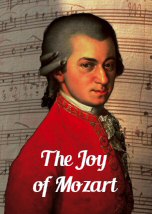
The Joy of Mozart

   2015    Art
Tom Service plunges into the life and times of Mozart to try and rediscover the greatness and humanity of the living man in his moment. Mozart's prodigious output and untimely death have helped place him on a pedestal that can often blind us to the unique brilliance of his work in the context of his life and times. Service visits the key cities and rooms in which Mozart lived and worked, plays some of Mozart's original instruments and scores, and gradually uncovers the brilliance and originality of his work." There is the prodigious childhood when Mozart was feted as an infant phenomenon around Europe's most glittering courts, and his golden decade in Vienna in which masterpiece followed masterpiece - operas, symphonies, piano concertos, string quartets - as if this short, high-voiced man-child must have been taking dictation from some divine source, until his death at the age of just 35 in 1791. Even more than the music, Mozart's tragic demise sets the seal on his myth. The trajectory of Mozart's life sets the template for the romantic paradigm whose throes we are still in today, which requires our creative heroes to die young to prove that they were too good for this madding world, whether it be Wolfgang Amadeus or Jimi Hendrix. Service travels from London to Vienna and Salzberg, unpicking the living, breathing genius that was Mozart. With Sir John Eliot Gardiner, Nicola Benedetti, Paul Morley and others.
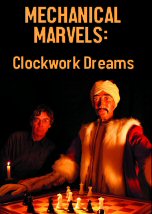
Mechanical Marvels: Clockwork Dreams

   2013    Technology
Professor Simon Schaffer presents the amazing and untold story of automata - extraordinary clockwork machines designed hundreds of years ago to mimic and recreate life. The film brings the past to life in vivid detail as we see how and why these masterpieces were built. Travelling around Europe, Simon uncovers the history of these machines and shows us some of the most spectacular examples, from an entire working automaton city to a small boy who can be programmed to write and even a device that can play chess". All the machines Simon visits show a level of technical sophistication and ambition that still amazes today. As well as the automata, Simon explains in great detail the world in which they were made - the hardship of the workers who built them, their role in global trade and the industrial revolution and the eccentric designers who dreamt them up. Finally, Simon reveals that to us that these long-forgotten marriages of art and engineering are actually the ancestors of many of our most loved modern technologies, from recorded music to the cinema and much of the digital world.

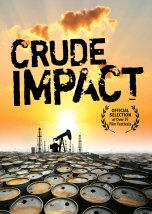
Crude Impact

   2006    Science
The documentary is about the effect of fossil fuels on issues such as global warming, the environmental crisis, society and the questionable practices of oil companies. It examines the interconnection of human domination of the planet and the use of petroleum, and offers solutions for how we can stop our progression down this destructive path. Written and directed by James Jandak Wood. The film has several awards and nominations

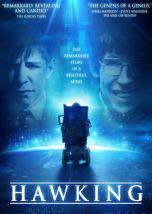
Hawking

   2013    Culture
Hawking is the extraordinary story of the planet's most famous living scientist, told for the first time in his own words and by those closest to him. Made with unique access to Hawking's private life, this is an intimate and moving journey into Stephen's world, both past and present. An inspirational portrait of an iconic figure, Hawking relates his incredible personal journey from boyhood under-achiever, to PhD genius, to being diagnosed with Motor Neuron Disease and given just two years to live. Despite the constant threat of death, Hawking manages to make many remarkable scientific discoveries and rises to fame and super-stardom. Hawking - a remarkable man, and a remarkable movie.

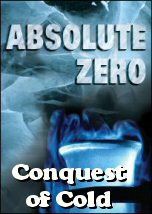
Absolute Zero Conquest of Cold

   2007    Technology
This scientific detective tale tells the story of a remarkable group of pioneers who wanted to reach the ultimate extreme: absolute zero, a place so cold that the physical world as we know it doesn't exist, electricity flows without resistance, fluids defy gravity and the speed of light can be reduced to 38 miles per hour. Absolute zero became the Holy Grail of temperature physicists and is considered the gateway to many new technologies, such as nano-construction, neurological networks and quantum computing. The possibilities, it seems, are limitless. The first episode Chronicles the major discoveries leading towards the mastery of cold, beginning with King James I's court magician, Cornelius Drebbel, who managed to air condition the largest interior space in the British Isles in 1620. Other stories will include the first "natural philosopher," Robert Boyle, a founder of the Royal Society in Great Britain; the Grand Duke Ferdinand II de Medici's involvement in the creation of the first thermometer; the establishment of the laws of thermodynamics by three young scientists, Sadi Carnot, James Joule and William Thomson; and Michael Faraday's critical achievement in liquefying several other gases which set the stage for the commercial application of cold to refrigeration and air conditioning.
Series: Absolute Zero

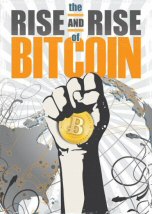
The Rise and Rise of Bitcoin

   2014    Technology
Bitcoin is a peer-to-peer monetary system in which all transaction records are public. Participants can use its open-source software to transfer virtual currency to one another as easily as they might send an email. Bitcoin opens an uncharted world of new possibilities to explore. We'll follow the stories of entrepreneurs and startups that are helping shape the new financial frontier. We'll look at the competitive mining market and the various subcultures within the Bitcoin community." You'll encounter a variety of characters and opinions as we examine the social and political impact of an open-source digital currency. Will the rise of Bitcoin bring a monetary paradigm shift that will forever change the world? Supposedly invented by a mysterious Japanese man named Satoshi Nakamoto (whose current whereabouts are unknown). Because it is designed to have an absolute ceiling of 21 million Bitcoins in circulation (not anticipated until 2040), and the system has no central depository or administrative authority, it has great appeal to libertarians and others who seek alternatives to a perceived corrupt, manipulative banking infrastructure and excessive government regulations. Its low processing fees compared with those of mainstream credit-card companies also hold considerable allure for merchants.
The Last Dance

The Last Dance

2020  Culture
Science and Islam

Science and Islam

2017  History
Enemies of Reason

Enemies of Reason

  Medicine
The Sky at Night

The Sky at Night

2018  Science
Follow This

Follow This

2018  Medicine
How Earth Made Us

How Earth Made Us

2010  Culture