Arguably the most powerful painting about war ever achieved. It portrays the slaughter of civilians after Napoleonic troops entered Madrid in 1808. The programme reveals the historical truths behind the painting and shows exactly how Goya achieved this masterpiece of protest. he painting's content, presentation, and emotional force secure its status as a groundbreaking, archetypal image of the horrors of war. Although it draws on many sources from both high and popular art, The Third of May 1808 marks a clear break from convention. Diverging from the traditions of Christian art and traditional depictions of war, it has no distinct precedent, and is acknowledged as one of the first paintings of the modern era. According to the art historian Kenneth Clark, The Third of May 1808 is 'the first great picture which can be called revolutionary in every sense of the word, in style, in subject, and in intention'. Discover how Goya used drawings by authentic witnesses to depict a real firing squad.
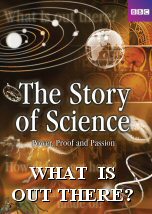
In the last in the series Professor Jim Al-Khalili explores how studying the atom forced us to rethink the nature of reality itself. He discovers that there might be parallel universes in which different versions of us exist, finds out that empty space isn't empty at all, and investigates the differences in our perception of the world in the universe and the reality.
In the final part, Professor Al-Khalili uncovers tales of success and heartache in the story of chemists' battle to control and combine the elements, and build our modern world. He reveals the dramatic breakthroughs which harnessed their might to release almost unimaginable power, and he journeys to the centre of modern day alchemy, where scientists are attempting to command the extreme forces of nature and create brand new elements.
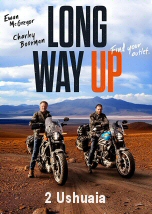
Ewan, Charley, and the team land in Ushuaia, the southernmost tip of South America, but tensions arise due to snow and mechanical issues. Traveling 13000 miles over 100 days on electric bikes is hard to imagine. Ewan McGregor and Charles Boorman find out how challenging their mission is as they embark on a journey on prototype Harley Davidsons and the Rivian trucks. The first obstacle is electricity. While parts of the city have no problems with charging the bikes and the trucks, the countryside is where the duo face issues.
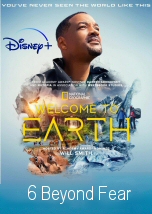
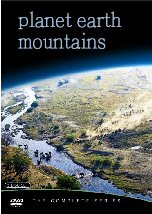
Welcome to an extreme landscape of rock, ice and snow. We tour the mightiest mountain ranges, starting with the birth of a mountain at one of the lowest places on Earth and ending at the summit of Everest. Find out how some of the most secretive animals rise to the challenge of mountain life. Share one of Earth's rarest phenomena, a lava lake that has been erupting for over 100 years. The same forces built the Simian Mountains where we find troops of gelada baboons nearly a thousand strong. In the Rockies, grizzlies build winter dens inside avalanche-prone slopes and climb the peaks to devour abundant summer moths. In another world first, the programme brings us astounding images of a snow leopard hunting on the Pakistan peaks.
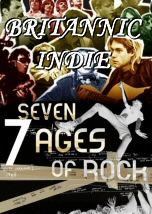
British Indie music was once seen as the bastion of the over earnest 'High Fidelity' snob who would sneer at chart success. the indie label was the redoubt against the forces of mediocrity and was a precious source of integrity and honesty. A generation would find meaning in the music of The Smiths, the archetypal indie group of the 1980's. From the Stone Roses, the heir manque of the indie music crown, via Suede’s dark sexuality and the media saturation of Brit-pop's Blur v Oasis, indie was now a marketing device, ultimately losing any of it's once cherished intimacy and integrity


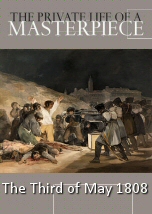



According to the art historian Kenneth Clark, The Third of May 1808 is 'the first great picture which can be called revolutionary in every sense of the word, in style, in subject, and in intention'. Discover how Goya used drawings by authentic witnesses to depict a real firing squad.