






Last Watched

"Allen"  Sort by

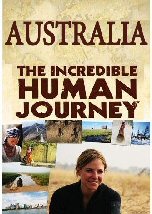
The Incredible Human Journey: Australia

   2009    History
Dr Alice Roberts looks at our ancestors' seemingly impossible journey to Australia. Miraculously preserved footprints and very old human fossils buried in the outback suggest a mystery: that humans reached Australia almost before anywhere else. How could they have travelled so far from Africa, crossing the open sea on the way, and do it thousands of years before they made it to Europe? The evidence trail is faint and difficult to pick up, but Alice takes on the challenge. In India, new discoveries among the debris of a super volcano hint that our species started the journey much earlier than previously thought, while in Malaysia, genetics points to an ancient trail still detectable in the DNA of tribes today. Alice travels deep into the Asian rainforests in search of the first cavemen of Borneo and tests out a Stone Age raft to see whether sea travel would have been possible thousands of years ago, before coming to a powerful conclusion.
Series: The Incredible Human Journey
Sex in Space

   2008    Technology
As man moves to colonize the cosmos, the realities of sexual relationships and reproduction need to be addressed. Probe the physiological, psychological and cultural challenges of sex in space.
Series: The Universe

When Knowledge Conquered Fear

   2014    Science
The episode begins with Tyson describing how pattern recognition manifested in early civilization as using astronomy and astrology to predict the passing of the seasons, including how the passage of a comet was often taken as an omen. Tyson continues to explain that the origin of comets only became known in the 20th century due to the work of Jan Oort and his hypothesis of the Oort cloud. Tyson then continues to relate the collaboration between Edmond Halley and Isaac Newton in the last part of the 17th century in Cambridge. The collaboration would result in the publication of Philosophiæ Naturalis Principia Mathematica, the first major work to describe the laws of physics in mathematical terms, despite objections and claims of plagiarism from Robert Hooke and financial difficulties of the Royal Society of London. Tyson explains how this work challenged the prevailing notion that God had planned out the heavens, but would end up influencing many factors of modern life, including space flight. Tyson further describes Halley's contributions including determining Earth's distance to the sun, the motion of stars and predicting the orbit of then-unnamed Halley's Comet using Newton's laws. Tyson contrasts these scientific approaches to understanding the galaxy compared to what earlier civilizations had done, and considers this advancement as mankind's first steps into exploring the universe. The episode ends with an animation of the Milky Way and Andromeda galaxies' merging based on the principles of Newton's laws.
Series: Cosmos: A Spacetime Odyssey

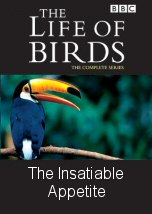
The Insatiable Appetite

   1998    Nature
The next instalment focuses on dietary needs and how different species have evolved beaks to suit their individual requirements. The latter come in a multitude of forms. Blue tits and goldfinches have beaks akin to tweezers, with which to extract seeds, while the hawfinch's razor-like bill can deal with a cherry-stone. However, the crossbill is the only finch that can twist its mandibles in opposite directions. Jays store acorns for winter by burying them in the ground, whereas woodpeckers can keep up to 60,000 of them in one tree trunk. Sap is also desirable, and there are a variety of methods used to obtain it. The hoatzin is the only specialised leaf-eater, and accordingly has a digestive system more akin to that of cattle. Plants recruit birds to aid pollination, and offer nectar as a reward. Hummingbirds eat little else, and the sword-bill's beak is the longest of any bird in relation to its body. Insects are also highly prized, and Galapagos finches are shown to possess some ingenuity as they not only strip bark, but also use 'tools' to reach their prey. Crows are hailed as being among the most intelligent birds, and one is shown using a twig to spear a grub within a fallen log. The robin is an opportunist, and Sir Attenborough observes one seizing morsels as he digs a patch of earth. In South America, a cattle tyrant sits atop an obliging capybara and uses its vantage point to spot passing food that may be dislodged by its grazing partner.
Series: The Life of Birds

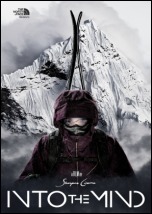
Into The Mind

   2013    Culture
This is a story of rising to the ultimate challenge. Having the courage to risk fatal exposure and the perseverance demanded on the quest for achievement. These are not solely physical feats, they are mental conquest. Sherpas Cinema presents their newest feature film, Into The Mind. With stunning cinematography and groundbreaking storytelling techniques, the Sherpas blur the lines between dream state and reality, and immerse you into the mind of a common skier as he attempts to climb and ski the ultimate mountain. Innovative athlete segments are actually a glimpse into his dreamscape, each one harboring messages that help inform our hero’s current, real-life choices. As you experience the majesty of Alaska, Bolivia, the Himalaya and beyond, Into the Mind paints a philosophical portrait of human kind. How do we balance risk versus reward? Why are we inspired to rise to the challenges in our lives and what do we learn on this journey to attain them?

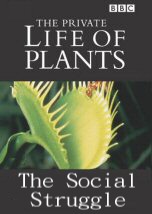
The Social Struggle

   1995    Nature
Fourth episode examines how plants either share environments harmoniously or compete for dominance within them. Attenborough highlights the 1987 hurricane and the devastation it caused. However, for some species, it was that opportunity for which they had lain dormant for many years. The space left by uprooted trees is soon filled by others who move relatively swiftly towards the light. The oak is one of the strongest and longest-lived, and other, lesser plants nearby must wait until the spring to flourish before the light above is extinguished by leaves. Tropical forests are green throughout the year, so brute force is needed for a successful climb to the top of the canopy: the rattan is an example that has the longest stem of any plant. As its name suggests, the strangler fig 'throttles' its host by growing around it and cutting off essential water and light. Some can take advantage of a fallen tree by setting down roots on the now horizontal trunk and getting nutriment from the surrounding moss and the fungi on the dead bark. The mountain ash (eucalyptus regnans) grows so tall, that regeneration becomes a considerable problem. It is easily flammable, so its solution is to shed its seeds during a forest fire and sacrifice itself. It therefore relies on the periodic near-destruction of its surroundings in order to survive. Attenborough observes that catastrophes such as fire and drought, while initially detrimental to wildlife, eventually allow for deserted habitats to be reborn.
Series: The Private Life of Plants
Leaving Neverland

Leaving Neverland

2019  Culture
The Green Planet

The Green Planet

2022  Nature
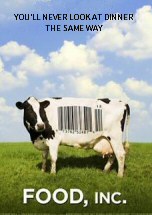
Food Inc

Food Inc

2009  Technology
Long Way Home

Long Way Home

2025  Culture
The Reluctant Traveler

The Reluctant Traveler

2023  Culture