With a humorous and surprisingly revealing look at modern farming, this documentary series follows Jeremy Clarkson as he trades fast cars and city life for the unpredictable challenges of running a working farm in the English countryside. What begins as an ambitious new venture soon becomes a constant battle against weather, bureaucracy, livestock, machinery, and the harsh realities faced by farmers every day. Combining stunning rural landscapes with Clarkson's trademark humor, the series offers an entertaining and eye-opening glimpse into life on the land. In the first three episodes, Jeremy finds himself largely on his own as key members of the team are away, forcing him to take greater responsibility for the farm's daily operations. Persistent rain threatens crucial planting schedules, while new equipment, a new farmhand, and even a potential new business opportunity provide fresh challenges and unexpected lessons. As he searches for a local pub to expand his ambitions, Jeremy also faces competition, difficult decisions, and the constant pressure of keeping the farm running in an environment where success often depends on factors completely beyond his control.
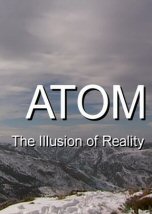
In the last in the series Professor Jim Al-Khalili explores how studying the atom forced us to rethink the nature of reality itself. He discovers that there might be parallel universes in which different versions of us exist, finds out that empty space isn't empty at all, and investigates the differences in our perception of the world in the universe and the reality.
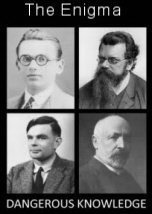
brilliant mathematicians whose genius has profoundly affected us, but which tragically drove them insane and eventually led to them all committing suicide. Kurt Gödel, the introverted confidant of Einstein, proved that there would always be problems which were outside human logic. His life ended in a sanatorium where he starved himself to death. Finally, Alan Turing, the great Bletchley Park code breaker, father of computer science and homosexual, died trying to prove that some things are fundamentally unprovable.
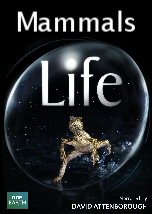
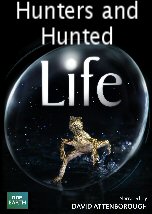
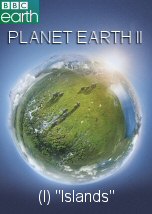
Mammals' ability to learn new tricks is the key to survival in the knife-edge world of hunters and hunted. In a TV first, a killer whale off the Falklands does something unique: it sneaks into a pool where elephant seal pups learn to swim and snatches them, saving itself the trouble of hunting in the open sea. Slow-motion cameras reveal the star-nosed mole's newly-discovered technique for smelling prey underwater: it exhales then inhales a bubble of air ten times per second. Young ibex soon learn the only way to escape a fox - run up an almost vertical cliff face - and young stoats fight mock battles, learning the skills that make them one of the world's most efficient predators.
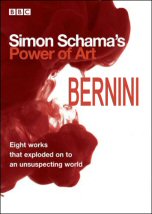
Born in Naples, Bernini was an exceptional talent from an early age and went on to dominate the art world of 17th century Rome. His work epitomised the Baroque style and his sculpture, church interiors and exteriors and town planning could be seen everywhere. Bernini worked under successive Popes; Pope Gregory XV made him a knight and Pope Urban VIII made him as his best friend. He was revered in his time until a jealous rage caused him to have the face of his mistress slashed after discovering her romance with his brother. His reputation fell further after his bell towers for the Cathedral of St Peter's started cracking in 1641. He redeemed himself and kick started his career again with what is arguably his most famous work, The Ecstasy of St Theresa, in 1652.
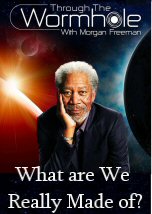
What is the universe made of? If you answered stars, planets, gas and dust, you'd be dead wrong. Thirty years ago, scientists first realized that some unknown dark substance was affecting the way galaxies moved. Today, they think there must be five times our understanding of the universe and the nature of reality itself has drastically changed over the last 100 years - and it's on the verge of another seismic shift. In a 17-mile-long tunnel buried 570 feet beneath the Franco-Swiss border, the world's largest and most powerful atom smasher, the Large Hadron Collider, is powering up. Its goal is nothing less than recreating the first instants of creation, when the universe was unimaginably hot and long-extinct forms of matter sizzled and cooled into stars, planets, and ultimately, us. These incredibly small and exotic particles hold the keys to the greatest mysteries of the universe. What we find could validate our long-held theories about how the world works and what we are made of -- or, all of our notions about the essence of what is real will fall apart.





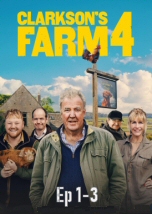

In the first three episodes, Jeremy finds himself largely on his own as key members of the team are away, forcing him to take greater responsibility for the farm's daily operations. Persistent rain threatens crucial planting schedules, while new equipment, a new farmhand, and even a potential new business opportunity provide fresh challenges and unexpected lessons. As he searches for a local pub to expand his ambitions, Jeremy also faces competition, difficult decisions, and the constant pressure of keeping the farm running in an environment where success often depends on factors completely beyond his control.