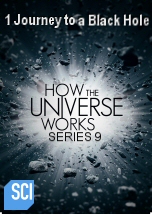
Humans have long gazed up at the night sky, wondering whether other lifeforms and intelligences could be thriving on worlds far beyond our own. But over the last few decades, ultra-sensitive telescopes and dogged detective work have transformed alien planet-hunting from science fiction into hard fact. We expected to find worlds similar to the planets in our own solar system, but we instead discovered a riot of exotic worlds. Vivid animation based on data from the most successful planet hunter of them all, the Kepler space telescope, brings these worlds into view: puffy planets with the density of polystyrene, unstable worlds orbiting two suns and 1,000-degree, broiling gas giants with skies whipped into titanic winds. But perhaps the most startling discovery was the number of worlds that may be contenders for a second Earth, at the right distance from their sun to have that ingredient so crucial for life as we know it, liquid water. Amongst them, we witness the most tantalizing discovery of all: a so-called ‘super-Earth’, situated in the Goldilocks zone - the area just the right distance from a sun to potentially support life - and with the faint signal of water in its atmosphere.
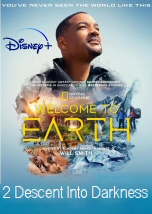
In the second episode, Will Smith descends 3,300 feet to the bottom of the ocean in a deep-water submersible, where even fewer people have gone than outer space. Along the way down, Will and explorer Diva Amon investigate how colour is used in the natural world and the role of bioluminescence. In the oceans, nearly 80 percent of animals use bioluminescence in some way, possibly the most common form of communication on the planet.
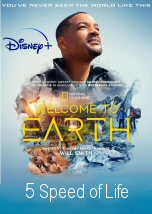
Will Smith discovers hidden worlds of fast and slow in the Earth's oldest desert. Worlds where things go so fast or so slow we don't even know they're happening. This hidden world of speed is everywhere, even 80 feet underwater. Hundreds of tiny anemones, anchored to the rocks, but film them patiently, then speed it up, and this miniature world comes to life. A lizard's tongue is one of the fastest movements in the entire animal kingdom. An orca creates a shock wave by slapping her tail and that pulse can travel through the water at more than a thousand miles an hour. to stuns the herrings she hunts.
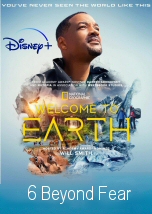
Will Smith confronts his fear of nature on powerful white-water rapids in Iceland. "Over five expeditions, I've followed explorers into situations that were straight-up scary. It was worth it to discover the Earth's wonders. But your boy was tripping more than once. Because when I see wilderness, you know, nothing but nature, I get nervous because I don't understand it."
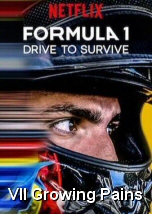
They have the raw talent, but can they handle the pressure? Now Yuki Tsunoda and Esteban Ocon must sink or swim in the rough waters of Formula 1. Yuki Tsunoda had to move from Tokyo to Milton Keynes and F1 cars are proving a bit more difficult to wield than the F2 machine in which he won races. Esteban Ocon is part of the all-French attack (from Enstone) in the shape of Alpine, soaking up the pressure to win the Hungarian GP.
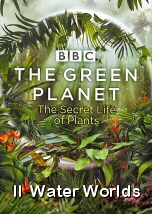
Water plants create some of the most beautiful, bizarre and important habitats on earth. To hold on in torrents, plants use a kind of superglue. Some are armed with vicious weapons to fight titanic battles for space. Others form perfect spheres and escape from animal enemies by rolling. Where nutrients are washed away, plants turn into hunters of animals, laying traps and even counting to ensure their success. In this episode we explore those watery worlds with David Attenborough, from Croatia to Brazil, from Colombia to Thailand, the brilliantly coloured flowers smother lakes, and in one magical river in Brazil, the water bubbles like champagne as plants create the atmosphere itself.









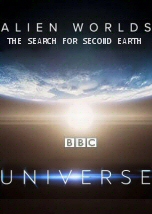




But perhaps the most startling discovery was the number of worlds that may be contenders for a second Earth, at the right distance from their sun to have that ingredient so crucial for life as we know it, liquid water. Amongst them, we witness the most tantalizing discovery of all: a so-called ‘super-Earth’, situated in the Goldilocks zone - the area just the right distance from a sun to potentially support life - and with the faint signal of water in its atmosphere.