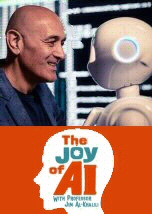
Professor Jim Al-Khalili looks at how we have created machines that can simulate, augment, and even outperform the human mind - and why we shouldn't let this spook us. He reveals the story of the pursuit of AI, the emergence of machine learning and the recent breakthroughs brought about by artificial neural networks. He shows how AI is not only changing our world but also challenging our very ideas of intelligence and consciousness.
Along the way, we'll investigate spam filters, meet a cutting-edge chatbot, look at why a few altered pixels makes a computer think it's looking at a trombone rather than a dog and talk to Demis Hassabis, who heads DeepMind and whose stated mission is to 'solve intelligence, and then use that to solve everything else'. Stephen Hawking remarked 'AI could be the biggest event in the history of our civilisation. Or the worst'. Jim argues that AI is a potent new tool that should enhance our lives, not replace us.
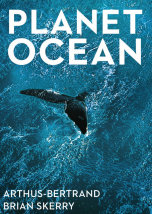
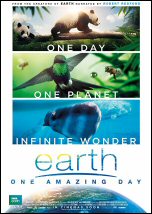
An astonishing journey revealing the awesome power of the natural world. Over the course of one single day, we track the sun from the highest mountains to the remotest islands, from exotic jungles to urban jungles. Breakthroughs in filmmaking technology bring you up close with a cast of unforgettable characters: a baby zebra desperate to cross a swollen river, a penguin who heroically undertakes a death-defying daily commute to feed his family, a family of sperm whales who like to snooze vertically, and a sloth on the hunt for love. Told with humour, intimacy and a jaw-dropping sense of cinematic splendour, Earth: One Amazing Day highlights how every day is filled with more wonders than you can possibly imagine- until now.
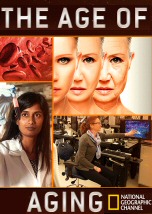
In recent years, close study of the aging process has opened up new ways that could help us all live healthier for longer. Can we move beyond treating individual diseases, and instead treat the aging process itself? But would a longer life necessarily be a better life? A loose-knit group of researchers believe the real breakthrough is extending our health span - the period of life spent free of disease". Hear from Laura Deming, who dropped out of M.I.T. at the age of 14 and committed herself to finding and funding projects that can expand the human health span, and Dr. Brian Kennedy, whose work in the basic biology of aging has been crucial to the development of countless other researchers' work.
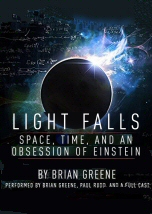
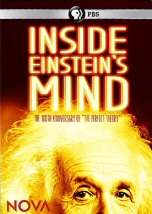
On November 25th, 1915, Einstein published his greatest work: General Relativity. The theory transformed our understanding of nature’s laws and the entire history of the cosmos, reaching back to the origin of time itself. Now, in celebration of the 100th anniversary of Einstein’s achievement, discover the inside story of Einstein’s masterpiece". The story begins with the intuitive thought experiments that set Einstein off on his quest and traces the revolution in cosmology that is still playing out in today’s labs and observatories. Discover the simple but powerful ideas at the heart of relativity, illuminating the theory—and Einstein’s brilliance—as never before. From the first spark of an idea to the discovery of the expanding universe, the Big Bang, black holes, and dark energy, NOVA uncovers the inspired insights and brilliant breakthroughs of “the perfect theory.”
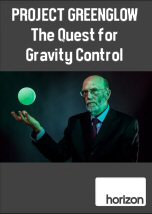
For centuries, the precise workings of gravity have confounded the greatest scientific minds - from Newton to Faraday and Einstein - and the idea of controlling gravity has been seen as little more than a fanciful dream. Yet in the mid 1990s, UK defence manufacturer BAE Systems began a ground-breaking project code-named Greenglow. Nasa was simultaneously running its own Breakthrough Propulsion Physics Project". It was concerned with potential space applications of new physics, including concepts like 'faster-than-light travel' and 'warp drives'. Looking into the past and projecting into the future, Horizon explores science's long-standing obsession with the idea of gravity control. It looks at recent breakthroughs in the search for loopholes in conventional physics and examines how the groundwork carried out by Project Greenglow has helped change our understanding of the universe. Gravity control may sound like science fiction, but the research that began with Project Greenglow is very much ongoing, and the dream of flying cars and journeys to the stars no longer seems quite so distant.
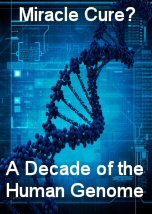
More than a decade ago, scientists announced that they had produced the first draft of the human genome, the 3.6 billion letters of our genetic code. It was seen as one of the greatest scientific achievements of our age, a breakthrough that would usher in a new age of medicine. Find out how close we are to developing the life-changing treatments that were hoped for". Follow three people, each with a genetic disease, as they go behind the scenes at some of Britain's leading research labs to find out what the sequencing of the human genome has done for them - and the hope this remarkable project offers all of us.








Along the way, we'll investigate spam filters, meet a cutting-edge chatbot, look at why a few altered pixels makes a computer think it's looking at a trombone rather than a dog and talk to Demis Hassabis, who heads DeepMind and whose stated mission is to 'solve intelligence, and then use that to solve everything else'. Stephen Hawking remarked 'AI could be the biggest event in the history of our civilisation. Or the worst'. Jim argues that AI is a potent new tool that should enhance our lives, not replace us.