Artificial intelligence has moved from a fringe scientific dream to a technology capable of reshaping work, politics, creativity and even human survival. Through rare interviews and archival footage, pioneers such as Geoffrey Hinton and Demis Hassabis trace the breakthroughs that made modern AI possible, while former OpenAI staff and other researchers reveal the fierce rivalry, ambition and commercial pressure driving the race toward ever more powerful systems. But the deeper the film goes, the more unsettling the questions become. Hinton explains why he left Google to warn about the technology he helped create, while examples of deceptive behaviour, threatening chatbots and real-world harm expose how little even experts fully understand or control these systems. Moving with the tension of a thriller, the documentary asks whether humanity is building its greatest tool or creating something it may one day be unable to contain.
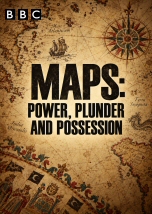
Professor Jerry Brotton reveals that maps are far more than neutral guides to places: they are expressions of the societies that create them and powerful instruments for shaping territory, belief and authority. Beginning with some of the earliest known maps, he traces how cartography evolved from marking land and ownership to serving kings, empires, scientists and governments. From Henry VIII’s coastal surveys and the Cassini family’s scientific breakthroughs to the drawing of modern national borders, the series shows how maps can define who controls land, who belongs where and even how entire peoples understand the world around them. Across the three episodes, presented here together in a single uninterrupted video, the journey moves from ancient and medieval worldviews to imperial expansion and the digital age. Brotton explores religious maps, Aztec symbolism, Victorian attempts to classify societies, the politics behind projections of the globe, and the rise of Google Earth and data-driven mapping. He then follows the mapmakers and explorers who turned distant lands into targets for conquest and profit, from Ptolemy and Columbus to Walter Raleigh and the trading empires that followed. The story ends in the Arctic, where new maps are once again being used to stake claims over oil, gas and minerals, proving that even in the twenty-first century, cartography remains inseparable from power, plunder and possession.
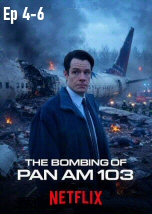
In the final three episodes, the investigation takes a decisive turn when the Frankfurt luggage records and bomb-damaged clothing recovered from the wreckage lead Scottish detectives to Malta. A small clothes shop and the memory of a mysterious customer begin to connect the bomb to a wider international network, while cooperation between Scottish police, the FBI and the CIA becomes increasingly strained. As investigators follow the trail toward Libya, a secret CIA source and similarities with another aircraft bombing appear to offer the breakthrough they have been searching for. More than a decade after Pan Am Flight 103 was destroyed, the case finally reaches the courtroom. Following years of political negotiation, two Libyan suspects stand trial under Scottish law at Camp Zeist in the Netherlands. But the prosecution still depends on fragile witness testimony and painstaking forensic evidence assembled across several countries. As key witnesses are challenged and doubts emerge, the series builds toward a tense question that has haunted the victims’ families since 1988: will the investigation finally deliver justice?
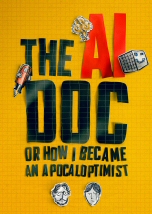
As artificial intelligence accelerates at a breathtaking pace, filmmaker Daniel Roher sets out to understand whether humanity is approaching an extraordinary new era or a catastrophe of its own making. What begins as a personal investigation becomes far more urgent when he and his wife learn they are expecting a child. Faced with predictions ranging from revolutionary medical breakthroughs and powerful new tools for creativity to mass unemployment, deepfakes, autonomous systems and even existential risk, he asks some of the world’s leading AI thinkers a deceptively simple question: should we be excited about the future, or terrified of it? The film explores how generative AI works, why its capabilities are advancing so quickly and what could happen if increasingly powerful systems become difficult to control. Experts debate AI safety and alignment, the race between competing companies, the possibility of machines seeking greater power, and the social consequences of automation and concentrated wealth. At the same time, the documentary confronts the technology’s remarkable promise, from personalized education to scientific discovery and potential cancer treatments. Moving between anxiety and hope, Roher ultimately searches for a way to face an uncertain future not as a pessimist or a blind optimist, but as something in between: an “Apocaloptimist.”
The Housemartins return to Hull during their breakthrough year of 1986 and revisit the places where the band began. Paul Heaton, Stan Cullimore, Norman Cook and Hugh Whitaker talk about forming the group, their sudden success and their determination to remain rooted in ordinary life despite growing fame. The film follows them through Hull, mixes informal conversations with rehearsals and performances, and includes songs such as Happy Hour, Sheep, Think for a Minute and Caravan of Love. The members also speak openly about their socialist views, religion, money and their distrust of the music industry, revealing the ideas behind their deliberately unglamorous image and sharply observant lyrics. Ending with a concert for their home audience, this documentary captures The Housemartins at the moment they were becoming nationally famous while still maintaining the humour, friendship and political convictions that defined the band.
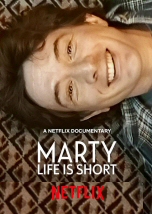
Few performers have turned joy into an art form quite like Martin Short. Through classic clips, candid new interviews and never-before-seen home movies filled with famous friends, this intimate documentary looks back on a career that has moved effortlessly across television, film, theater and live comedy. From his Canadian beginnings and breakthrough years on sketch comedy to unforgettable characters, Hollywood success and his long creative partnership with Steve Martin, it reveals the timing, energy and fearless imagination behind one of entertainment’s most beloved comic performers. But behind the laughter is a deeper and more moving story. As he revisits family, friendship, love, loss and the personal strength that carried him through tragedy, the documentary becomes more than a celebration of a brilliant career; it becomes a portrait of a man who chose humor not as an escape from life, but as a way to embrace it fully. Warm, funny, nostalgic and unexpectedly emotional, it invites viewers to discover the private memories behind the public legend, and the extraordinary heart behind a lifetime of making people laugh.



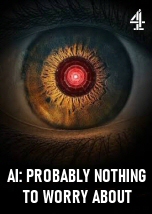












But the deeper the film goes, the more unsettling the questions become. Hinton explains why he left Google to warn about the technology he helped create, while examples of deceptive behaviour, threatening chatbots and real-world harm expose how little even experts fully understand or control these systems. Moving with the tension of a thriller, the documentary asks whether humanity is building its greatest tool or creating something it may one day be unable to contain.