The film unlocks the secrets to an innovative concept called circularity, an economic system based on the idea that nothing should go to waste. It's a deceptively simple idea that is at the heart of nature and the natural world, but very few of us actually live this way. And yet, it has the potential to save our planet's resources and save us from the ravages of future climate change. The film tells the story of four visionaries from around the world, whose thinking shapes and informs the concept of circularity: 102-year-old inventor Dr. James Lovelock, biomimicry biologist Janine Benyus, engineer and designer Arthur Huang, and financier John Fullerton. The extraordinary experiences of these very different people changed the way they think about humanity's future. Through the deeply personal transformation of each visionary profiled, the film explores concrete solutions individuals and communities are using to move toward a more circular society, rethinking everything from our food, our cities, our financial system, even our fashion industry.
The documentary delves deep into the mysterious and catastrophic collapse of ancient civilizations during the late Bronze Age, as empires from Greece to ancient Egypt were wiped off the map. It explores the various theories and hypotheses that have emerged to explain their sudden downfall, revealing the tumultuous events that brought an end to a once-thriving era of human history. Through invasions, mega-droughts, natural disasters, and rebellions, we discover the complex web of factors that were involved. With stunning visual imagery, expert interviews and immersive storytelling, this film offers a fascinating glimpse into one of the most pivotal and enigmatic periods of human history. And it warns that we could be facing a similar combination of threats today.
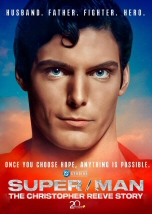
Christopher Reeve was a world movie star, but in 1995 he suffered a near-fatal horseback riding accident that left him paralyzed from the neck down. He later became an activist for spinal cord injury treatment and the rights of people with disabilities. This film offers a poignant exploration of Christopher Reeve's extraordinary life, weaving together intimate interviews with his children, Matthew, Alexandra, and Will. It chronicles his journey from a difficult childhood and a strained relationship with his father to his meteoric rise as Superman, a role that made him a global icon. The narrative transitions seamlessly between his career highs—starring in acclaimed films, enduring public missteps, and returning to the stage—and the personal challenges that shaped him, including his complex relationships, the birth of his children, and his eventual romance with Dana Morosini, the love of his life. After the devastating horse-riding accident that left him paralyzed, Reeve's unwavering spirit redefined heroism. The film highlights his advocacy for spinal cord research, the creation of the Christopher Reeve Foundation, and the enduring impact he and Dana had on disability rights. Their story is one of resilience, love, and inspiration, with their children now carrying on their legacy. Through moments of triumph and heartbreak, this film celebrates a man who truly embodied the spirit of Superman, both on and off-screen.
After a small plane crashes, four indigenous children struggle to survive in the Colombian Amazon jungle, relying on ancestral wisdom as an unprecedented rescue mission unfolds amid the jungle's challenges. Directed by Oscar winner Orlando von Einsiedel, this documentary tells the incredible story from the point of view of those involved in this epic rescue: the children's family, indigenous communities and leaders, and the Colombian army.
The filmmakers challenge former Indonesian death-squad leaders to reenact their mass-killings in whichever cinematic genres they wish, including classic Hollywood crime scenarios and lavish musical numbers. Anwar Congo and his friends have been dancing their way through musical numbers, twisting arms in film noir gangster scenes, and galloping across prairies as yodeling cowboys. Their foray into filmmaking is being celebrated in the media and debated on television, even though Anwar Congo and his friends are mass murderers. Medan, Indonesia. When the government of Indonesia was overthrown by the military in 1965, Anwar and his friends were promoted from small-time gangsters who sold movie theatre tickets on the black market to death squad leaders. They helped the army kill more than one million alleged communists, ethnic Chinese, and intellectuals in less than a year. As the executioner for the most notorious death squad in his city, Anwar himself killed hundreds of people with his own hands. The Act of Killing is about killers who have won, and the sort of society they have built. Unlike ageing Nazis or Rwandan génocidaires, Anwar and his friends have not been forced by history to admit they participated in crimes against humanity. Instead, they have written their own triumphant history, becoming role models for millions of young paramilitaries. The Act of Killing is a journey into the memories and imaginations of the perpetrators, offering insight into the minds of mass killers. And The Act of Killing is a nightmarish vision of a frighteningly banal culture of impunity in which killers can joke about crimes against humanity on television chat shows, and celebrate moral disaster with the ease and grace of a soft shoe dance number.
When Norwegian gamer Mats Steen died at age 25, his parents mourned what they thought was an isolated life. It was only once they had access to his blog that they discovered the deep friendships he created virtually before passing away from a degenerative muscular disease. They were unaware that Mats had long been leading a vibrant digital life that had left a profound impact on a community of fellow gamers. The film takes us on a journey through the breadth of Mats Steen's adventurous online life, introducing us to Ibelin, his charismatic World of Warcraft persona. Through reconstructed animated moments from Mats' gameplay, narrated entries from his blog and interviews with people who knew him as Ibelin, a picture of a remarkable young man emerges, one that underscores how community and soulful relationships can transcend the boundaries of the physical world.












The film tells the story of four visionaries from around the world, whose thinking shapes and informs the concept of circularity: 102-year-old inventor Dr. James Lovelock, biomimicry biologist Janine Benyus, engineer and designer Arthur Huang, and financier John Fullerton. The extraordinary experiences of these very different people changed the way they think about humanity's future.
Through the deeply personal transformation of each visionary profiled, the film explores concrete solutions individuals and communities are using to move toward a more circular society, rethinking everything from our food, our cities, our financial system, even our fashion industry.