






Last Watched

"UN"  Sort by

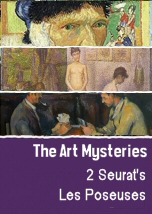
Seurat Les Poseuses

   2020    Art
Hanging in the Barnes Foundation in Philadelphia, Seurat’s Les Poseuses is probably his least-known painting. It is also a picture brimming with codes and hidden meanings. It shows three nudes in the artist’s studio, but included in the background is Seurat’s famous masterpiece, A Sunday Afternoon on the Island of La Grande Jatte. Why is it there? What is it trying to say? Why two pictures at once? Waldemar Januszczak investigates.
Series: The Art Mysteries
Shadows of Forgotten Ancestors

   2020    Nature
When Homo sapiens, which means 'wise ones,' discovered and controlled fire hundreds of thousands of years ago, everything changed. Fire allowed us to cook food and heat dwellings, and it served as a focal point for storytelling and sharing cultural identity among community members. We don't yet have established parameters for what it means to be 'distinctly human,' It would seem the only thing that separates us from other animals, Neil deGrasse Tyson ponders, is our neurotic need to feel 'special'. Against the backdrop of the Halls of Extinction, Tyson insists that there must be a clear distinction between ourselves and animals that justifies our eating them, wearing them and even bringing an end to their species.
From the birth of the devil in ancient Persia to a searing story of saintliness among macaque monkeys, this episode is an exploration of human potential for change. It concludes with the story of how one of history's greatest monsters was transformed into one of its shining lights.
Series: Cosmos: Possible Worlds

Coming of Age In The Anthropocene

   2020    Nature
At 11 o'clock on New Year's Eve of the Cosmic Calendar, Homo erectus stood up for the first time, freeing its hands and earning the species its name. They began to move around, to explore, daring to risk everything to get to unknown places. Our Neanderthal relatives lived much as we did and did many of the things we consider to be 'human.' More restless than their cousins the Neanderthals and Denisovans, our Homo sapiens ancestors crossed seas and unforgiving landscapes, changing the land, ocean and atmosphere, leading to mass extinction. The scientific community gave our age a new name, 'Anthropocene.'
Since the first civilizations we've wondered if there's something about human nature that contains the seeds of our destruction. Syukuro Manabe was born in rural Japan and took an intense interest in Earth's average global temperature. In the 1960's, he would assemble the evidence he needed to predict the increase of Earth's temperature due to greenhouse gases until it becomes an uninhabitable and toxic environment, leading to our extinction. 'This doesn't have to be,' says Neil deGrasse Tyson, 'it's not too late. There's another hallway, another future we can still have; we'll find a way.'
Series: Cosmos: Possible Worlds

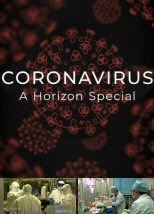
Coronavirus Special Part 2

   2020    Medicine
Dr Chris van Tulleken, Dr Hannah Fry and Michael Mosley examine the latest research and explore some of the big questions about Covid-19 and the pandemic it has created. Michael visits the UK government's high-security laboratory Porton Down, where vaccines are being tested. He also uncovers what the experience of the 2002 SARs epidemic reveals about this one. Both were caused by coronaviruses, but certain key changes to today's virus have allowed it to infect the world, where SARs was contained.
Series: Coronavirus Special

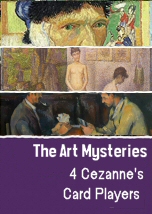
Cezanne Card Players

   2020    Art
One of Cezanne’s best-known pictures, but it is also one of his most mysterious. Why did the so-called father of modern art paint two old men hunched over a game of cards? What is the picture trying to tell us?
By exploring Cezanne’s puzzling religious beliefs and his passion for Mary Magdalene, the patron saint of Provence, Waldemar Januszczak uncovers the surprising secrets of a haunting masterpiece.
Series: The Art Mysteries

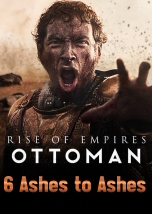
Ashes to Ashes

   2020    History
Hours before Mehmed II launches his final assault, an ominous sight shakes both sides. Rumors of a 40-ship fleet's imminent arrival have swirled for weeks, but it's exact whereabouts remained unknown. Ottoman cannons reduced the city walls to rubble, and Venetian reinforcements arrived too late. The conquest of Constantinople ushers in a new era for the Ottoman Empire, being a dominant force in world politics for 300 years. Mehmed II, in many senses, changed the nature of world history.
Series: Rise of Empires: Ottoman