Planets beyond our solar system are known to astronomers as exoplanets. They are at trillions of miles from Earth and yet, it might be possible to detect a faint signature of life in them. From the light of the stars they orbit that passes through the atmosphere of an exoplanet, it is possible to capture the chemical fingerprint of the elements in that atmosphere. The fictional world Eden is orbiting not one star, but two. The light from its twin stars powers photosynthesis, pumping more oxygen into the atmosphere than in Earth, allowing life to thrive. Grazers are constantly alert to danger, because the canopy is home to predators perfectly evolved to live among the trees. In Episode 3, another topic are fungi and the role they could play on exoplanets. Ecologist Thomas Crowther talks about the role mycelial networks play in the Rothiemurchus forest in Scotland.
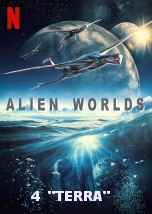
What sort of alien civilizations might exist in the vastness of space? Terra is the fictional world imagined in Episode 4, a planet nine billion years old, twice as old as Earth. Old enough that a truly advanced intelligence could evolve. It was once a fertile world, now it is barren. But life can still thrive here in artificial domes. Over time, they've evolved not to need their bodies. They exist only as neural tissue. They never age, they never die. They're monitored and maintained by robots. If alien civilizations are statistically so likely, why haven't astronomers found any sign of them? Where is everyone? Every time we look at an individual star, that's like dropping a bucket in the ocean. We're going to have to look at a lot of stars and to search through a lot of data until we find the clue that leads us to another civilization.
In the third episode, the discovery of extraterrestrial life might face an impossible challenge: the physics of the universe itself; but using cutting-edge tech, experts might be on the verge of a groundbreaking find -- and the evidence could already be in hand.
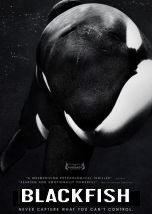
The story of Tilikum, a captive killer whale that has taken the lives of several people , including a top killer whale trainer, underscores the consequences of keeping these powerful animals in captivity, the problems within the sea-park industry, the man's relationship to nature, and how little has been learned about these highly intelligent and sentient mammals. Tilikum was captured in the northern Atlantic Ocean in 1983 and taken to Sealand of the Pacific, a now-shuttered park near Victoria, British Columbia. Former Sealand trainers interviewed in 'Blackfish' say the park’s female killer whales would aggressively gang up on Tilikum, particularly when they were confined in a 20-foot-by- 30-foot pool overnight.
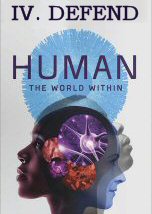
A look into how the body defends itself against all odds through the stories of a nature survivalist, rancher twins, a doctor who survived Ebola and a cancer therapy recipient. The Immune System, essential to our survival every second, is the most complex and least understood piece of our biology.
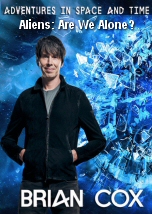
Brian Cox looks at our attempts to answer one of the most profound questions we can ask – are we alone in the universe? With scientists sending space probes to the furthest reaches of our solar system and beyond, the scientific search for alien life has begun. Inspired by a childhood love of science fiction, Brian still hopes to hear from ET. In this film, he explains why this search deserves to be taken seriously, and he explores the chances of it happening.













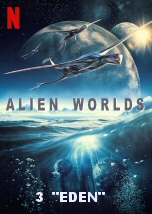



The fictional world Eden is orbiting not one star, but two. The light from its twin stars powers photosynthesis, pumping more oxygen into the atmosphere than in Earth, allowing life to thrive. Grazers are constantly alert to danger, because the canopy is home to predators perfectly evolved to live among the trees. In Episode 3, another topic are fungi and the role they could play on exoplanets. Ecologist Thomas Crowther talks about the role mycelial networks play in the Rothiemurchus forest in Scotland.