














Last Watched

"Hun"  Sort by

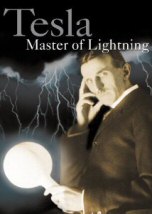
Tesla: Master of Lightning

   2007    History
The story of Nikola Tesla, the great scientist, visionary, and inventor who gave the world alternating current electricity, as well as being the father of radio. The film tells the story of this man's astonishing genius, his visions and inventions. Tesla's own scientific and autobiographical writings, as well as archival photographs and re-enactments are used to tell the story. A native of Austro-Hungary, Tesla came to America in 1884. Working first with Edison, the two inventors fell out over Edison's insistence on using direct current. Tesla took his alternating current vision to Westinghouse. Tesla worked to unlock the secrets of energy and electricity. The film follows Tesla's exploits and eccentricities, which made him a darling of the press. Largely forgotten today in spite of the great debt the modern world owes him, the film pays tribute to this overlooked genius
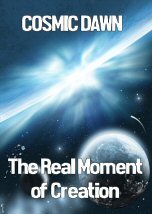

Cosmic Dawn: The Real Moment of Creation

   2015    Science
Forget the Big Bang. The real moment of creation was the Cosmic Dawn - the moment of first light. It's the moment the first stars were born, the moment that lit up the Universe, and made the first structure and the first ingredients of life. This is the scientific version of the story of Genesis. The Big Bang gets all the credit for creating our universe. But in fact, the universe it gave was dark and boring. There were no stars, no galaxies, just a vast, black fog of gas - the cosmic dark ages". But, after a hundred million years of nothing, came a dramatic moment of transformation - the Cosmic Dawn. Astronomers are now trying to witness this cosmic dawn. For the first time they have the tools to explore the very first stars of the universe and to tell the scientific story of our creation.

Workingman Death

   2005    Culture
Austrian director Michael Glawogger travels to five countries to focus on some of the worst jobs imaginable: Ukrainian miners crawl into tiny cracks in old coal pits to scratch out a few bags of winter fuel; Indonesian workers trudge long distances carrying baskets with hundreds of pounds of sulfur chunks extracted from a steaming mountain; Pakistanis risk explosions and burial under tons of scrap iron as they dismantle huge carrier ships. The visuals are everything here. Despite the hardships depicted, many sequences have a dreamlike beauty. In addition, the director has a bone-dry sense of irony; during the Ukraine scenes, he frequently cuts away to a statue of Stakhanov, the "hero" lauded by the Soviets for his superhuman work habits. He also shows us an old German smelting works that's been converted into a theme park.

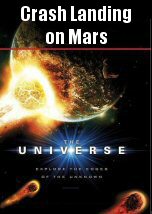
Crash Landing on Mars

   2011    Technology
What might happen if the first manned mission to Mars crashes hundreds of miles from the rocket that would take them back home? Could they survive the crash, and travel across the brutal Martian surface to their home ship? We'll show what the astronauts would have to do to survive dust storms and space radiation, while extracting vital resources like water from the Martian soil itself. It's a dramatic vision of the very near future, where survival can depend on pre-industrial technology and human ingenuity.

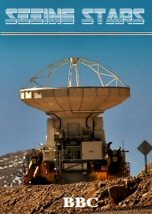
Seeing Stars

   2011    Science
Around the world, a new generation of astronomers are hunting for the most mysterious objects in the universe. Young stars, black holes, even other forms of life. They have created a dazzling new set of super-telescopes that promise to rewrite the story of the heavens. This film follows the men and women who are pushing the limits of science and engineering in some of the most extreme environments on earth. But most strikingly of all, no-one really knows what they will find out there.

Humpback Whale

   2006    Nature
Few sounds are more beautiful or moving than the underwater songs of the humpback whale. Male whales compete with their songs, which often last for 10 minutes at a time, and can be repeated for hours on end. Whales separated by thousands of miles of sea will sing almost identical songs. Researchers have found that the songs change throughout the breeding months, following a mysterious pattern repeated across the waves. Whales also use sound to hunt. To catch herring, humpback whales release a stream of bubbles to form a shimmering, circular fishing net. Emitting a repetitive loud scream, they scare the fish into a tight ball, then lunge out of the water to swallow the shoal whole. Now it seems that the long-held image of the gentle giant must change to one of a ferocious and opportunistic hunter.