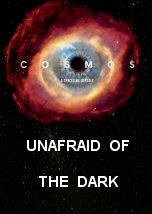
The centre of our galaxy is home to an invisible monster of unimaginable power – a supermassive black hole named Sagittarius A star, with four million times the mass of the Sun. Recent astronomical breakthroughs have confirmed not only that black holes like Sagittarius A star exist, but that these bizarre invisible objects may be the ultimate galactic protagonists. Stunning CGI takes us back to witness the fiery origins of our galaxy’s black hole 13.6 billion years ago, when the early universe was home to colossal blue stars, and when they ran out of fuel, they collapsed under their own enormous mass, crushing down into an object so small and so dense it punched a hole in the fabric of the universe. Over billions of years, Sagittarius A star feasted on nearby gas, stars, and through cataclysmic mergers with other black holes. A breakthrough discovery by Nasa’s Fermi gamma-ray telescope has shown that our black hole had the power to sculpt the entire galaxy, creating vast bubbles of gas above and below our galaxy and even protecting stars systems as ours. In a mind-bending conclusion, Brian Cox reveals how our modern understanding of black holes is challenging our concepts of reality to the breaking point. In trying to understand the fate of objects that fall into Sagittarius A star, scientists have come to a stunning conclusion: space and time, concepts so foundational to how we experience the world around us, are not as fundamental as we once thought.
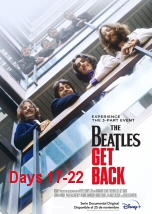
The Beatles continue recording as the deadline for completing the project, caused by Ringo Starr's filming schedule for The Magic Christian, approaches. McCartney continues to hope that the band will perform live for an audience and Lennon meets American businessman Allen Klein for the first time. On the penultimate day, the Beatles perform an unannounced concert on the roof of the Apple Corps building, attracting crowds of passers-by as well as the attention of the Metropolitan Police.
In 1940, France has fallen and Hitler orders Operation Sealion, the invasion of Great Britain. But first the Luftwaffe must defeat the RAF for seaborne landings to succeed. In July 1940 an epic struggle in the skies above England begins. Only a brilliant defensive system and the bravery of young pilots stand in the Luftwaffe’s way. Wave after wave of German bombers are attacked by British planes. Featuring the last interview with the youngest Spitfire-pilot in the battle, Geoffrey Wellum.
Nathan decides to practice his own assertiveness in relationships by challenging Angela over their son's religious upbringing. Angela, a fervent Christian, refuses to allow Adam to be raised in Nathan's Jewish faith, so Nathan secretly brings his son to lessons with a tutor in Judaism under the pretense of swimming lessons. Seeking solace outside the house, Nathan opens his replica Alligator Lounge to the public under the name Nate's Lizard Lounge. The co-parents argue over a comedy skit featuring six-year-old Adam as 'Dr. Fart' and a joke about eating faeces, which Angela claims is a Satanic practice. Nathan rehearses the confrontations with a fake Angela, and in one scenario, she harshly criticizes Nathan's emotional detachment and questions the ethics of the entire production. However, in their real final confrontation, Angela simply decides to quit the rehearsal. Nathan continues to raise Adam, now as a single parent.
As Chris bulks up for ‘Thor: Love and Thunder’ he needs to build a body that looks right for an immortal god. But, he also wants the kind of muscles that are scientifically proven to help him stay strong and healthy as he grows older in real life. Teaming up with extreme sports guru Ross Edgley, he trains for a grueling 100-foot rope climb challenge, changing him from an ornament into an instrument.
Chris has always worked to keep his body healthy; now it’s time to start looking after his brain. Neurologist Dr. Sharon Sha challenges him to go off-grid into the wilderness without a GPS or map. Teaming up with his buddy, First Nations artist Otis Hope Carey, Chris will need to tune into nature to navigate through Otis’ remote ancestral homeland. The hike stirs up Chris’s most precious memories.























Stunning CGI takes us back to witness the fiery origins of our galaxy’s black hole 13.6 billion years ago, when the early universe was home to colossal blue stars, and when they ran out of fuel, they collapsed under their own enormous mass, crushing down into an object so small and so dense it punched a hole in the fabric of the universe. Over billions of years, Sagittarius A star feasted on nearby gas, stars, and through cataclysmic mergers with other black holes. A breakthrough discovery by Nasa’s Fermi gamma-ray telescope has shown that our black hole had the power to sculpt the entire galaxy, creating vast bubbles of gas above and below our galaxy and even protecting stars systems as ours.
In a mind-bending conclusion, Brian Cox reveals how our modern understanding of black holes is challenging our concepts of reality to the breaking point. In trying to understand the fate of objects that fall into Sagittarius A star, scientists have come to a stunning conclusion: space and time, concepts so foundational to how we experience the world around us, are not as fundamental as we once thought.