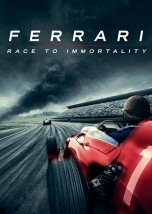
The 1950's - the iconic Scuderia Ferrari battle to stay on top in one of the deadliest decades in motor racing history. Cars and drivers were pushed to their limits, and the competition for the world championship meant racing on a knife edge where one mistake could take a life. At the centre of it all was Enzo Ferrari, a towering figure in motor racing who was driven to win at any cost. Amidst the stiff competition within his Ferrari team, two of its British stars, Peter Collins and Mike Hawthorn, put friendship first and the championship second. Ferrari: Race to Immortality tells the story of the loves and losses, triumphs and tragedy of Ferrari's most celebrated drivers in an era where they lived la dolce vita during the week and it was win or die on any given Sunday.
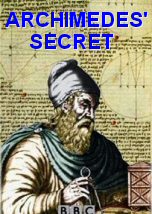
This is the story of a book that could have changed the history of the World. To the untrained eye, it is nothing more than a small and unassuming Byzantine prayer book. For faintly visible beneath the prayers on its pages are other, unique, writings - words that have been lost for nearly two thousand years. The text is the only record of work by one of the world's greatest minds - the ancient Greek, Archimedes - a mathematical genius centuries ahead of his time. Hidden for a millennium in a middle eastern library, it has been written over, broken up, painted on, cut up and re-glued. But in the nick of time scientists have saved the precious, fragile document, and for the first time it is revealing just how revolutionary Archimedes' ideas were. If it had been available to scholars during the Renaissance, we might have reached the Moon over a hundred years ago.
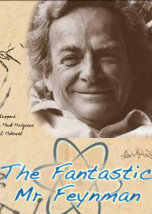
Richard Feynman is one of the most iconic, influential and inspiring scientists of the 20th century. He helped design the atomic bomb, solved the mystery of the Challenger Shuttle catastrophe and won a Nobel Prize. 25 years after his death - in his own words and those of his friends and family - this is the story of the most captivating communicator in the history of science.
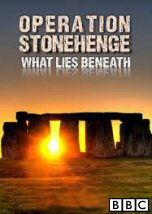
Stonehenge is an icon of prehistoric British culture, an enigma that has seduced archaeologists and tourists for centuries. Why is it here? What is its significance? And which forces inspired its creators? Now a group of international archaeologists led by the University of Birmingham and the Ludwig Boltzman Institute in Vienna believe that a new state-of-the-art approach is the key to unlocking Stonehenge's secrets. For four years the team have surveyed and mapped every monument, both visible and invisible, across ten square kilometres of the sacred landscape to create the most complete digital picture of Stonehenge and the surrounding area over millennia. Known monuments have yielded more data than ever before, revealing hidden structures within, and new finds are revolutionising the very timeline of Stonehenge. The film takes the viewer on a prehistoric journey from 8000 BC to 2500 BC as the scientists uncover the very origins of Stonehenge, learning why this landscape is sacred, preserved and has been revered by following generations. Evidence of war and conflict, as well as the cultivation of ideas and industry, is explored to reveal complex communities with international trade links as far-reaching as Spain and central Europe.
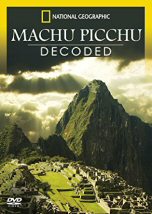
Deep in the Andean mountains lays a mysterious ruin named Machu Picchu. For 400 years it sat abandoned on its misty cliff, the quintessential lost city in the jungle. Rediscovered in 1911, it contained no written records or carvings, nothing that could shed light on its history. For a century since, it has defied the endless scores of visitors and scientists who attempted to understand its purpose. Who were the mysterious people who built it and why did they build it here? Today an international team of archaeologists, engineers and scientists are finally piecing together the clues. Together they are discovering astonishing new burials, revealing the intricacies of its ingenious engineering and finally decoding the secrets of Machu Picchu.
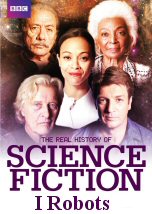
The series heads to the very frontiers of space and science to produce the definitive history of science fiction. What if our creations turn against us? The idea of creating life has fascinated society since the earliest days of science fiction. Robots transports viewers from the first steps of Frankenstein’s monster to the threat provided by the Terminator and the world of Cyberspace. Find out how Rutger Hauer created one of the greatest speeches in all of science fiction for Blade Runner. Discover from Kenny Baker the challenge of acting in Star Wars while inside the body of R2D2, and learn how Anthony Daniels was drawn to the role of C-3PO by concept art modeled closely on the robot from the silent classic Metropolis. The creators of the original Robocop describe how its hidden depths have given it enduring appeal and William Gibson reveals the origins of his seminal novel Neuromancer. From HAL in 2001: A Space Odyssey to the Cylons of the reimagined Battlestar Galactica and the world of The Matrix, this is a journey that asks – what does it mean to be human?







Amidst the stiff competition within his Ferrari team, two of its British stars, Peter Collins and Mike Hawthorn, put friendship first and the championship second. Ferrari: Race to Immortality tells the story of the loves and losses, triumphs and tragedy of Ferrari's most celebrated drivers in an era where they lived la dolce vita during the week and it was win or die on any given Sunday.