










Last Watched

"AGI"  Sort by

Deeper, Deeper, Deeper Still

   2014    Science
This episodes the nature of the cosmos on the micro and atomic scales, using the Ship of the Imagination to explore these realms. Tyson describes some of the micro-organism that live within a dew drop, demonstrating parameciums and tardigrades. He proceeds to discuss how plants use photosynthesis via their chloroplasts to convert sunlight into chemical reactions that convert carbon dioxide and water into oxygen and energy-rich sugars. Tyson then discusses the nature of molecules and atoms and how they relate to the evolution of species. He uses the example set forth by Charles Darwin postulating the existence of the long-tongued Morgan's sphinx moth based on the nature of the comet orchid with pollen far within the flower. He further demonstrates that scents from flowers are used to trigger olfactory centers in the brain, stimulating the mind to threats as to aid in the survival of the species. Tyson narrates how Greek philosophers Thales and Democritus postulated that all matter was made up of combinations of atoms in a large number of configurations, and describes how carbon forms the basic building block for life on earth due to its unique chemical nature. Tyson explains on the basic atomic structure of protons, neutrons, and electrons, and the nature of nuclear fusion that occurs in most stars. He then discusses the existence of neutrinos that are created by these nuclear processes in stars, and that detecting such sub-atomic particles which normally pass through matter require subterranean facilities like the Super-Kamiokande that were used to detect neutrinos from the supernova SN 1987A in the Large Magellanic Cloud before light from the explosion were observed due to their ability to pass through matter of the dying sun. Tyson compares how neutrinos were postulated by Wolfgang Pauli to account for the conservation of energy from nuclear reactions in the same manner as Darwin's postulate on the long-tongued moth. Tyson concludes by noting that there are neutrinos from the Big Bang still existing in the universe but due to the nature of light, there is a "wall of infinity" that cannot be observed beyond.
Series: Cosmos: A Spacetime Odyssey
Secret Forests

   2014    Nature
This is the story of two tiny animals coming of age. In the wild woods of North America, a young chipmunk is gathering a vital store of nuts ahead of his first winter - in his way are ruthless rivals and giant predators. In the steaming rainforest, a young tree-shrew is forced deep into the jungle to find food. She must draw on all her intelligence and agility if she is to escape the ultimate jungle predator - a reticulated python!
Series: Hidden Kingdoms

The Chemistry of Life

       Science
This episode explores how scientists delved ever deeper into the world of the cell, seeking to reveal the magic ingredient that can spark a bundle of chemicals into life. Their discoveries have brought us to the brink of being able to create life for ourselves.
Series: The Cell

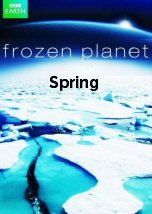
Frozen Planet: Spring

   2011    Nature
Spring arrives in the polar regions, and the sun appears after an absence of five months; warmth and life return to these magical ice worlds - the greatest seasonal transformation on our planet is underway. Male Adelie penguins arrive in Antarctica to build their nests - it takes a good property to attract the best mates and the males will stop at nothing to better their rivals! But these early birds face the fiercest storms on the planet. In the Arctic, a polar bear mother is hunting with her cubs. Inland, the frozen rivers start to break up and billions of tons of ice are swept downstream in the greatest of polar spectacles. This melt-water fertilizes the Arctic Ocean, feeding vast shoals of Arctic cod and narwhal. The influx of freshwater accelerates the breakup of the sea-ice - an area of ice the size of Australia will soon vanish from the Arctic. On land, a woolly bear caterpillar emerges from the snow having spent the winter frozen solid. Caterpillars normally become moths within months of hatching, but life is so harsh here that the woolly bear takes 14 years to reach adulthood. Once mature it has only days to find a mate before it dies! Alongside the caterpillars white Arctic wolves race to raise their adorable cubs before the cold returns.
Series: Frozen Planet

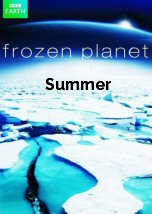
Frozen Planet: Summer

   2011    Nature
It is high summer in the Polar Regions, and the sun never sets. Vast hordes of summer visitors cram a lifetime of drama into one long, magical day; they must feed, fight and rear their young in this brief window of plenty. Summer is a tough time for the polar bear family, as their ice world melts away and the cubs take their first swimming lesson. Some bears save energy by dozing on icy sun beds, while others go egg-collecting in an Arctic tern colony, braving bombardment by sharp beaks. There are even bigger battles on the tundra; a herd of musk oxen gallop to the rescue as a calf is caught in a life and death struggle with a pair of Arctic wolves. But summer also brings surprises, as a huge colony of 400,000 king penguins cope with an unlikely problem - heat. The adults go surfing, while the woolly-coated chicks take a cooling mud bath. Nearby, a bull fur seal is prepared to fight to the death with a rival. Fur flies as the little pups struggle desperately to keep out of the way of the duelling giants. Further south, a minke whale is hunted amongst the ice floes by a family of killer whales. The dramatic chase lasts over 2 hours and has never been filmed before. The killers harry the minke whale, taking it in turns to wear it down. Eventually it succumbs to the relentless battering. Finally, comical adelie penguins waddle back to their half a million strong colony like clockwork toys. The fluffy chicks need constant feeding and protection as piratical skuas patrol the skies. When an unguarded chick is snatched, a dramatic "dogfight" ensues.
Series: Frozen Planet

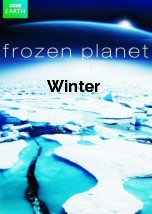
Frozen Planet: Winter

   2011    Nature
There is no greater test for life than winter, as temperatures plummet to 70 below and winds reach 200kph. Darkness and ice extend across the polar regions and only a few remarkable survivors gamble on remaining. We join a female polar bear trekking into the Arctic mountains to give birth as the first blizzards arrive. Out on the frozen ocean, the entire world's population of spectacled eider ducks brave the winter in a giant ice hole kept open by ferocious currents. Arctic forests transform into a wonderland of frost and snow - the scene of a desperate and bloody battle between wolf and bison, but also where a remarkable alliance between raven and wolverine is made. Beneath the snow lies a magical world of winter survivors. Here tiny voles dodge the clutches of the great grey owl, but cannot escape the ultimate under-show predator - the least weasel. Midwinter and a male polar bear wanders alone across the dark, empty icescape. Below the snow, polar bear cubs begin life in an icy den while fantastical auroras light the night skies above. In Antarctica, we join male emperor penguins in their darkest hour, battling to protect precious eggs from fierce polar storms. Weddell seals escape to a hidden world of jewel-coloured corals and alien-looking creatures but frozen devastation follows as sinister ice stalactites reach down with deadly effect.
Series: Frozen Planet