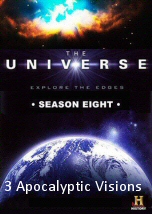
The end is coming. But which cosmic catastrophe will deliver the death blow? Were the Vikings right to fear the frozen apocalypse of an endless winter? Did the Buddhists correctly predict a fiery end to life on Earth? Or will the thunderous Christian vision of Armageddon come crashing down from the stars? Which ancient prophesy do scientists believe accurately foretells our doom? And how close are we to the end of the world? This film explores all the possibilities Apocalyptic Visions to the Future.
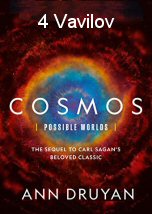
The fourth episode sees host Neil deGrasse Tyson exploring our eternal quest to end hunger and honoring Nikolai Ivanovic Vavilov, pioneer of modern plant breeding, who risked his life for a discovery that would change the history of science. Vavilov's story is marked by both the tenacity and creativity and is particularly tragic. Interwoven into Vavilov's somber narrative are warnings and treatments of science and its ethical implications, especially when science itself comes under attack from political forces.
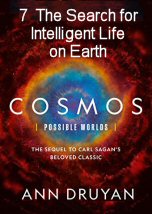
Episode 7 focuses specifically on first contact and the search for intelligent life in the vastness of the cosmos. Are humans ready to make first contact with other intelligent beings? Is our technology even sophisticated enough to detect communication signals from another world? Who are we to search for alien intelligence when we can't even recognize or respect the consciousness all around us, or even beneath our feet. Neil deGrasse Tyson reveals the hidden underground network that is a collaboration of four kingdoms of life, and a true first contact story between humans and beings who communicate in a symbolic language and have maintained a representative democracy for many tens of millions of years.
When Homo sapiens, which means 'wise ones,' discovered and controlled fire hundreds of thousands of years ago, everything changed. Fire allowed us to cook food and heat dwellings, and it served as a focal point for storytelling and sharing cultural identity among community members. We don't yet have established parameters for what it means to be 'distinctly human,' It would seem the only thing that separates us from other animals, Neil deGrasse Tyson ponders, is our neurotic need to feel 'special'. Against the backdrop of the Halls of Extinction, Tyson insists that there must be a clear distinction between ourselves and animals that justifies our eating them, wearing them and even bringing an end to their species. From the birth of the devil in ancient Persia to a searing story of saintliness among macaque monkeys, this episode is an exploration of human potential for change. It concludes with the story of how one of history's greatest monsters was transformed into one of its shining lights.
One of Cezanne’s best-known pictures, but it is also one of his most mysterious. Why did the so-called father of modern art paint two old men hunched over a game of cards? What is the picture trying to tell us? By exploring Cezanne’s puzzling religious beliefs and his passion for Mary Magdalene, the patron saint of Provence, Waldemar Januszczak uncovers the surprising secrets of a haunting masterpiece.
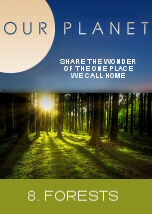
The last episode examines the fragile interdependence that exists between forests' wide variety of residents, including bald eagles, hunting dogs and Siberian tigers. Over half of all the world's trees, evergreen and deciduous, stand in great assemblies. For many of us, they are places of mystery and darkness. They are key to our climate, and home to countless unique species. The boreal forest contains 750 billion trees, and it stores over 40 percent of the world's carbon, making it a vital element in the fight against climate change. In the past, we have destroyed them without hesitation. Yet, forests do have an astonishing ability to recover. If we choose to give forests time and space, they could reclothe the earth with much of the rich and varied communities of animals and plants of which we have, so recently, robbed it. A future with more forests is key to the resilience of our planet.












This film explores all the possibilities Apocalyptic Visions to the Future.