


Last Watched

"Earth"  Sort by

Surviving

   1995    Nature
the final episode deals with plants that live in hostile environments. Attenborough visits Ellesmere Island, north of the Arctic Circle, to demonstrate that even in a place that is unconducive to life, it can be found. Algae and lichens grow in or on rock, and during summer, when the ice melts, flowers are much more apparent. However, they must remain close to the ground to stay out of the chilling wind. In the Tasmanian mountains, plants conserve heat by growing into 'cushions' that act as solar panels, with as many as a million individual shoots grouped together as one. Others, such as the lobelia in Mount Kenya, have a 'fur coat' of dense hairs on their leaves. The saguaro cactus in the Sonoran Desert flourishes because of its ability to retain vast amounts of water, which can't be lost through leaves because it has none. Many desert dwellers benefit from an accelerated life cycle, blooming rapidly within weeks after rainfall. Conversely, Mount Roraima is one of the wettest places on Earth. It is a huge sandstone plateau with high waterfalls and nutrients are continuously washed away, so plants have to adapt their diet if they are to survive. A bladderwort is shown invading a bromeliad. Inhabitants of lakes have other problems to contend with: those that dominate the surface will proliferate, and the Amazon water lily provides an apt illustration. Attenborough ends the series with an entreaty for the conservation of plant species.
Series: The Private Life of Plants
One Life on the Limit

   2013    Culture
One Life on the Limit is an action documentary showcasing the glamour, speed, danger and excitement of Formula One Grand Prix racing. Narrated by Michael Fassbender, the film tells the story of the golden age of Formula 1, when the sport became terrifyingly dangerous. In the late 1960s, Formula 1 cars doubled their engine size and sprouted wings, making them incredibly quick, but even more hazardous. With money pouring in from sponsorship and a new worldwide television audience, superstar drivers were born, thrown like gladiators into the ring. The drivers were legendary with charisma and raw talent, but many of them paid the ultimate price. Follow the story of the drivers who raced on the edge and those who stood up to change the sport forever. It is about the greatest show on earth, Formula 1.

Life: Creatures of the Deep

   2009    Nature
Marine invertebrates are some of the most bizarre and beautiful animals on the planet, and thrive in the toughest parts of the oceans. Divers swim into a shoal of predatory Humboldt squid as they emerge from the ocean depths to hunt in packs. When cuttlefish gather to mate, their bodies flash in stroboscopic colours. Time-lapse photography reveals thousands of starfish gathering under the Arctic ice to devour a seal carcass. A giant octopus commits suicide for her young. A camera follows her into a cave which she walls up, then she protects her eggs until she starves. The greatest living structures on earth, coral reefs, are created by tiny animals in some of the world's most inhospitable waters.
Series: Life

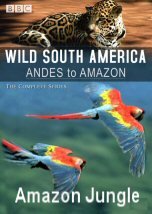
Amazon Jungle

   2005    Nature
A visit to the Amazon jungle - the world's largest rainforest and home to the widest variety of plants and animals on Earth. he diversity of life in the jungle is so great that in just two square miles scientists have counted 3,000 varieties of ants, 530 types of birds and 11 species of monkey. But despite the huge range of life that flourishes here, survival is never easy.
Series: Wild South America

Another Earth

   2009    Science
Could we be unique in the universe or is there another planet similar to earth somewhere in the cosmos? Is it possible that Alpha Centauri, our nearest star, is home to another earth-like planet? Earth sized planets have been hard to find, but indirect methods are coming on line to give scientists a good survey of how many such bodies may be in the universe. How rare would it be to find life on another earth-like planet?
Series: The Universe

Cosmic Phenomena

   2009    Nature
A variety of cosmic events have both helpful and harmful effects on life on Earth. From the beauty of the Aurora Borealis and rainbows to the dangers of UV radiation and cosmic rays, from the miracle of photosynthesis to the thrill of a meteor shower, this episode explores how the effects generated by the sun and other extra-solar sources can literally get under our skin, scramble our technology, make life possible and threaten our existence all at the same time
Series: The Universe
The Big Think

The Big Think

2017  Technology
Catalyst

Catalyst

2017  Science
Making a Murderer

Making a Murderer

2015  History
How to Grow a Planet

How to Grow a Planet

2012  Science
Natural World

Natural World

2017  Nature
Leaving Neverland

Leaving Neverland

2019  Culture