







Last Watched

"Ape"  Sort by

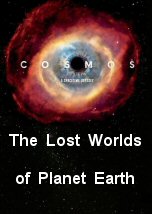
The Lost Worlds of Planet Earth

   2014    Science
This episode explores the palaeogeography of Earth over millions of years, and its impact on the development of life on the planet. Tyson starts by explaining that the lignin-rich trees evolved in the Carboniferous era about 300 million ago, then explains on the nature of plate tectonics that would shape the landmasses of the world and the asteroid impact that initiated the Cretaceous–Paleogene extinction event, leaving small mammals as the dominate species on earth. Earth's landmasses are expected to change in the future and postulates what may be the next great extinction event.
Series: Cosmos: A Spacetime Odyssey
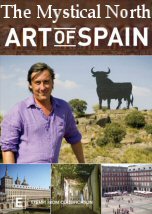
The Mystical North

   2008    Art
Graham-Dixon reveals how the north of the country has produced some of the most dazzling and iconic art of the modern age. Spain's turbulent history has shaped artists from Francisco Goya to Pablo Picasso. Graham-Dixon argues that Spanish architecture is the art form now taking the nation forward in the new millennium.
Series: Art of Spain

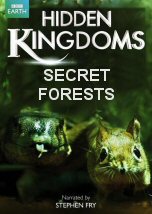
Secret Forests

   2014    Nature
This is the story of two tiny animals coming of age. In the wild woods of North America, a young chipmunk is gathering a vital store of nuts ahead of his first winter - in his way are ruthless rivals and giant predators. In the steaming rainforest, a young tree-shrew is forced deep into the jungle to find food. She must draw on all her intelligence and agility if she is to escape the ultimate jungle predator - a reticulated python!
Series: Hidden Kingdoms

Ice

   2007    Nature
Our icy adventure begins with host Dr. Iain Stewart in the Alps, where he goes down an ice crevasse to show viewers how snowfall develops into expansive masses. Then, we see how ice can shape the earth's topography giving rise to features like Yosemite National Park and Manhattan Island, in NY. Finally, journey to Greenland and see how ice sheets and glaciers are melting at a phenomenal rate that is likely to accelerate over the coming years, changing the world as we know it.
Series: Earth, The Power of the Planet

The Oceans

   2007    Nature
Earth’s oceans help make our planet different from every other planet in the solar system. As far as we know, no other place is the right temp for liquid water, the most essential ingredient for life to exist. The oceans are Earth’s primary stabilizing force, and their immense power helps to shape the appearance and behavior of the entire planet and everything living on it. And they are also the planet's great unknown - their deepest points have been visited less than the surface of the moon.
Series: Earth, The Power of the Planet

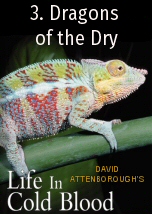
Dragons of the Dry

   2008    Nature
About 340 million years ago a brand new family of animals was evolving in the primeval swamps. They were to go one step further than the amphibians who had emerged onto dry and before them. For they would eventually completely cut their ties with water. They were the ancestors of todays lizards. They evolved scaly impermeable skins and moved up into the forests. They diversified into a multitude of different shapes and sizes. They developed signalling systems to communicate with one another. And they squabbled as animals do. For food they hunted insects that were already well established on the land in great numbers. And here without returning to water they produced their families. They powered their bodies not only with food but with the heat that they drew directly from the sun.
As they diversified so they spread into the harshest of the lands habitats. The baking waterless deserts which eventually they would come to dominate. Discover jacky lizards that wave, wrestling beaded lizards and the the world's smallest chameleon, which is no bigger than his thumbnail, and the biggest lizard in Australia.
Series: Life In Cold Blood