







Last Watched

"Ara"  Sort by

Boko Haram and Unnatural Selection

   2015    Culture
The terrorist group Boko Haram is responsible for thousands of deaths in Nigeria. Now, the government is determined to drive these militants from the country. But is the hunt for insurgents causing as much harm as it's preventing? Former Navy SEAL and new VICE correspondent Kaj Larsen travels to Nigeria to see what this cat-and-mouse game means for the people caught in the middle of the fight. 'Unnatural Selection': For centuries, scientists have been working to change the genetic traits of plants and animals. Now, the new gene-editing method CRISPR has made that process astonishingly simple - so simple it could easily be used on humans. Isobel Yeung reports from Brazil, Scotland, China and the U.S. on the technological advances that could reshape evolution as we know it.

Dark Net Provoke

   2016    Technology
We all project images of ourselves online - a curated identity that defines how we want to be perceived. But what temptations exist to embellish and what are the dark implications? In this episode, enter the world of Cyberbanging, where inner city youth are using social media to brag, conspire and incite violence; two African-American women bloggers who have turned the table on the trolls who threaten them; and the creator of Abdullah X, an online character who's trying to keep Muslim kids from falling under the spell of Islamic extremists.
Series: Dark Net

Atom: The Illusion of Reality

   2007    Science
In the last in the series Professor Jim Al-Khalili explores how studying the atom forced us to rethink the nature of reality itself. He discovers that there might be parallel universes in which different versions of us exist, finds out that empty space isn't empty at all, and investigates the differences in our perception of the world in the universe and the reality.
Series: Atom

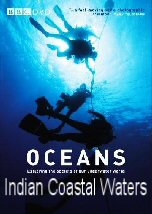
The Indian Ocean Coastal Waters

   2009    Nature
The tropical Indian Ocean is home to the Spice Islands. Characterised by beautiful sandy beaches, fringing coral reefs and coastal mangrove forests, this is a vibrant nursery area for marine life, such as whale sharks, crabs, seahorses and a great variety of fish. The coastal areas are where humans have the most direct impact on the ocean's resources.
Series: Oceans

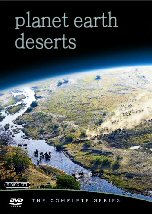
Deserts

   2007    Nature
Around 30% of the land's surface is desert, the most varied of our ecosystems despite the lack of rain. Unravel the secrets of desert survival and experience the ephemeral nature of this dynamic environment. Watch Saharan sandstorms nearly a mile high and desert rivers that run for a single day. In the Gobi Desert, rare Bactrian camels get moisture from the snow. In the Atacama, guanacos survive by licking dew off cactus spines. In the USA, the brief blooming of Death Valley triggers a plague of locusts 65km wide and 160km long. A unique aerial voyage over the Namibian desert reveals elephants on a long trek for food and desert lions searching for wandering oryx.
Series: Planet Earth

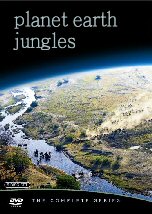
The Jungles

   2006    Nature
Jungles cover roughly three per cent of our planet yet contain 50 per cent of the world's species. High-definition cameras enable unprecedented views of animals living on the dark jungle floor. In the Ngogo forest the largest chimpanzee group in the world defends its territory from neighbouring groups. Other jungle specialists include parasitic fungi which infiltrate an insect host, feed on it, and then burst out of its body.
Series: Planet Earth