





Last Watched

"Australia"  Sort by

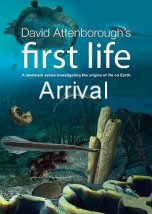
Arrival

   2010    Science
Sir Attenborough's journey begins in a forest near his childhood home in Leicester, where a fossil discovery transformed our understanding of the evolution of complex life. Travelling to the fog bound coastline of Newfoundland and the Australian outback, Sir Attenborough unearths the earliest forms of animal life to exist on Earth. These bizarre and wonderful creatures are brought to life with the help of cutting edge scientific technology and photorealistic visual effects. From the first animal forms that moved to the first mouths that ate, these were creatures that evolved the traits and tools that allow all animals, including ourselves, to survive to this day.
Series: First Life

Size Matters

   2013    Science
Brian explores the physics of the size of life through some close encounters with Australia's wildlife. From swimming with great white sharks to tracking red kangaroos, he discovers that the size you are profoundly affects the life you lead and, ultimately, how long you have to enjoy it.
Series: Wonders of Life

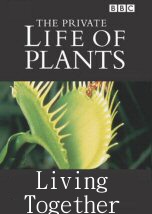
The Private Life of Plants Living Together

   1995    Nature
The fifth programme explores the alliances formed between the animal and plant worlds. Attenborough dives into Australia's Great Barrier Reef and contrasts the nocturnal feeding of coral, on microscopic creatures, with its daytime diet of algae. Some acacias are protected by ants, which will defend their refuge from any predator. Besides accommodation, the guards are rewarded with nectar and, from certain species, protein for their larvae as well. Fungi feed on plants but can also provide essential nutriment to saplings (Mycorrhiza). The connection is never broken throughout a tree's life and a quarter of the sugars and starches produced in its leaves is channelled back to its fungal partners. Meanwhile, fungi that feed on dead wood leave a hollow trunk, which also benefits the tree. Orchids enjoy a similar affiliation. Lichens are the product of a relationship between fungi and a photosynthetic associate, usually algae. They are extremely slow-growing, and a graveyard is the perfect location to discover their exact longevity. Mistletoe is a hemiparasite that obtains its moisture from a host tree, while using own leaves to manufacture food. Its seeds are deposited on another by the mistletoe tyrannulet, following digestion of the fruit. The dodder (Cuscuta) is also parasitic, generally favouring nettles, and siphons its nourishment through periodic 'plugs' along its stem. The rafflesia has no stem or leaves and only emerges from its host in order to bloom — and it produces the largest single flower: one metre across.
Series: The Private Life of Plants

Tales by Light Submerged

   2015    Art
In this series, the pursuit of the perfect image takes five adventurous photographers on journeys to the ends of the Earth, where they push the limits of their craft. In the first episode, Australian marine photographer Darren Jew captures mating humpback whales in Tonga, a 70-year-old biplane wreck and an active New Guinea volcano.
Series: Tales by Light

Panorama

   2015    Art
In the fourth episode, leading landscape photographer Peter Eastway follows in the footsteps of Frank Hurley – the pioneering Australian photographer on Shackleton’s expedition to the south a century ago – to capture the wilderness and wildlife of Antarctica and South Georgia.
Series: Tales by Light