Alejandro Jodorowsky's daring and psychedelic films of the early 1970's, 'El Topo' and 'The Holy Mountain', cemented his status as the Godfather of the Midnight Movie. In 1974, he began work on his next film, possibly the most ambitious film ever attempted. In the pre-Star War era, Jodorowsky’s adaptation of Frank Herbert’s classic sci-fi novel DUNE was poised to change cinema forever. His DUNE would star Brontis Jodorowsky, Alejandro's own 12 year old son, alongside Orson Welles, Mick Jagger, David Carradine and even Salvador Dali. The team of assembled visual artists were some of the most provocative talents of the era, including H.R. Giger, Chris Foss, and Jean ‘Moebius’ Giraud. The groundbreaking special effects were under the control of Dan O'Bannon and the soundtrack would be created by Pink Floyd and the French prog-rock masters, Magma. For two years, Jodorowsky and his team of 'Spiritual Warriors' worked night and day on the massive task of creating the fabulous world of DUNE. In order to secure the necessary Hollywood funding, they created over 3,000 storyboards, numerous paintings, incredible costumes, and an outrageous, moving, and powerful screenplay. In the words of Jodorowsky’s producer, Michel Seydoux, 'It should have been enough. But it wasn’t.' Through intimate and honest conversations with Jodorowsky, filmed over the span of three years, plus interviews with legends and luminaries including H.R. Giger (artist, ALIEN), Gary Kurtz (producer, STAR WARS) and Nicolas Winding Refn (director, DRIVE and THE NEON DEMON), as well as never-before-seen realizations of Jodorowsky’s mind-blowing psychedelic space opera, director Pavich's film finally unearths the full saga of 'THE GREATEST MOVIE NEVER MADE'.
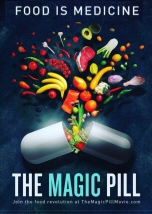
The Magic Pill follows doctors, patients, scientists, chefs, farmers and journalists from around the globe who are combating illness through a paradigm shift in eating. According to its followers, this simple change - embracing fat as our main fuel - is showing profound promise in improving the health of people, animals and the planet. The film is highly controversial and was criticized by some medical associations. The Paleo diet proposes that humans were genetically adapted to eating specifically those foods that were readily available to them in their local environments. Advocates of the diet claim many chronic diseases and degenerative conditions evident in modern Western populations have arisen because of a mismatch between Stone Age genes and modern lifestyles. The Paleo diet typically includes vegetables, fruits, nuts, roots, and meat and excludes foods such as dairy products, grains, sugar, legumes, processed vegetable oils, salt, alcohol or coffee.
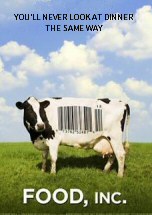
Filmmaker Robert Kenner lifts the veil on our nation's food industry, exposing the highly mechanized underbelly that's been hidden from the American consumer with the consent of our government's regulatory agencies, USDA and FDA. Our nation's food supply is now controlled by a handful of corporations that often put profit ahead of consumer health, the livelihood of the American farmer, the safety of workers and our own environment. We have bigger-breasted chickens, the perfect pork chop, insecticide-resistant soybean seeds, even tomatoes that won't go bad, but we also have new strains of e coli--the harmful bacteria that cause illness for an estimated 73,000 Americans annually. We are riddled with widespread obesity, particularly among children, and an epidemic level of diabetes among adults Featuring interviews with such experts as Eric Schlosser (Fast Food Nation), Michael Pollan (The Omnivore's Dilemma) along with forward thinking social entrepreneurs like Stonyfield Farms' Gary Hirschberg and Polyface Farms' Joe Salatin, the film reveals surprising--and often shocking truths--about what we eat, how it's produced, who we have become as a nation and where we are going from here.
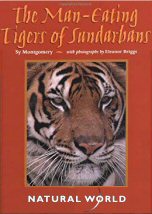
The Sundarbans mangrove forest, in Bangladesh near the Indian border, is a tidal jungle where Ganges and Brahmaputra enter the Indian Ocean. Its has some 400 Bengal tigers - the largest population in the world, and the only to be hardly scared of men. The downside is tigers kill up the 50 Bangladeshis a year, even from neighbouring villages, so keeping them inside the reserve is key to long-term survival. A recent project tries to train local mongrels, not pets but fiercely self-reliant dogs, to spot and even scare off tigers from villages. An individual tiger can turn into a man-eater in order to survive - this process may occur due to an injury or old age (and so cannot hunt agile prey) or even accidentally tasting human flesh.
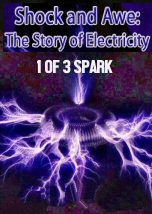
Professor Jim Al-Khalili tells the electrifying story of our quest to master nature's most mysterious force - electricity. Until fairly recently, electricity was seen as a magical power, but it is now the lifeblood of the modern world and underpins every aspect of our technological advancements.Without electricity, we would be lost. This series tells of dazzling leaps of imagination and extraordinary experiments - a story of maverick geniuses who used electricity to light our cities, to communicate across the seas and through the air, to create modern industry and to give us the digital revolution. Episode one tells the story of the very first 'natural philosophers' who started to unlock the mysteries of electricity. They studied its curious link to life, built strange and powerful instruments to create it and even tamed lightning itself. It was these men who truly laid the foundations of the modern world. Electricity was without doubt a fantastical wonder. This is the story about what happened when the first real concerted effort was made to understand electricity; how we learned to create and store it, before finally creating something that enabled us to make it at will - the battery.
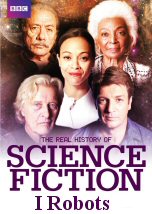
The series heads to the very frontiers of space and science to produce the definitive history of science fiction. What if our creations turn against us? The idea of creating life has fascinated society since the earliest days of science fiction. Robots transports viewers from the first steps of Frankenstein’s monster to the threat provided by the Terminator and the world of Cyberspace. Find out how Rutger Hauer created one of the greatest speeches in all of science fiction for Blade Runner. Discover from Kenny Baker the challenge of acting in Star Wars while inside the body of R2D2, and learn how Anthony Daniels was drawn to the role of C-3PO by concept art modeled closely on the robot from the silent classic Metropolis. The creators of the original Robocop describe how its hidden depths have given it enduring appeal and William Gibson reveals the origins of his seminal novel Neuromancer. From HAL in 2001: A Space Odyssey to the Cylons of the reimagined Battlestar Galactica and the world of The Matrix, this is a journey that asks – what does it mean to be human?







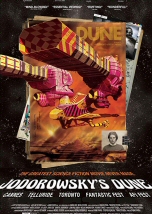




For two years, Jodorowsky and his team of 'Spiritual Warriors' worked night and day on the massive task of creating the fabulous world of DUNE. In order to secure the necessary Hollywood funding, they created over 3,000 storyboards, numerous paintings, incredible costumes, and an outrageous, moving, and powerful screenplay. In the words of Jodorowsky’s producer, Michel Seydoux, 'It should have been enough. But it wasn’t.' Through intimate and honest conversations with Jodorowsky, filmed over the span of three years, plus interviews with legends and luminaries including H.R. Giger (artist, ALIEN), Gary Kurtz (producer, STAR WARS) and Nicolas Winding Refn (director, DRIVE and THE NEON DEMON), as well as never-before-seen realizations of Jodorowsky’s mind-blowing psychedelic space opera, director Pavich's film finally unearths the full saga of 'THE GREATEST MOVIE NEVER MADE'.