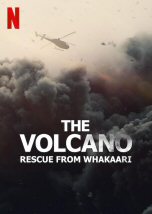
A close examination of the Whakaari / White Island volcanic eruption of 2019, in which 22 lives were lost, the film viscerally recounts a day when ordinary people were called upon to do extraordinary things, placing this tragic event within the larger context of nature's unpredictability and the resilience and power of our shared humanity. The film explores the profound impact on survivors, their unwavering determination to recover and rebuild, and the enduring effects of the eruption. With remarkable personal stories, stunning visuals, and a poignant reflection on the forces of nature, this documentary offers a gripping portrayal of the human spirit and solidarity in the face of adversity. It is a must-watch for those interested in powerful storytelling and the resilience of the human spirit, with a captivating and thought-provoking narrative.
How did the Chinese government turn pandemic cover ups in Wuhan into a triumph for the Communist party? Award-winning filmmaker Nanfu Wang recounts the experiences of people on the ground in the earliest days of the novel coronavirus and the way two countries dealt with its initial spread, from the first days of the outbreak in Wuhan to its rampage across the United States. The film explores the early confusion and parallel campaigns by authorities to try to contain the virus as well as shape the public narrative through misinformation, resulting in a devastating impact on citizens of both countries. With emotional first-hand accounts from medical professionals, patients, and grieving family members, and startling, on-the-ground footage from both Wuhan and the U.S., In The Same Breath is a revelatory illustration of the devastating toll that resulted from official missteps at containment of the infection and the widespread phenomenon of social media misinformation, while also highlighting the strength and resilience of the people who risked everything to communicate the truth.
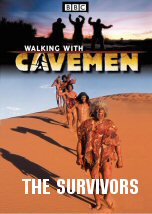
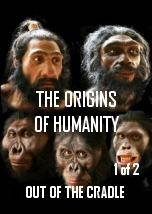
Nearly half a million years ago, the most advanced human yet roams Europe. Strong and powerful, Homo heidelbergensis are fierce hunters, use sophisticated tools and live in close-knit family groups. Over 200,000 years they become split into two populations by extremes of weather and environment and evolve separately into two very different species. In the North are the Neanderthals, whose physical power and resilience is the key to surviving in ice age Northern Europe. About 140,000 years ago, Africa is in the grip of a devastating drought, and something remarkable has happened to the descendants of heidelbergensis who live there. The combination of environment and chance has bred in them a unique ability that will change the course of human history. It will be this small band of southern survivors, perhaps numbering just a few tens of thousands, who will come to dominate the world and be known as Homo sapiens.
Diarmaid MacCulloch's own life story makes him a symbol of a distinctive feature about Western Christianity - scepticism, a tendency to doubt which has transformed both Western culture and Christianity. In the final programme in the series, he asks where that change came from. He challenges the simplistic notion that faith in Christianity has steadily ebbed away before the relentless advance of science, reason and progress, and shows instead how the tide of faith perversely flows back in. Despite the attacks of Newton, Voltaire, the French Revolutionaries and Darwin, Christianity has shown a remarkable resilience. The greatest damage to Christianity was actually inflicted to its moral credibility by the two great wars of the 20th century and by its entanglement with Fascism and Nazism. And yet it is during crisis that the Church has rediscovered deep and enduring truths about itself, which may even be a clue to its future.
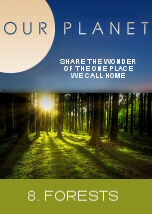
The last episode examines the fragile interdependence that exists between forests' wide variety of residents, including bald eagles, hunting dogs and Siberian tigers. Over half of all the world's trees, evergreen and deciduous, stand in great assemblies. For many of us, they are places of mystery and darkness. They are key to our climate, and home to countless unique species. The boreal forest contains 750 billion trees, and it stores over 40 percent of the world's carbon, making it a vital element in the fight against climate change. In the past, we have destroyed them without hesitation. Yet, forests do have an astonishing ability to recover. If we choose to give forests time and space, they could reclothe the earth with much of the rich and varied communities of animals and plants of which we have, so recently, robbed it. A future with more forests is key to the resilience of our planet.
Mid-1942, as Hitler’s forces are pushing into southern Russia to take the oilfields, he spies a city prized by his enemy Stalin – Stalingrad. If Hitler can capture this city, he can expand his empire all the way to the Urals. But what Hitler hasn’t counted on is the enormous resilience of the Soviet people; men and women willing to defend their Motherland at all costs. What ensues at Stalingrad is one of the bloodiest battles in the history of warfare, with an estimated 2 million total casualties, and an event that turns the tide for the Germans.












With remarkable personal stories, stunning visuals, and a poignant reflection on the forces of nature, this documentary offers a gripping portrayal of the human spirit and solidarity in the face of adversity. It is a must-watch for those interested in powerful storytelling and the resilience of the human spirit, with a captivating and thought-provoking narrative.