(Click CC for subtitles) Ranjit, a farmer in India, takes on the fight of his life when he demands justice for his 13-year-old daughter, the victim of a brutal gang rape. His decision to support his daughter is virtually unheard of, and his journey unprecedented. Nominated for Best Documentary Award, the film has an undeniable and unshakable power. It is one of those documentaries where anyone who watches it won’t be the same person by the end as they were when it started. To Kill a Tiger offers the viewer remarkable access to village life, not just in the modest home where Ranjit’s family make roti on an open fire, but in the fields where they herd goats and collect water from a pump. The camera finds quiet details, like Ranjit’s daughter carefully weaving ribbons into her hair. Women and men insist that the community, not the criminal court, should solve the issue with a forced marriage—to remove the ‘stain on her’. The men become increasingly hostile—to the family, and eventually to the film crew itself.
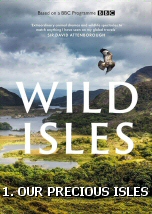
In the first episode, Sir David Attenborough reveals the unexpected wildlife riches of the British Isles, showcasing the dramatic and spectacular habitats that rival any across the globe. This journey uncovers the diversity of life in the UK's unique landscapes, from the intricate world of bumblebees to the swift lives of kingfishers. The episode captures extraordinary scenes of nature, including killer whales preying on seals, golden eagles in the Scottish mountains, the cunning tactics of woodland plants, and the perilous life of puffins evading gulls. It highlights Britain's geological diversity as a cornerstone of its natural wealth, contributing to an array of habitats and supporting a wide range of life. Britain's importance extends to being a haven for migratory birds, with our seas feeding 65% of the world's gannets and supporting the largest colony of northern gannets on Scotland's Bass Rock. The west coast of Scotland offers sanctuary to barnacle geese due to its abundant food and mild climate, though they remain vigilant against hunting sea eagles. Despite these natural treasures, Britain faces challenges as one of the most nature-depleted countries globally. Sir David Attenborough emphasizes the need to conserve and restore these wild isles for the enjoyment and benefit of future generations.
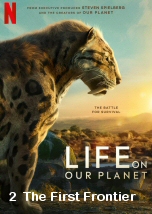
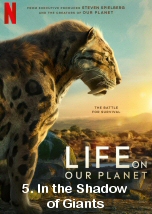
The fifth episode of the series is a fascinating exploration of the dinosaur era and its impact on the evolution of life on Earth. Through a journey of 200 million years, we discover how the breakup of Pangea and tectonic changes shaped biodiversity and created environments for dinosaurs and other forms of life to flourish. From the majestic Diplodocus to the formidable Allosaurus, the documentary brings to life the giants that once dominated our planet. Additionally, it shows the evolution of plants, highlighting the emergence of flowers and their symbiotic relationship with insects, such as termites and ants, whose social and evolutionary dynamics are explored in depth. The narrative also addresses the rise of mammals and their coexistence with dinosaurs, highlighting species such as the Numbat and their struggle for survival. With stunning imagery and a captivating narrative, this episode is an invitation to learn, marvel, and reflect on the extraordinary history of life on Earth.
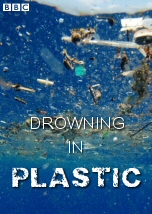
Our blue planet is facing one its biggest threats in human history. Trillions of pieces of plastic are choking the very lifeblood of our earth, and every marine animal, from the smallest plankton to the largest mammals, is being affected. But can we turn back this growing plastic tide before it is too late? Wildlife biologist Liz Bonnin visits scientists working at the cutting edge of plastics research. She works with some of the world's leading marine biologists and campaigners to discover the true dangers of plastic in our oceans and what it means for the future of all life on our planet, including us. Liz travels to a remote island off the coast of Australia that is the nesting site for a population of seabirds called flesh-footed shearwaters. Newly hatched chicks are unable to regurgitate effectively, so they are filling up on deadly plastic. She visits the Coral Triangle that stretches from Papua New Guinea to the Solomon Islands to find out more from top coral scientists trying to work out why plastic is so lethal to the reefs, fragile ecosystems that contain 25 per cent of all marine life.
For more than 90 years, Abbey Road Studios has been at the heart of the music industry. In this personal film of memory and discovery, Mary McCartney guides us through nine decades to see and experience the creative magic that makes it the most famous and longest-running studio in the world. From classical to pop, film scores to hip-hop, ‘If These Walls Could Sing’ explores the breadth, diversity and ingenuity of Abbey Road Studios. The doc marks the first time Abbey Road has opened its doors to a feature doc, and will be the centrepiece of the legendary studio’s 90th anniversary celebrations. Billed as the untold story of the studio, the film will feature an all-star cast of interviews, and intimate access to the premises.
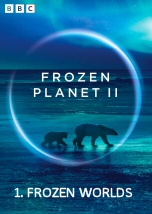
Journeying from pole to pole, The series 'Frozen Planet II' reveals surprising worlds that exist across the planet and the remarkable animals that make them their home. In a fragile world of beauty and hostility, nature finds a way to survive and thrive. David Attenborough explores a planet on the brink of major change. In the first episode, we begin our journey in the far south, in the most hostile place on earth, the frozen continent of Antarctica. After being raised on the ice in winter, emperor penguin chicks find themselves abandoned by their parents in spring. To survive, they must find their own way across the treacherous sea ice to the rich waters of the Southern Ocean. The waters surrounding Antarctica may be the richest of all, but they are also home to an exceptionally sophisticated predator, the killer whale. To reach their favored prey, Weddell seals, a family of killer whales have learnt to generate their own waves, washing the seals off their ice floes. It’s a technique that has been passed down over generations and is coordinated by the family matriarch, who can be over 100 years old. Leaving Antarctica and travelling north, we discover frozen habitats that are created by altitude. The greatest of these is the Himalaya, the tallest mountain range on earth, which contains so much ice and snow it is known as the third pole. In the shadow of the Himalaya lies a vast frozen grassy plain that is home to the fluffiest cat in the world, Pallas’s cat. It may have extremely dense fur, but if it’s to survive the Mongolian winter, it needs to catch lots of gerbils and voles. Easier said than done when you only have short legs and paws that are sensitive to the cold. North of the Great Steppe lies the boreal forest, which encircles the continents of North America, Europe and Asia, and remains frozen for six months of the year. Prowling these forests in the far east of Russia is the Siberian tiger, the largest cat in the world. In winter, it is on the lookout for black bears hibernating in caves, a high-risk strategy that only a cat of this size would attempt. Above the boreal forest, we cross into the Arctic Circle, where conditions become so extreme that trees can no longer grow. This is the tundra. Living here are relics of the last ice age, musk ox. In spring, their calves face a far greater danger than the cold, grizzly bears. Encounters can be brutal, but if just a few calves survive the gauntlet, the herd’s future is secure. To the north of the tundra is the Arctic Ocean, the only ocean that can completely freeze over. Living here is one of the most peculiar animals on earth, the hooded seal. Males have extraordinary inflatable noses, producing a bright red balloon out of their left nostrils. One male hopes this will make him irresistible. All of the frozen habitats share one thing in common: the threat posed by today’s climate change. Travelling to the island of Greenland, home to the largest body of ice in the northern hemisphere, we witness how global warming is melting its ice cap at faster rates than ever before, with profound consequences for global sea levels. Lastly, we visit the Arctic’s most iconic resident, the polar bear, as a mother bear struggles to provide for her cubs in a world of shrinking sea ice.














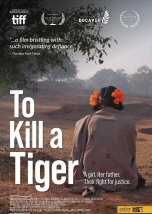



To Kill a Tiger offers the viewer remarkable access to village life, not just in the modest home where Ranjit’s family make roti on an open fire, but in the fields where they herd goats and collect water from a pump. The camera finds quiet details, like Ranjit’s daughter carefully weaving ribbons into her hair. Women and men insist that the community, not the criminal court, should solve the issue with a forced marriage—to remove the ‘stain on her’. The men become increasingly hostile—to the family, and eventually to the film crew itself.