










Last Watched

"World War I"  Sort by

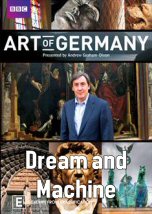
Dream and Machine

   2010    Art
Andrew Graham-Dixon continues his exploration of German art by looking at the tumultuous 19th and early 20th centuries, and how artists were at the forefront of Germany's drive to become a single nation. Andrew travels to the north and the coastal town of Griefswald, the birthplace of Caspar David Friedrich, the most influential of the German Romantics, to discover how the Baltic coast impacted his mysterious paintings of the German landscape. He also visits Berlin and explores the art of the powerful Prussian state, which would spearhead the unification of Germany in 1871. The episode ends with the outbreak of World War I and the attempts of the artists Franz Marc and Otto Dix to rationalise the catastrophic experiences of the world's first technological war, a war driven by the Prussian innovations.
Series: The Art of Germany
1945 The Savage Peace

   2015    History
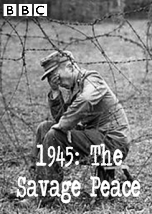
When the Second World War ended, the people of liberated Europe celebrated their freedom from Nazi tyranny. Their years of suffering had ended, but for millions of Germans, the end of the conflict opened a new and terrible chapter. They suffered the appalling violence meted out to the defeated, especially to those ethnic Germans who had lived peacefully for centuries in neighbouring countries". Savage Peace uses rare and unseen archive film, the documentary tells a harrowing story of vengeance against German civilians, which mirrored some of the worst cruelty of the Nazi occupiers during the years of war. The Savage Peace includes the unique testimony of eyewitnesses and victims, who recall the horrors with searing clarity, their memories undimmed 70 years after the events took place. This a story that has, until now, been untold amidst the justified celebration of an end to an unspeakable tyranny. But as the writer George Orwell said, the treatment of the defeated Germans was a terrible crime that has gone unpunished.

Picasso

   2006    Art
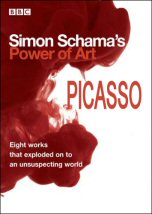
Guernica (1937) was created during Picasso's Surrealist period and captures the horror of the bombing of the Basque town of Guernica during the Spanish Civil War. By the end of World War II, Picasso had become an internationally known artist and celebrity.
Series: Power of Art

War and Peace

   2013    History
World War II is a watershed event for Latino Americans with hundreds of thousands of men and women serving in the armed forces, most fighting side by side with Anglos. In the Pacific, East L.A.'s Guy Gabaldon becomes a Marine Corp legend when he singlehandedly captures more enemy soldiers than anyone in US military history. But on the home front, discrimination is not dead: in 1943, Anglo servicemen battle hip young "Zoot suitors" in racially charged riots in southern California
Series: Latino Americans

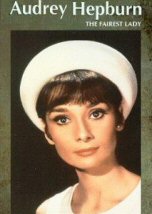
Audrey Hepburn: The Fairest Lady

   1997    Art
Audrey Hepburn was a film and fashion icon of the twentieth century and one of the most beloved actresses of all time. She enchanted the world with elegance and innocent charm, and portrayed some of the most memorable characters in film. Although she was one of the few actresses to win an Emmy, Tony, Grammy, and Academy Award, Audrey was modest about her talents, often claiming she had no acting technique. She redefined glamour with elfin features and a waif-like figure that inspired timeless designs by Hubert de Givenchy.Raised in the Netherlands during World War II, Audrey never forgot her own struggles during the German occupation and dedicated her later years to helping needy children around the world, becoming an International Goodwill Ambassador for UNICEF and traveling around the world to provide aid. Audrey Hepburn is remembered as a natural talent, a timeless beauty and a great humanitarian.

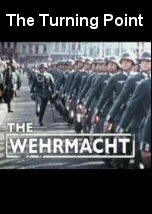
The Turning Point

   2007    History
The German army launched Operation Barbarossa, the invasion of the East, with supreme confidence in its own superiority. High Command was sure that victory would come as quickly and as easily as in France. At the onset, the troops advanced rapidly and the Panzer forces under General Guderian were unbeatable. There were, however, far more casualties and more wear-and-tear on equipment than anticipated. The invading force got bogged down short of Moscow and the withdrawal from there was a severe psychological blow to the men. When an extremely severe winter set in, morale sank further. The soldiers were not equipped for such low temperatures and their guns and machinery could not cope. Hitler ordered his troops to stand firm.
Series: The Wehrmacht