

Last Watched

"Science"  Sort by

What is the Right Diet for You 1of3

   2015    Medicine
Horizon investigates the idea that the best way to lose weight successfully is a personalised approach, diets tailored to our individual biology and psychology. In a groundbreaking experiment, Dr Chris van Tulleken and Tanya Byron join a team of experts to put 75 overweight volunteers on diets designed to tackle the specific reasons why they eat too much. The volunteers are put through a series of tests at a residential clinic to understand how their genes, hormones and psychology influence their eating behaviour. They are then put on the diets the experts believe are best suited to them. Can science succeed where other diets have failed?
Series: What is the Right Diet for You
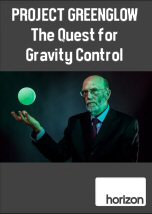
Project Greenglow The Quest for Gravity Control

   2016    Science
For centuries, the precise workings of gravity have confounded the greatest scientific minds - from Newton to Faraday and Einstein - and the idea of controlling gravity has been seen as little more than a fanciful dream. Yet in the mid 1990s, UK defence manufacturer BAE Systems began a ground-breaking project code-named Greenglow. Nasa was simultaneously running its own Breakthrough Propulsion Physics Project". It was concerned with potential space applications of new physics, including concepts like 'faster-than-light travel' and 'warp drives'. Looking into the past and projecting into the future, Horizon explores science's long-standing obsession with the idea of gravity control. It looks at recent breakthroughs in the search for loopholes in conventional physics and examines how the groundwork carried out by Project Greenglow has helped change our understanding of the universe. Gravity control may sound like science fiction, but the research that began with Project Greenglow is very much ongoing, and the dream of flying cars and journeys to the stars no longer seems quite so distant.

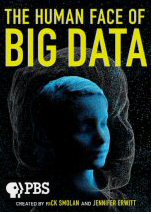
The Human Face of Big Data

   2016    Technology
With the rapid emergence of digital devices, an unstoppable, invisible force is changing human lives: Big Data, a word that was barely used a few years ago but now governs the day for many of us. The real time visualization of data streaming in from satellites, billions of sensors and GPS enabled cameras and smart phones is beginning to enable us to sense, measure and understand aspects of our existence in ways never possible before". This massive gathering and analysing of data in real time is also allowing us to address to some of humanity biggest challenges, including pollution, world hunger and illness, and it is also helping create a new kind of planetary nervous system. But as Edward Snowden and the release of the NSA documents have shown, the accessibility of all this data comes at a steep price. The Human Face of Big Data captures the promise and peril of this extraordinary knowledge revolution.

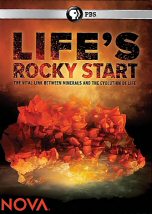
Life Rocky Start

   2016    Science
Four and a half billion years ago, the young Earth was a hellish place, a seething chaos of meteorite impacts, volcanoes belching noxious gases, and lightning flashing through a thin, torrid atmosphere. Then, in a process that has puzzled scientists for decades, life emerged. But how? Join mineralogist Robert Hazen as he journeys around the globe. From an ancient Moroccan market to the Australian Outback, he advances a startling and counterintuitive idea—that the rocks beneath our feet were not only essential to jump-starting life, but that microbial life helped give birth to hundreds of minerals we know and depend on today. It's a theory of the co-evolution of Earth and life that is reshaping the grand-narrative of our planet’s story.

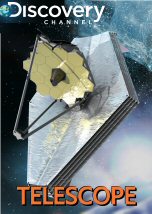
Telescope

   2016    Technology
A dynamic journey behind the scenes of the next step in the evolution of telescopes: NASA's James Webb Space Telescope. A new generation has been inspired to design and build this massive instrument, which is 100 times more powerful than the Hubble Space Telescope and will be a veritable time machine, capable of looking back on the origins of our universe and identifying signatures of potential life on planets far outside our solar system". With unprecedented access to the people and technologies that power its creation, including astrophysicists, engineers at Northrop Grumman, and personnel from NASA'S Goddard Space Flight Center and the Space Telescope Science Institute, the operations center for Hubble and Webb, Telescope spotlights the high-stakes mission of building this massive new scientific instrument. The film is a comprehensive look at the dynamic history of 400 years of telescopes starting with Galileo in 1609. The Webb is the next great telescope in society's ongoing mission to see farther into the universe and answer fundamental questions that have haunted mankind from the beginning of time. Directed by Oscar nominated filmmaker Nathaniel Kahn

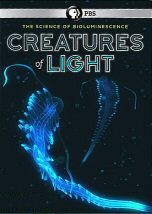
Creatures Of Light

   2016    Nature
In the dark depths of the oceans, nearly 90% of all species light up the darkness from within. These creatures flash, sparkle, shimmer, or simply glow. Whether it’s to scare off predators, fish for prey, or lure a mate, the language of light is everywhere in the ocean depths, and scientists are finally starting to decode it. Discover surprising ways to harness nature’s light—from tracking cancer cells to detecting pollution, lighting up cities, and even illuminating the inner workings of our brains.
Prehistoric Planet

Prehistoric Planet

2022  Science
Leaving Neverland

Leaving Neverland

2019  Culture
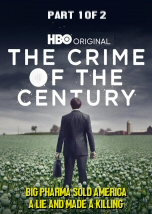
The Crime of the Century

The Crime of the Century

2021  Medicine
Food Inc

Food Inc

2023  Technology
Planet Earth II

Planet Earth II

2016  Nature