




Last Watched

"Bee"  Sort by

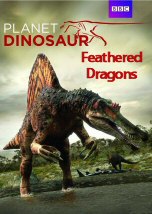
Feathered Dragons

   2011    Culture
In a late Jurassic forest in what is now China, an Epidexipteryx escapes from a juvenile Sinraptor by climbing a tree. It finds a beetle grub in the tree bark, being shown to use its elongated fingers in a similar way to a modern day aye-aye. However, its prey is stolen by another, larger Epidexipteryx, and after a brief bout of posturing, the smaller individual goes to find more food. It drops a second grub to the forest floor, where the other Epidexipteryx retrieves it, only to be killed by the juvenile Sinraptor. The episode then cuts to a desert in late Cretaceous Mongolia, where a Saurornithoides is shown brooding a nest of eggs. When it leaves the nest, an Oviraptor raids it, fleeing when the troodontid returns. The Saurornithoides is suddenly attacked and eaten by a Gigantoraptor, which then heads to compete in a breeding ritual for mates. The males use their feathers for display, a brief fight between two erupting at one point, allowing the females to choose the best suitor. The episode finally cuts to an early Cretaceous forest in China, where a Xianglong is being hunted by a Microraptor, which uses its feathers to pursue the gliding lizard in the air. A Sinornithosaurus attacks it, and after a brief chase the Microraptor manages a lucky escape. The Sinornithosaurus, alongside two other members of its species is then shown hunting a Jeholosaurus and its three young. The group brings down the parent, the narrator explaining that their possibly venomous bite allowed them to tackle animals much larger than themselves. A montage is then shown of the feathered dinosaurs featured in the programme, with the narrator saying that Microraptor not only hints at how flight might have developed, but also that dinosaurs still live amongst us today, as birds.
Series: Planet Dinosaur
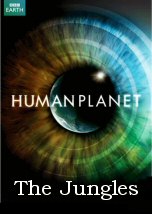
Human Planet: The Jungles

   2011    Culture
The rainforest is home to more species of plants and animals than any other habitat on the planet. But for humans, life there is not as easy as it looks. Life in the trees requires great skill, ingenuity and sheer bravery. The Matis of Brazil carve 4-metre-long blow-pipes to hunt monkeys - in near total silence. Deep in the Congo forests, Tete defies death by scaling a giant tree using nothing more than a liana vine, and he must then negotiate an angry swarm of bees - all to collect honey for his family. Three children from Venezuela's Piaroa tribe venture deep into the jungle to hunt tarantulas - to toast for lunch! In West Papua the Korowai tribe show-off their engineering skills by building a high-rise home 35 metres up in the tree tops. Most memorable of all, in Brazil we join a unique monitoring flight in search an un-contacted tribe...
Series: Human Planet

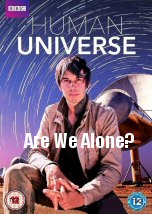
Are...We Alone

   2014    Science
Is mankind alone, or are there aliens out there, either waiting to be discovered, or on their way to find Earth? Professor Brian Cox spends this episode asking such questions, and what he discovers may raise a few eyebrows. He begins by exploring the human race's efforts to find neighbours in outer space, including the launch of two golden discs containing a greeting from Earth in the 1970s; they are still travelling and are now the most distant man-made objects from the planet. Brian also meets members of the Search for Extra-Terrestrial Intelligence, who have been monitoring radio signals for 50 years without success, before discussing the ingredients needed to make an intelligent civilisation with astrophysicist Dr Frank Drake.
Series: Human Universe

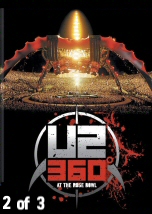
U2 Live at the Rose Bowl 2of3

   2010    Art
The tour was designed by Willie Williams, who has worked on every U2 tour since 1982. Williams had been toying with ideas for 360-degree stadium staging for U2 for a number of years, and presented sketches of a four-legged design to the group near the end of their Vertigo Tour in 2006. The inspiration for the 'spaceship-on-four-legs' design, nicknamed 'the Claw', came from the landmark Theme Building at Los Angeles International Airport.
Series: U2 Live at the Rose Bowl

What is the Right Diet for You 2of3

   2015    Medicine
It is time to see if personalised dieting will work in normal life. The volunteers have been given one of three diets to follow - based on their genes, their hormones and their psychology. But now they are back at home, trying to stick to their personalised diets with all the stresses and temptations of real life. Dr Chris van Tulleken and Professor Tanya Byron discover how our genetic makeup can make temptation difficult to resist, how understanding the brain reveals what makes us comfort eat and what science can tell us about why we make disastrous food choices.
Series: What is the Right Diet for You

What is the Right Diet for You 3of3

   2015    Medicine
So far the volunteers have successfully been losing lost weight, but now the honeymoon period is over. It is the final two months of the diet, and their minds and bodies are fighting back. Dr Chris van Tulleken and Professor Tanya Byron find out if the new personalised diets will help them stay on course, and the experts reveal the scientific secrets to permanent dieting success.
Series: What is the Right Diet for You
Generation Iron

Generation Iron

2018  History
Arnold

Arnold

2023  History
Unknown

Unknown

2023  Technology
Clarkson Farm Season 2

Clarkson Farm Season 2

2023  Nature
Wild Isles

Wild Isles

2023  Nature