







Last Watched

"CIA"  Sort by

Gasp

   2018    Nature    HD
The extraordinary story of Earth and why it is special and uniquely brimming with life among a largely unknown but harsh cosmic arena. It will be told by eight astronauts from their unique perspective of being away from Earth. In the first episode, Astronaut Chris Hadfield reveals the unlikely and unexpectedly interconnected systems that allow life on our planet to breathe.
Series: One Strange Rock

A Sunday Afternoon on the Island of La Grande Jatte

   2004    Art
This award-winning series, Private Life of a Masterpiece, reveals the full and fascinating stories behind famous works of art, not just how they came to be created, but also how they influenced others and came to have a life of their own in the modern world. The works of art featured here are both instantly familiar and profoundly mysterious. Revolutionary in their conception, and iconic years after their execution, they each have their own compelling stories. For behind the beautiful canvases and sculptures are tales of political revolution, wartime escapes, massive ego clashes, social scandal, financial wrangling and shocking violence. In this fascinating series key works of art are investigated and the intricate details of their lives revealed - the history, contemporary reactions, and legacies of each are illustrated.
A Sunday Afternoon on the Island of La Grande Jatte is a popular masterpiece and yet an enduring enigma. It seems to show a quiet scene in a Paris park but there are hints at the demi-monde, if you know where to look. The most remarkable aspect of this vast canvas however remains Seurat's technique his revolutionary pointillism.
Series: The Private Life of a Masterpiece

Numbers as God

   2018    Science
Mathematician Dr Hannah Fry explores the mystery of maths. It underpins so much of our modern world that it's hard to imagine life without its technological advances, but where exactly does maths come from? Is it invented like a language or is it something discovered and part of the fabric of the universe? It's a question that some of the most eminent mathematical minds have been wrestling with. To investigate this question, Hannah goes head first down the fastest zip wire in the world to learn more about Newton's law of gravity, she paraglides to understand where the theory of maths and its practice application collide, and she travels to infinity and beyond to discover that some infinities are bigger than others.
In this episode, Hannah goes back to the time of the ancient Greeks to find out why they were so fascinated by the connection between beautiful music and maths. The patterns our ancestors found in music are all around us, from the way a sunflower stores its seeds to the number of petals in a flower. Even the shapes of some of the smallest structures in nature, such as viruses, seem to follow the rules of maths. All strong evidence for maths being discovered. But there are those who claim maths is all in our heads and something we invented. To find out if this is true, Hannah has her brain scanned. It turns out there is a place in all our brains where we do maths, but that doesn't prove its invented.
Experiments with infants, who have never had a maths lesson in their lives, suggests we all come hardwired to do maths. Far from being a creation of the human mind, this is evidence for maths being something we discover. Then along comes the invention of zero to help make counting more convenient and the creation of imaginary numbers, and the balance is tilted in the direction of maths being something we invented. The question of whether maths is invented or discovered just got a whole lot more difficult to answer
Series: Magic Numbers

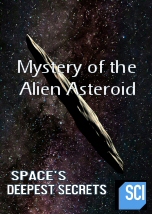
Mystery of the Alien Asteroid

   2018    Science    HD
When a mysterious cigar-shaped object is spotted tumbling through our solar system, experts race to uncover it's true nature. The object, nicknamed Oumuamua, meaning 'a messenger that reaches out from the distant past' in Hawaiian, was discovered by the Pan-STARRS 1 telescope in Hawaii. Since its discovery, scientists have been at odds to explain its unusual features and precise origins, with researchers first calling it a comet and then an asteroid before finally deeming it the first of its kind: a new class of 'interstellar objects.'
A recent paper by researchers at the Harvard Smithsonian Center for Astrophysics raises the possibility that the elongated dark-red object, which is 10 times as long as it is wide and travelling at speeds of 196,000 mph, might have an 'artificial origin.' The theory is based on the object's 'excess acceleration,' or its unexpected boost in speed as it travelled through and ultimately out of our solar system.
Series: Space Deepest Secrets

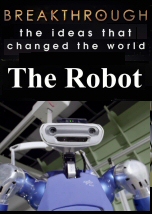
The Robot

   2019    Technology
For most of our history, we humans considered ourselves unique. But now, a new, artificial species might challenge our superiority. Mechanical beings have the potential to change everything. How we got them is a story of astonishing twists and amazing turns to achieve us the machine that may turn out to be the most revolutionary technology ever conceived--the robot.
Learn how robots were first conceptualized in ancient Rome and see how their use has evolved over the centuries, from the calculator to the Mars Lander. Then, take a sneak peek at what future robots will be able to do. Narrated by Patrick Stewart.
Series: Breakthrough: The Ideas That Changed the World

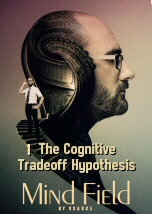
The Cognitive Tradeoff Hypothesis

   2019    Science
Join us on a journey into the mysterious depths of the human psyche as we investigate the strange and surprising terrain of the Mind Field.
Chimps and Humans can be traced biologically back to a common ancestor. The Cognitive Tradeoff Hypothesis theorizes about the two different paths of development - particularly cognitive development - that occurred in these two species after the split. Chimps stayed in the trees and developed some extraordinary cognitive capabilities which are shown by the research work of Japanese scientists, while humans came down into the savanna and developed social capabilities and language.
The hypothesis is that humans 'traded' some aspects of cognitive capabilities by re-purposing areas of the brain that had evolved in the context of other uses. Those capabilities are kept in chimps and are far surpassing that of normal humans. This is shown by the research work of scientists at the Primate Research Center connected with Kyoto University.
Series: Mind Field
Cosmos

Cosmos

1980  Culture
Order and Disorder

Order and Disorder

2012  Science
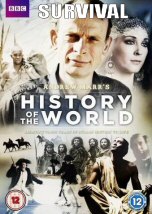
History of the World

History of the World

2012  History
Get Gotti

Get Gotti

2023  History
Seven Ages of Rock

Seven Ages of Rock

2007  Art
The Crime of the Century

The Crime of the Century

2021  Medicine
Tiger

Tiger

2020  History
The Story of Maths

The Story of Maths

2008  Science