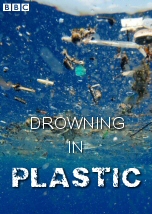
Our blue planet is facing one its biggest threats in human history. Trillions of pieces of plastic are choking the very lifeblood of our earth, and every marine animal, from the smallest plankton to the largest mammals, is being affected. But can we turn back this growing plastic tide before it is too late? Wildlife biologist Liz Bonnin visits scientists working at the cutting edge of plastics research. She works with some of the world's leading marine biologists and campaigners to discover the true dangers of plastic in our oceans and what it means for the future of all life on our planet, including us. Liz travels to a remote island off the coast of Australia that is the nesting site for a population of seabirds called flesh-footed shearwaters. Newly hatched chicks are unable to regurgitate effectively, so they are filling up on deadly plastic. She visits the Coral Triangle that stretches from Papua New Guinea to the Solomon Islands to find out more from top coral scientists trying to work out why plastic is so lethal to the reefs, fragile ecosystems that contain 25 per cent of all marine life.
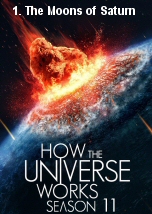
The tenth season of this acclaimed series. A users guide to the cosmos from the big bang to galaxies, stars, planets and moons. Where did it all come from and how does it all fit together. A primer for anyone who has ever looked up at the night sky and wondered. In the first episode, new astronomical research is beginning to reveal an invisible scaffold of dark matter known as the Cosmic Web, an intergalactic network that transformed the Universe from a chaotic Big Bang into the structured beauty of the present day cosmos.
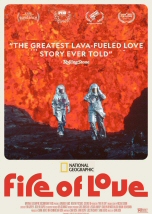
Katia and Maurice Krafft loved two things —each other and volcanoes. For two decades, the daring French volcanologist couple were seduced by the thrill and danger of this elemental love triangle. They roamed the planet, chasing eruptions and their aftermath, documenting their discoveries in stunning photographs and breathtaking film to share with an increasingly curious public in media appearances and lecture tours. This couple of intrepid scientists died in a volcanic explosion doing the very thing that brought them together: unraveling the mysteries of volcanoes by capturing the most explosive imagery ever recorded.
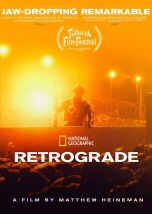
‘Retrograde’ offers a deeply intimate account of the end of Americas's longest war and humanizes the individuals most impacted through both US and Afghan perspectives. With a character-driven, cinema-verite approach, the film functions as an up-close record of a turning point in American and Afghan history while also providing an emotional reminder of the human costs of war. ‘Retrograde’ focuses in the relationship between American Green Berets and the Afghan officers they trained.
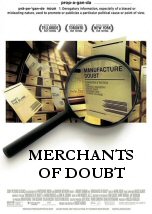
Merchants of Doubt takes audiences on a satirically comedic, yet illuminating ride into the heart of conjuring American spin. Filmmaker Robert Kenner lifts the curtain on a secretive group of highly charismatic, silver-tongued pundits-for-hire who present themselves in the media as scientific authorities - yet have the contrary aim of spreading maximum confusion about well-studied public threats ranging from toxic chemicals to pharmaceuticals to climate change. Inspired by the acclaimed book by Naomi Oreskes and Erik Conway
For more than 90 years, Abbey Road Studios has been at the heart of the music industry. In this personal film of memory and discovery, Mary McCartney guides us through nine decades to see and experience the creative magic that makes it the most famous and longest-running studio in the world. From classical to pop, film scores to hip-hop, ‘If These Walls Could Sing’ explores the breadth, diversity and ingenuity of Abbey Road Studios. The doc marks the first time Abbey Road has opened its doors to a feature doc, and will be the centrepiece of the legendary studio’s 90th anniversary celebrations. Billed as the untold story of the studio, the film will feature an all-star cast of interviews, and intimate access to the premises.













Liz travels to a remote island off the coast of Australia that is the nesting site for a population of seabirds called flesh-footed shearwaters. Newly hatched chicks are unable to regurgitate effectively, so they are filling up on deadly plastic. She visits the Coral Triangle that stretches from Papua New Guinea to the Solomon Islands to find out more from top coral scientists trying to work out why plastic is so lethal to the reefs, fragile ecosystems that contain 25 per cent of all marine life.