The search for extraterrestrial life is an age-old quest. But recent breakthroughs make today an era like no other in the history of astronomy. From the exhilarating probing of our own solar system and the Kepler mission’s astounding discovery of thousands of extrasolar planets, to the next-generation telescopes under development, the prospects for finding life beyond Earth have never been stronger. Still, daunting hurdles remain. How can we study anything light years away, let alone a little planet? In the vast universe, where should we even start to look? Is our failure to hear any other voices in the galaxy a sign that we are special? Join leading explorers now searching the galaxy for life and intelligence on other planets—and asks, if we do find other life in the universe... what would that mean?
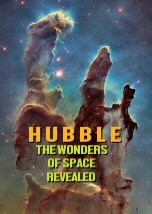
To celebrate the 30th anniversary of its launch, this film tells the remarkable story of how the Hubble Space Telescope revealed the awe and wonder of our universe and how a team of daring astronauts risked their lives to keep it working. Additionally, a team led by Greg Bacon and Dr Frank Summers has transformed many of Hubble's most awe-inspiring images into visualisations - from the spectacular Orion Nebula to the fabulous Whirlpool Galaxy and ethereal Horsehead Nebula. One of the most mind-blowing of the visualizations takes the viewer on a remarkable journey, flying across the Universe to witness almost 13 billion years of cosmic evolution. It's called the 'Hubble Ultra Deep Field' and was created when Hubble stared at a small patch of sky for the equivalent of more than 11 days to see some of the most distant galaxies ever observed.
Over billions of years, planet Earth has become home to an amazing interdependent ecosystem, containing a dizzying variety of animals and plants. But how did life here begin? And does it exist anywhere outside of our solar system? We uncover the secrets of our world by tracking the evolution of the cosmos itself, from the Big Bang onwards. Follow scientists responsible for some of the major breakthroughs in understanding the origins of life and witness how their discoveries are fundamentally changing the way we perceive the universe.
We are the generation of human beings that are going to know whether or not we're alone in the universe. This episode explores the search of exoplanets, from ancient Greek philosophers to the discoveries made possible with the Kepler Telescope. Unbelievable new worlds, planets made of diamond, planets of raining glass, worlds in collision, some plunging into stars, and others that just might harbor life. Thanks to today's planet hunters, our views of the universe and of our place in it are undergoing one of the greatest revolutions in scientific history.
Every day Astronomers are finding a new planetary system that looks pretty similar to Earth. The possibilities of life somewhere else other than Earth I think are very high. If there is life out there what would it be like? Could we talk to it? Is there anything out there like you and me? To find out, we can't just look into space, we also need to look down here. The story of how a miraculous event transformed life on Earth into a complex interconnected food web; Astronauts and experts question other intelligent life in the universe.
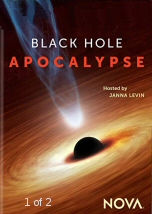
Black holes are the most enigmatic and exotic objects in the universe. They’re also the most powerful; with gravity so strong it can trap light. And they’re destructive, swallowing entire planets, even giant stars. Anything that falls into them vanishes... gone forever. Now, astrophysicists are realizing that black holes may be essential to how our universe evolved—their influence possibly leading to life on Earth and, ultimately, us. In this series, astrophysicist and author Janna Levin takes viewers on a journey to the frontiers of black hole science. Along the way, we meet leading astronomers and physicists on the verge of finding new answers to provocative questions about these shadowy monsters: Where do they come from? What’s inside? What happens if you fall into one? And what can they tell us about the nature of space, time, and gravity?







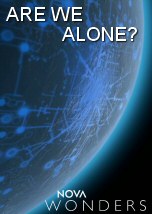









Still, daunting hurdles remain. How can we study anything light years away, let alone a little planet? In the vast universe, where should we even start to look? Is our failure to hear any other voices in the galaxy a sign that we are special? Join leading explorers now searching the galaxy for life and intelligence on other planets—and asks, if we do find other life in the universe... what would that mean?